


Stereo vs Compound Microscope: Which Is Better for Your Specimen?
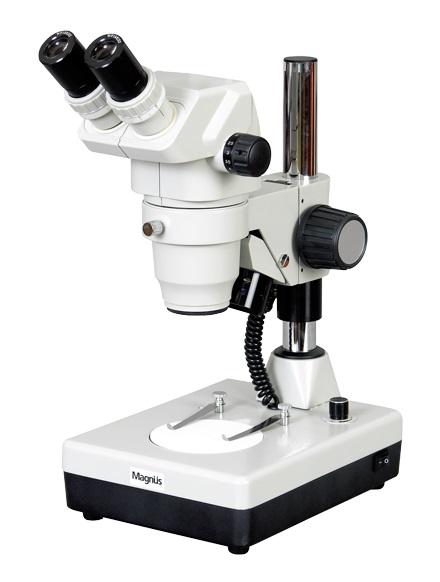
Stereo and compound microscopes serve different observation requirements. Although both magnify objects, their optical designs make them suitable for different types of specimens and laboratory tasks.
Understanding the difference helps researchers, students and laboratory professionals select a microscope based on the actual work rather than magnification specifications alone.
What Is a Stereo Microscope?
A stereo microscope provides a three-dimensional visual impression by presenting slightly different views to each eye.
It is commonly used to inspect solid objects, surface features and larger biological specimens. Its working distance can provide room for specimen handling, dissection and other practical tasks.
Common applications include component inspection, specimen preparation, educational demonstrations and examination of small assemblies.
What Is a Compound Microscope?
A compound microscope uses an objective lens and an eyepiece or imaging system to examine specimens at higher magnifications.
It is widely used for thin biological specimens, prepared slides, cells and tissue sections. Depending on the optical configuration, suitable compound microscopes can support a range of observation methods.
Specimen preparation and illumination play important roles in obtaining useful images.
Stereo vs Compound Microscope: Main Differences
| Feature | Stereo microscope | Compound microscope |
|---|---|---|
| Typical specimens | Larger, solid or three-dimensional objects | Thin specimens and prepared slides |
| Viewing impression | Three-dimensional | Primarily two-dimensional |
| Working distance | Often greater | Usually shorter at higher magnifications |
| Common applications | Surface inspection and dissection | Cellular and biological observation |
| Illumination | Often reflected; sometimes transmitted | Often transmitted; configuration-dependent |
| Specimen manipulation | Often convenient | Depends on working distance and configuration |
These are general distinctions. Actual performance varies between microscope models.
Which Microscope Should You Choose?
Choose a stereo microscope when you need to inspect surface structures, view the shape of an object or manipulate a specimen during observation.
Choose a compound microscope when the task involves thin samples, prepared slides or cellular structures that require suitable optical resolution.
If your laboratory handles both types of specimens, the two microscopes may complement one another rather than compete as alternatives.
Explore Magnus Opto stereo microscopes and compound microscopes to compare the relevant categories.
Frequently Asked Questions
1. What is the main difference between stereo and compound microscopes?
A stereo microscope provides a three-dimensional viewing impression for larger objects, whereas a compound microscope is generally used to examine thin specimens at higher magnifications.
2. Which microscope is better for examining cells?
A suitable compound microscope is generally more appropriate for observing cells in prepared slides. The required detail depends on the specimen, contrast method and optical configuration.
3. Can a stereo microscope be used for dissection?
Yes. Stereo microscopes are commonly useful for dissection because their viewing arrangement and working distance can allow users to manipulate specimens while observing them.
4. Which microscope is better for surface inspection?
A stereo microscope is often more suitable because it allows users to inspect three-dimensional surfaces and understand the shape and position of features.
5. Do stereo and compound microscopes use the same illumination?
Not necessarily. Stereo microscopes often use reflected illumination for solid objects, while compound microscopes commonly use transmitted illumination for prepared slides. Configurations vary.
6. Can a laboratory need both microscope types?
Yes. Laboratories working with prepared slides as well as solid specimens may benefit from using both types for their respective applications.

 English
 Arabic
 French
 Spanish
 Portuguese
 Deutsch
 Turkish
 Dutch
 Italiano
 Russian
 Portuguese (Brazil)
 Greek