


Types of Fire Detection and Alarm Systems in the Philippines that are Being Used
Facility managers need reliable tools to protect their buildings from fire hazards. We review fire detection and alarm systems in the Philippines to help you understand your options. These devices save lives and protect valuable assets during emergencies.
Understanding Conventional Fire Alarm Systems
Conventional systems divide a building into specific zones for monitoring. Each zone connects to the main control panel through separate circuits. This setup helps staff identify the general area where a fire starts.
The control panel receives signals from detectors within a specific zone. It then triggers alarms to alert occupants in that particular section. This method works well for smaller buildings with simple layouts.
Installation costs remain lower compared to more advanced addressable systems. Maintenance teams can troubleshoot issues by checking individual zone circuits. This simplicity makes them a popular choice for basic facilities.
However, pinpointing the exact device requires manual inspection of the zone. Staff must check each detector to find the one that triggered the alarm. This process takes more time during an emergency response situation.
Exploring Addressable Fire Alarm Technology
Addressable systems assign a unique address to every detector and device. The control panel identifies the exact location of any triggered sensor. This precision allows for faster and more targeted emergency responses.
These systems use a single loop or circuit for all connected devices. Data travels back and forth between the panel and each component. This two-way communication provides real-time status updates for every device.
Facility managers receive detailed information about system health and device status. They can see if a detector is dirty or needs maintenance immediately. This feature reduces false alarms and improves overall system reliability.
Larger buildings benefit greatly from this detailed level of monitoring. Security teams can direct firefighters to the exact room with smoke. This accuracy saves valuable minutes during critical evacuation procedures.
How Ionization Smoke Detectors Work
Ionization detectors use a small amount of radioactive material inside a chamber. This material ionizes the air between two electrically charged plates. A small current flows between the plates under normal conditions.
Smoke particles enter the chamber and disrupt the electrical current flow. The drop in current triggers the alarm signal to the control panel. These detectors respond quickly to fast-flaming fires with little visible smoke.
They are effective for detecting fires involving flammable liquids or gases. However, they may produce false alarms near kitchens or bathrooms. Steam and cooking fumes can interfere with the ionization process.
Regular testing helps maintain their sensitivity and performance over time. Users should replace batteries annually to keep the unit functional. Proper placement away from heat sources reduces unnecessary nuisance alarms.
Functionality of Photoelectric Smoke Detectors
Photoelectric detectors use a light source and a photosensitive sensor. The light beam usually misses the sensor in normal air conditions. Smoke particles scatter the light onto the sensor when present.
This scattering effect triggers the alarm circuit within the device. These detectors excel at sensing smoldering fires that produce heavy smoke. Examples include fires started by cigarettes on upholstery or bedding.
They are less prone to false alarms from cooking steam than ionization types. This makes them suitable for residential areas and hotel rooms. Their response time to slow-burning fires provides early warning for occupants.
Combining both detector types offers comprehensive protection for various fire risks. Many modern devices integrate both technologies into a single unit. This dual-sensor approach covers a wider range of fire scenarios.
Heat Detection Methods for Specific Areas
Heat detectors respond to changes in temperature rather than smoke particles. They activate when the ambient temperature reaches a set threshold. Some models trigger when the temperature rises at a specific rate.
These devices are ideal for environments where smoke detectors fail. Kitchens, garages, and boiler rooms often contain dust or fumes. Smoke in these areas would cause frequent false alarms with standard detectors.
Fixed temperature detectors activate at a preset limit such as fifty-eight degrees Celsius. Rate-of-rise detectors trigger if temperatures increase too quickly. Both types provide reliable protection in harsh industrial environments.
They don't detect fires in early smoldering stages like smoke detectors. Therefore, they work best as part of a layered safety strategy. Combining them with smoke detectors ensures broader coverage for the facility.
Regular inspection ensures these mechanical devices function correctly over time. Dust accumulation can insulate the sensor and delay activation. Cleaning schedules should account for the specific environmental conditions of the site.
Manual Pull Stations and Emergency Alerts
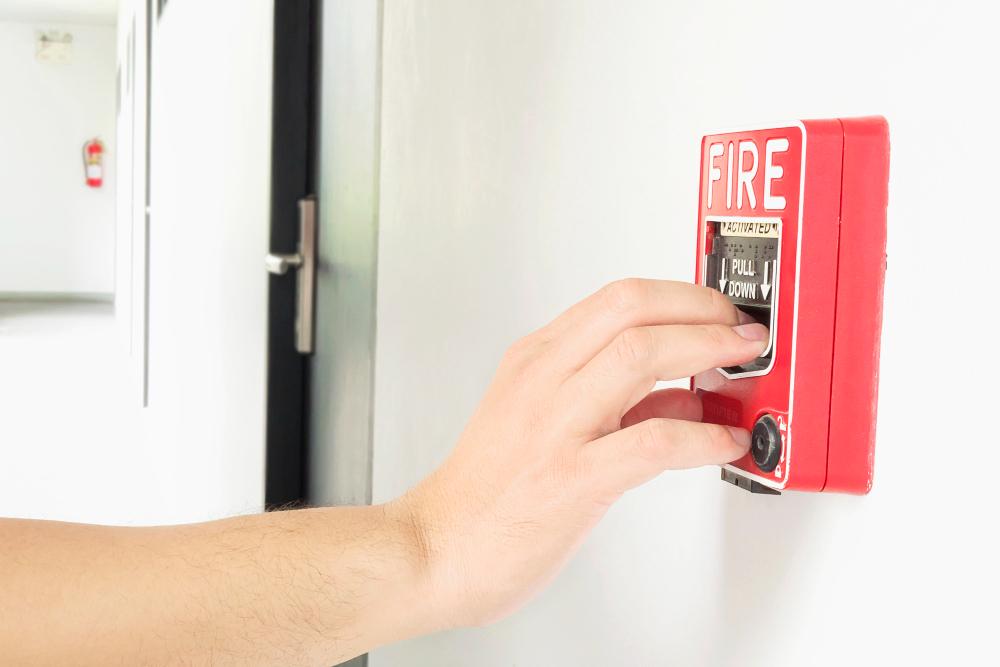
Manual pull stations allow occupants to trigger the alarm directly. These devices are mounted on walls near exits and stairwells. They provide a way to alert others if automatic detectors miss a fire.
Breaking the glass or pulling the lever sends a signal to the panel. This action activates alarms and strobes throughout the building immediately. It gives people control over the emergency notification process.
Staff training includes instructions on when and how to use these stations. Quick activation can save lives before smoke spreads to other areas. Regular drills help employees remember the location of these devices.
Tamper-resistant designs prevent accidental or malicious activation in public spaces. Covers protect the mechanism while remaining easy to break in emergencies. Maintenance checks verify that the internal switches function properly.
Integration with the main system ensures consistent alerting across all zones. The control panel logs the time and location of manual activations. This data helps investigators determine the origin of the incident later.
Key Takeaway
Choosing the right system depends on your building size and risk profile. Assess fire detection and alarm systems in the Philippines so the technology fits your specific operational needs. Proper selection enhances safety and compliance for your facility.

 English
 Arabic
 French
 Spanish
 Portuguese
 Deutsch
 Turkish
 Dutch
 Italiano
 Romaian
 Portuguese (Brazil)
 Greek