


How Does Hopeway AMD Approach Tyvek Flat Roll Pouch Production?
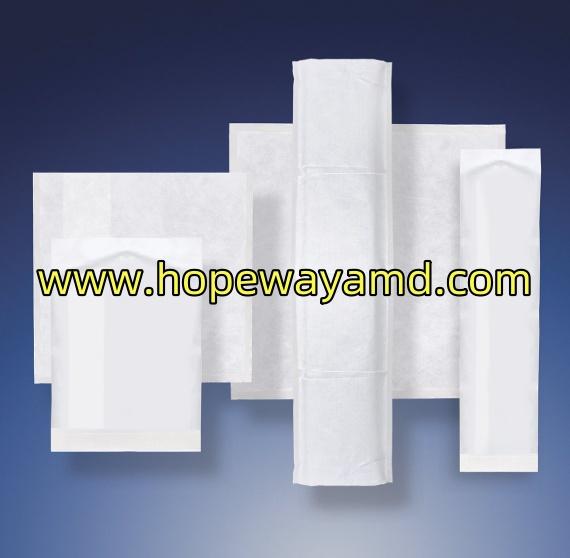
Medical packaging design involves more than choosing an outer layer for protecting individual products. Material flexibility, sealing compatibility, sterilization requirements, and storage conditions all influence the final packaging solution. For manufacturers seeking adaptable packaging materials, Tyvek Flat Roll Pouch from Hopeway AMD represents an option worth considering for medical and healthcare-related applications. Its roll-based format provides opportunities for customized packaging production while addressing the practical demands of professional packaging environments.
One of the key considerations in medical packaging is the ability to accommodate products with different shapes and dimensions. Standard packaging formats may not always match the requirements of specialized medical devices or customized product configurations. Roll-based materials offer manufacturers greater flexibility when developing packaging layouts. They can be processed according to specific production requirements, helping businesses coordinate material usage with their packaging equipment and product designs.
Material characteristics also play an important role in the development of medical packaging. A suitable packaging material needs to support the intended sterilization process while maintaining its functional properties throughout production and handling. Breathability, microbial barrier performance, and sealing compatibility are among the aspects that manufacturers should evaluate when selecting materials. These considerations help determine whether a particular packaging structure is appropriate for its intended use.
Another important factor is production efficiency. Medical packaging manufacturers often work with different product categories and changing packaging specifications. Materials that can be integrated into existing converting and sealing processes may help simplify production arrangements. A roll format allows manufacturers to plan cutting, forming, and sealing operations according to their equipment capabilities. This flexibility can also support packaging designs that require specific dimensions or configurations.
Sterilization compatibility deserves careful attention during material evaluation. Medical products may undergo different sterilization procedures depending on their intended applications and manufacturing requirements. Packaging materials should therefore be assessed according to the relevant sterilization method, processing conditions, and applicable validation requirements. Careful evaluation helps manufacturers establish whether their selected packaging structure can perform as expected throughout the complete process.
Storage and transportation are equally important parts of medical packaging planning. Products may move through manufacturing facilities, distribution channels, and healthcare environments before reaching their final destinations. Packaging should be designed with attention to handling conditions, sealing integrity, and protection against external contamination. Choosing appropriate materials and developing suitable packaging structures can help businesses manage these considerations more effectively.
For purchasing professionals, technical communication is another valuable part of supplier cooperation. Understanding material specifications, available formats, processing recommendations, and application possibilities makes it easier to evaluate potential packaging solutions. Manufacturers benefit from working with suppliers who can provide relevant product information and communicate clearly about material suitability. This cooperation supports more informed decisions during product development and purchasing.
As medical device designs and packaging requirements continue to change, flexible material options remain relevant to manufacturers seeking adaptable production arrangements. Rather than focusing on a single material characteristic, businesses should consider the complete packaging process, from initial design and material conversion to sterilization, storage, and distribution.
Choosing packaging materials is ultimately about creating a suitable connection between product requirements and manufacturing capabilities. Careful material selection can help businesses develop packaging structures that reflect their technical needs, production methods, and quality management objectives.
A new packaging project deserves a closer look at the materials behind it. Whether you are refining an existing design or considering a different production format, the right product information can help shape your next decision. Visit https://www.hopewayamd.com/product/ and browse the available medical packaging solutions. Take a moment to see what could fit your next packaging development project.

 English
 Arabic
 French
 Spanish
 Portuguese
 Deutsch
 Turkish
 Dutch
 Italiano
 Russian
 Romaian
 Portuguese (Brazil)