


Advanced Pump Engineering for Crop Protection
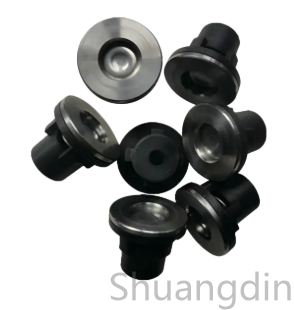
Agricultural spraying equipment requires a dependable pumping system to deliver liquids through hoses, distribution lines, and spray nozzles under controlled operating conditions. Pressure stability is particularly important because it influences spray formation, coverage consistency, and the performance of connected components. A pump designed for demanding agricultural applications must combine mechanical strength, effective sealing, and suitable material compatibility. Selecting a High Pressure Diaphragm Pump For Sprayers therefore involves evaluating the complete fluid system rather than focusing on pressure capability alone.
Diaphragm pumps generate fluid movement through the repeated displacement of a flexible membrane. As the diaphragm moves away from the pumping chamber, the internal volume increases and liquid enters through the inlet valve. When the diaphragm moves in the opposite direction, the chamber volume decreases and liquid is discharged through the outlet valve. This reciprocating process supports controlled fluid transfer, while the diaphragm separates the conveyed liquid from selected drive components. The structure can be suitable for agricultural spraying systems where chemical exposure and repeated operating cycles are important considerations.
Pressure management depends on the interaction between the pump and the connected spraying circuit. The pump supplies liquid, while pressure regulators and relief components help control system behavior as spray demand changes. Nozzle openings, hose dimensions, filter conditions, and the number of active outlets all affect the resistance encountered during operation. If a nozzle becomes blocked or a filter is restricted, pressure behavior may change and place additional stress on the equipment. Correct system configuration helps maintain stable delivery and reduces unnecessary mechanical loading.
Material engineering is central to durability. Agricultural spraying liquids may contain pesticides, fertilizers, additives, and other substances that interact differently with metals, plastics, and elastomers. The diaphragm must maintain flexibility while resisting chemical exposure and repeated deformation. Seals must retain their compression and sealing ability, while housing materials need adequate strength for vibration, pressure, and outdoor operating conditions. Depending on the application, manufacturers may use engineering plastics, aluminum alloys, and specialized elastomer compounds. Compatibility should be confirmed for every liquid-contact component.
Internal hydraulic design also affects performance. The geometry of the pumping chamber, inlet and outlet passages, and valve assemblies influences fluid movement throughout each operating cycle. Properly designed valve seats help regulate flow direction, while accurately finished sealing surfaces reduce leakage risks. The diaphragm's movement must remain consistent to support reliable suction and discharge. These details are particularly important in systems that operate for extended periods or experience frequent changes in spray demand.
Manufacturing accuracy helps maintain the consistency of these components. Molding processes need to produce diaphragms and polymer housings with controlled dimensions. Machined components require suitable surface quality at connecting and sealing interfaces. During assembly, correct positioning and fastening help prevent uneven compression and unnecessary stress on the diaphragm. Quality management may include dimensional inspections, material checks, leakage evaluation, and functional testing. Consistent production procedures help equipment manufacturers integrate pumps more reliably into different sprayer configurations.
Installation should follow the requirements of the complete fluid circuit. The suction line needs an appropriate arrangement to avoid excessive restrictions, sharp bends, or loose connections. Filters should be installed where they can protect the pump without creating unnecessary inlet resistance. Discharge hoses, fittings, and pressure-control components must be compatible with the intended working conditions. Secure mounting also helps reduce vibration and makes routine inspection easier. These practical details can influence performance as much as the pump's internal construction.
Maintenance is necessary to preserve reliable operation. Operators should regularly inspect hoses, clamps, filters, valves, seals, and visible housing surfaces. Leakage, unusual noise, reduced liquid delivery, or inconsistent spray patterns may indicate a blocked passage, damaged diaphragm, worn valve, or air entering the suction line. Identifying the cause early can help prevent more extensive equipment problems. After spraying, flushing should follow the chemical manufacturer's instructions and the pump supplier's recommendations to reduce residue accumulation and protect internal materials.
For agricultural machinery manufacturers, sprayer distributors, and professional equipment operators, selecting a suitable High Pressure Diaphragm Pump For Sprayers requires attention to pressure requirements, flow demand, chemical compatibility, and long-term serviceability. A reliable pump solution should also support straightforward installation and convenient replacement of serviceable components. SHUANG DIN Co Ltd. provides agricultural diaphragm pump solutions for different spraying applications, with further company information available at https://www.agriculturaldiaphragmpump.com/about/.

 English
 Arabic
 French
 Spanish
 Portuguese
 Deutsch
 Turkish
 Dutch
 Italiano
 Russian
 Romaian
 Greek