


How much Gas Can a Biogas Plant Produce Daily?
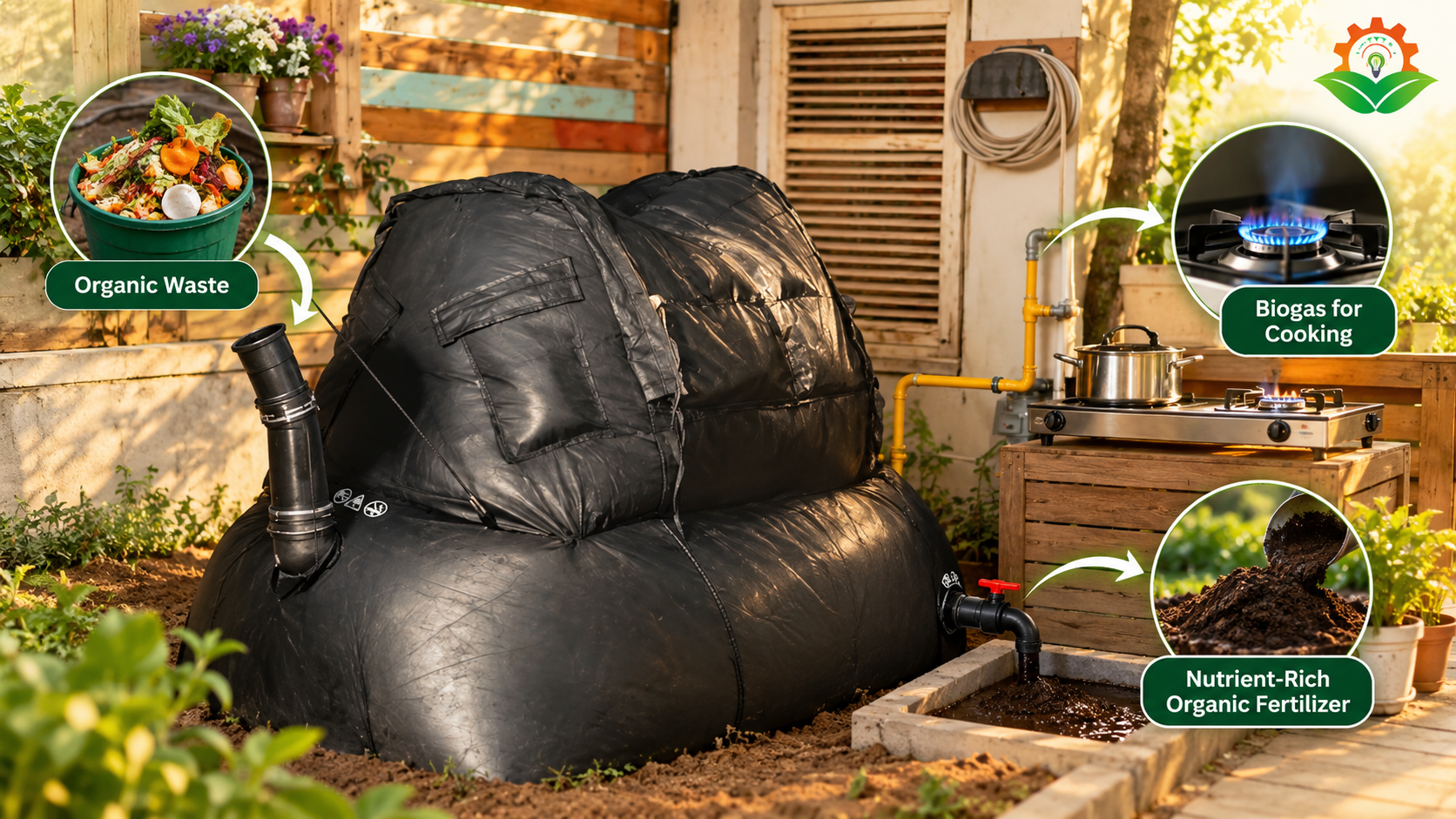
A dairy farmer with ten cattle wants to reduce monthly LPG expenses while making better use of animal manure. At the same time, a rural household hopes to convert kitchen waste into clean cooking fuel instead of sending it to landfills. Their first question is often the same: How much gas can a biogas plant produce every day? The answer depends on feedstock quality, digester size, operating conditions, and system design rather than a single fixed number.
A properly engineered biogas plant converts organic waste into methane-rich biogas through anaerobic digestion. When correctly sized and maintained, it provides a dependable renewable energy source for cooking, heating, and small-scale electricity generation while producing nutrient-rich bio-slurry for agricultural use.
How a Biogas Plant Produces Gas
A biogas plant is a sealed anaerobic digestion system where naturally occurring microorganisms decompose biodegradable waste in the absence of oxygen.
Common feedstock includes:
- Kitchen waste
- Cow dung
- Buffalo manure
- Poultry litter
- Agricultural residues
- Organic food processing waste
As microorganisms digest the organic material, methane-rich biogas is generated and stored inside the gas chamber. The remaining digested material becomes bio-slurry, an excellent organic fertilizer that improves soil fertility and crop productivity.
A properly engineered biogas plant design ensures efficient digestion, stable microbial activity, and consistent daily gas production.
What Determines Daily Gas Production?
No two installations generate exactly the same amount of gas. Daily output depends on several engineering and operational factors.
Factors That Influence Biogas Plant Gas Yield
The most important variables include:
- Daily feedstock quantity
- Feedstock quality
- Organic solids content
- Digester volume
- Hydraulic retention time
- Operating temperature
- Consistency of daily feeding
- Health of anaerobic microorganisms
For example, cattle manure typically produces stable methane output when supplied consistently, while food waste may generate higher gas volumes but requires careful feedstock balancing.
Proper retention time allows microorganisms to complete digestion before slurry exits the reactor, improving methane recovery.
Importance of Correct Plant Sizing
Daily gas production begins with selecting the correct digester capacity.
The system should be designed according to:
- Daily waste generation
- Number of users
- Cooking fuel requirements
- Future energy demand
- Available installation space
An undersized digester may not generate sufficient gas, while an oversized unit increases capital investment without proportional gains in productivity.
A professionally designed biogas plant for home provides reliable fuel when matched to actual household waste generation.
Feedstock Quality and Gas Yield
Feedstock quality has a direct impact on methane production.
Suitable materials include:
- Fresh cattle manure
- Kitchen waste
- Poultry litter
- Agricultural residues after preparation
- Food processing waste
Materials that should never enter the digester include:
- Plastics
- Chemicals
- Detergents
- Excess cooking oil
- Stones
- Metal objects
Maintaining a consistent daily feeding schedule allows beneficial bacteria to remain active, resulting in stable gas generation throughout the year.
Digester Design and Gas Storage Engineering
Efficient biogas plant systems depend on more than just the digester.
Important engineering considerations include:
- Digester geometry
- Hydraulic retention time
- Gas storage volume
- Pressure regulation
- Moisture removal systems
- Leak-proof piping
- Safety valves
Proper gas storage ensures a steady fuel supply during peak cooking hours, while correctly sized pipelines maintain stable pressure for appliances.
Modern systems are compatible with kitchen stoves, water heaters, and appropriately sized biogas-powered generators.
Bio-Slurry: A Valuable By-Product
Gas production is only one benefit of anaerobic digestion.
Every operating biogas plant also generates nutrient-rich bio-slurry containing nitrogen, phosphorus, potassium, and stabilized organic matter.
This organic fertilizer improves soil health, reduces dependence on synthetic fertilizers, and supports sustainable farming practices.
Proper slurry management maximizes the overall economic value of the installation.
Maintenance for Consistent Gas Production
Even a well-designed plant requires routine maintenance to sustain daily gas output.
Recommended practices include:
- Feeding the digester consistently
- Inspecting gas pipelines
- Removing condensate from gas lines
- Checking valves and regulators
- Cleaning inlet and outlet chambers
- Monitoring gas pressure
- Inspecting structural components
Preventive maintenance minimizes operational interruptions while preserving long-term methane production.
Key Features of Efficient Biogas Plant Systems
High-quality systems offer several operational advantages:
- Continuous gas generation
- Compact installation footprint
- Effective odor control
- Durable corrosion-resistant construction
- Reliable performance across varying weather conditions
- Low maintenance requirements
- Easy operation
- Scalable plant capacity
- Long operational service life
These characteristics allow biogas plant systems to deliver dependable renewable energy across a wide range of applications.
Applications Across Different Sectors
Biogas technology supports multiple sectors, including:
- Rural households
- Dairy and livestock farms
- Agricultural cooperatives
- Educational institutions
- Hostels
- Small hotels
- Farmstays
- Housing societies
- Community waste management projects
- Rural electrification initiatives
Both commercial installations and domestic biogas digester for homes and farms help convert organic waste into clean, renewable energy.
Cost and Investment Factors
The overall biogas plant price depends on several engineering and installation considerations.
Major cost factors include:
- Daily feedstock volume
- Digester size
- Tank construction material
- Required gas storage capacity
- Pipeline complexity
- Site preparation
- Integration with cooking appliances or generators
- Annual maintenance contracts
- Expected payback period
Although larger systems require greater initial investment, long-term savings from reduced fuel purchases and fertilizer production often justify the cost.
Buyer's Guide: Choosing the Right Manufacturer
Selecting experienced biogas plant manufacturers in India is essential for achieving reliable daily gas production.
Before investing, evaluate:
- Industry experience
- Digester engineering expertise
- Manufacturing quality
- Material standards
- Customization capability
- Installation expertise
- Technical support
- After-sales maintenance services
- Documentation and subsidy assistance
- Proven project track record
Working with a trusted Sigma Power Tech manufacturer and service provider ensures access to quality engineering, dependable installation, and long-term technical support. A professionally engineered Sigma Power Tech biogas plant is designed to maximize methane production while maintaining reliable performance throughout its operating life.
Common Mistakes That Reduce Gas Production
Several avoidable mistakes can significantly lower daily gas yield.
Avoid:
- Undersizing or oversizing the digester
- Inconsistent feedstock input
- Poor site selection
- Ignoring bio-slurry management
- Skipping preventive maintenance
- Improper gas piping installation
- Neglecting seasonal temperature effects on digestion efficiency
Careful planning and disciplined operation help maintain stable gas production year-round.
Conclusion
A biogas plant can produce a reliable daily supply of renewable energy when it is properly sized, professionally engineered, and consistently maintained. Daily gas output depends on feedstock quality, digester design, hydraulic retention time, and regular operation rather than a single standard production figure.
Instead of focusing only on the initial biogas plant price, prioritize quality engineering, proven installation expertise, and long-term operational support. A well-designed biogas plant delivers dependable fuel savings, nutrient-rich organic fertilizer, and sustainable waste-to-energy infrastructure that benefits households, farms, and industries for decades.

 English
 Arabic
 French
 Spanish
 Portuguese
 Deutsch
 Turkish
 Italiano
 Russian
 Romaian
 Portuguese (Brazil)
 Greek