


Durable Components for Industrial Power Infrastructure
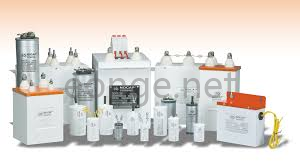
Medium voltage distribution networks connect substations, industrial facilities, commercial buildings, and regional power infrastructure. Their reliability depends not only on the cable itself but also on the components used to connect, terminate, and protect electrical pathways. Medium Voltage Cable Accessories help maintain electrical continuity and insulation integrity throughout these networks. Their design must account for voltage stress, material compatibility, environmental exposure, and installation conditions to support stable operation over time.
Insulation materials are fundamental to the construction of cable connection components. Cross-linked polyethylene, silicone rubber, and other engineered polymer materials may be used according to product structure and intended application. These materials provide electrical insulation while also needing to withstand mechanical stress, temperature variation, and environmental exposure. Material selection requires attention to dielectric properties, flexibility, aging behavior, and compatibility with the cable insulation system. Consistent material quality helps reduce variations that could affect electrical performance during long-term service.
Stress control is another essential design consideration. At cable joints and terminations, changes in conductor geometry and insulation structure can create localized electrical field concentrations. If these areas are not managed appropriately, electrical stress may become uneven and increase the possibility of insulation deterioration. Stress control components are designed to distribute the electrical field more evenly around critical connection areas. Their geometry, material characteristics, and positioning must match the intended cable configuration.
Sealing structures help protect internal electrical connections from moisture, dust, and other environmental contaminants. Outdoor installations may experience rain, ultraviolet exposure, temperature changes, and pollution, while underground installations can face moisture and soil-related conditions. Sealing materials and enclosure structures should therefore be selected according to the installation environment. Proper sealing also depends on surface preparation, correct assembly, and the use of compatible components. Inadequate sealing may allow contaminants to enter the connection area and affect insulation performance.
Mechanical construction influences the stability of the complete assembly. Joints and terminations must accommodate conductor connections while maintaining suitable insulation distances and mechanical support. Conductive connectors, insulating bodies, stress control elements, and outer protective layers need to work together as an integrated structure. Manufacturing consistency is important because dimensional variation or poor component alignment may affect the assembly process. Accurate production tolerances also help installation teams achieve repeatable results across multiple connection points.
In industrial power distribution, these components are used in applications such as substations, factories, renewable energy facilities, utility networks, and large commercial installations. Different cable structures and installation arrangements require different connection solutions. Engineers must confirm conductor material, cable insulation type, cross-sectional compatibility, screen construction, and installation environment before selecting the appropriate configuration. Compatibility between the cable and its connection components is essential for dependable operation.
Installation quality has a direct influence on service reliability. Cable preparation requires careful control of stripping dimensions, insulation surface condition, conductor connection, and component positioning. Incorrect cutting or surface damage can create weaknesses that may not be immediately visible. Installation teams should follow the manufacturer's instructions and use suitable tools for each assembly stage. Training and consistent work procedures help reduce avoidable installation defects, particularly in projects involving many connection points.
Electrical testing provides additional assurance before equipment enters service. Depending on the product and applicable standards, verification may include dimensional inspection, insulation checks, electrical performance testing, and examination of material quality. Production testing helps identify manufacturing defects, while installation testing can confirm that the completed cable system meets the project's acceptance requirements. Testing procedures should be selected by qualified personnel and coordinated with the applicable technical specifications.
Environmental durability is also important for long-term operation. Polymer materials may be exposed to heat, moisture, sunlight, chemical substances, and mechanical forces. Underground installations may require additional protection against water penetration and external pressure, while outdoor equipment needs suitable resistance to weathering. Product selection should consider these conditions rather than relying only on nominal electrical ratings. Maintenance teams should also inspect exposed components for signs of aging, contamination, or physical damage.
For procurement teams, supplier evaluation should include material traceability, manufacturing controls, technical documentation, installation guidance, and product compatibility. Clear communication about cable construction and site conditions allows manufacturers to identify suitable configurations and reduce the risk of incorrect selection. Consistent quality management is particularly valuable for large distribution projects where similar components are required across multiple locations.
As electrical infrastructure expands, dependable cable connections remain essential to distribution system performance. Engineers evaluating Medium Voltage Cable Accessories should consider insulation design, stress control, sealing, mechanical structure, and installation requirements as interconnected factors. For additional information about electrical equipment and available product categories, visit https://www.eonge.net/product and confirm that the selected components match the technical requirements of the intended cable system.

 English
 Arabic
 French
 Spanish
 Portuguese
 Deutsch
 Turkish
 Dutch
 Italiano
 Russian
 Portuguese (Brazil)
 Greek