


Bricklayers Corner Blocks: A Guide to Accurate Brickwork
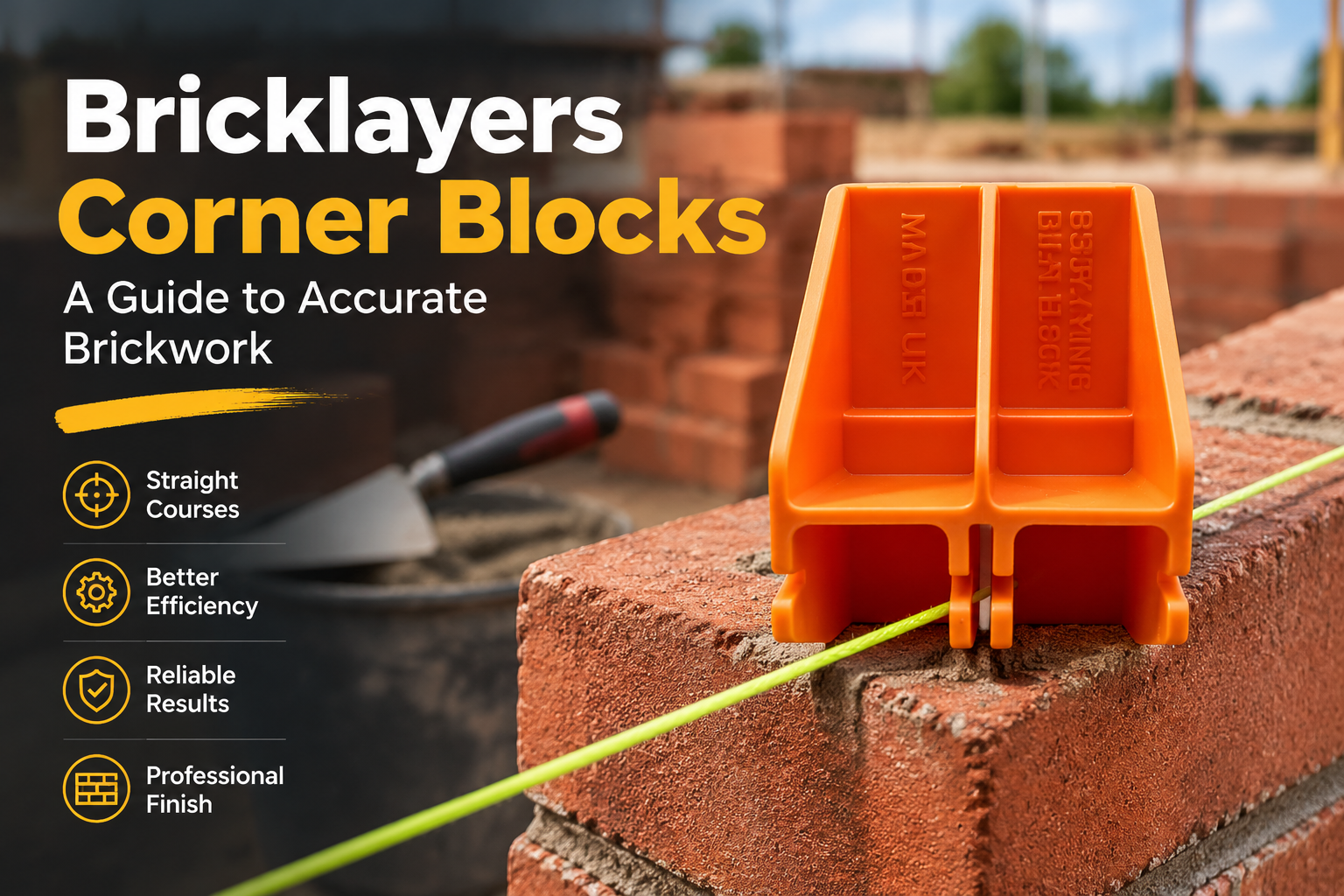
Accurate brickwork depends on careful preparation, reliable tools and consistent working techniques. Whether building garden walls, boundary walls or larger masonry structures, bricklayers need to maintain straight lines and level courses throughout the project. Even a small alignment error at the beginning can affect the appearance and stability of the finished wall. Using suitable line-setting equipment helps reduce these problems and supports a more professional result.
Bricklayers corner blocks are useful accessories for positioning and securing a bricklaying line between the corners of a wall. They help tradespeople establish a clear guide for laying bricks in straight, consistent courses. Understanding how these tools work, how to use them correctly and how to choose the right type can make everyday bricklaying tasks more efficient.
What Are Corner Blocks in Bricklaying?
Corner blocks are small tools designed to hold a bricklaying line securely around the corners of a wall. The line runs between the corner points and provides a visual guide for positioning each brick along the course.
Instead of relying entirely on visual judgement, bricklayers can follow the line to maintain a consistent direction and alignment. This is particularly useful when constructing long walls, where minor deviations can become more noticeable as the work progresses.
Line Blocks are available in different materials and designs to suit various working preferences. Some models are made from durable plastic, while others feature alternative materials and gripping mechanisms. The right choice depends on the type of brickwork, the user's experience and the conditions on site.
Why Are Corner Blocks Important for Accurate Brickwork?
Precision is essential when laying bricks. Courses must remain straight, joints should be consistent, and the wall must follow the intended dimensions. Reliable line-setting tools help achieve these requirements.
1. Maintaining Straight Brick Courses
A properly tensioned line provides a reference point for every brick in a course. By following this guide, bricklayers can reduce alignment errors and produce a cleaner finish.
This is especially important for long stretches of masonry, where small inaccuracies can gradually increase. A secure corner arrangement helps maintain a dependable guide from one end of the wall to the other.
2. Improving Working Efficiency
Setting up a bricklaying line correctly at the beginning of a course can reduce the need for repeated adjustments. Once the line is secured, the bricklayer can work along the wall with a clear reference point.
This can help streamline routine tasks, particularly on projects involving multiple courses or several sections of masonry.
3. Supporting Consistent Results
Consistency is an important part of professional bricklaying. A reliable line helps tradespeople maintain the intended wall alignment and check brick positions throughout the job.
Although the line does not replace a spirit level or careful measuring, it provides a useful visual guide that complements other essential tools.
How to Use Brick Line Blocks Correctly
Correct setup is important for achieving the best results from bricklaying equipment. Follow these practical steps when preparing a line for a new course.
Step 1: Prepare the corners
Make sure the corner sections are positioned correctly and that the previous courses are sufficiently level and aligned. Accurate starting points help establish a dependable guide for the next course.
Step 2: Attach the blocks securely
Fit the blocks to the appropriate brickwork or corner positions according to the product's design. Ensure each block grips securely and sits in the correct position.
Step 3: Stretch the line between the corners
Connect the bricklaying line between the blocks and apply enough tension to keep it straight. Avoid excessive force that could dislodge the blocks or damage the line.
Step 4: Check the alignment
Before laying additional bricks, check the line position and confirm that it matches the intended height and direction. Use a spirit level and other measuring tools where necessary.
Step 5: Lay bricks along the guide
Position each brick in relation to the line, taking care not to push against it. Continue checking the course as you work to maintain consistent alignment.
Step 6: Move the line for the next course
Once a course is complete, reposition the line to the required height. Repeat the setup process and check the alignment before continuing.
Choosing Between Different Types of Line Blocks
Not every bricklaying project requires the same equipment. Comparing the available designs can help you select a practical option for everyday site work.
Plastic Line Blocks
Plastic Line Blocks are popular for their lightweight construction and convenient handling. They are easy to carry between jobs and can be suitable for regular bricklaying tasks.
When choosing plastic models, look for secure gripping features, a practical shape and construction that can withstand normal site conditions. Check the manufacturer's guidance for compatibility with different brick sizes and line types.
Traditional Brick Line Blocks
Traditional Brick Line Blocks are designed to provide a secure attachment point for bricklaying lines. Depending on the model, the gripping mechanism and adjustment method may vary.
Choose a design that is straightforward to position and remove. Easy handling can be particularly valuable when moving between courses throughout the working day.
Corner Blocks for Different Projects
Different wall layouts may require different approaches to line setting. Straight garden walls, longer boundary walls and more complex masonry projects can involve varying corner arrangements.
Before purchasing, consider the type of work you undertake most frequently, the materials you use and whether the blocks are compatible with your existing line-setting equipment.
Common Mistakes to Avoid
Even practical tools require correct handling. Avoiding a few common mistakes can help improve accuracy and reduce unnecessary adjustments.
-
Using loose blocks: Poorly secured blocks can move during bricklaying and affect the line position.
-
Leaving the line slack: A loose line may sag between the corners, making it difficult to maintain a straight course.
-
Pulling the line too tightly: Excessive tension can dislodge blocks or cause the line to interfere with the brickwork.
-
Ignoring level checks: A straight line alone does not confirm that the wall is level or correctly measured.
-
Failing to inspect equipment: Worn gripping surfaces or damaged lines can compromise performance.
-
Rushing the setup: Taking time to position the blocks correctly can prevent repeated corrections later.
Regular checks are worthwhile, particularly when working on long walls or changing the line position frequently.
Maintaining Your Bricklaying Line Blocks
Simple maintenance helps keep bricklaying accessories ready for use. After finishing a job, remove mortar, dust and other debris that could interfere with the gripping mechanism.
Inspect the blocks for cracks, excessive wear or damaged components. Plastic models should be checked for weakened areas, especially around points that experience repeated pressure.
Store the blocks with other line-setting equipment in a suitable tool bag or storage compartment. Keeping the line separate from sharp tools can help prevent tangling and unnecessary damage.
Good storage habits also make it easier to locate the equipment when preparing for the next project.
Choosing Reliable Bricklaying Accessories
Quality accessories can make routine masonry work easier to organise. When comparing products, prioritise secure attachment, ease of use, durability and compatibility with your existing equipment.
Bricky’s Buddy offers practical tools and accessories for bricklayers and building professionals. Choosing suitable line-setting equipment alongside essential items such as spirit levels, measuring tapes and bricklaying lines helps create a dependable setup for everyday site work.
The best equipment is not necessarily the most complicated. A straightforward design that performs reliably, fits your working method and withstands regular use can provide lasting value.
Conclusion
Accurate brickwork starts with careful preparation and the correct tools. Corner blocks help secure a bricklaying line, providing a useful reference for maintaining straight courses and consistent alignment.
By selecting suitable equipment, securing the line correctly and checking each course as you work, you can reduce avoidable errors and support a professional finish. Regular cleaning, inspection and proper storage also help keep your equipment in good working condition.
Whether working on a small garden wall or a larger masonry project, dependable line-setting accessories remain a practical part of an organised bricklaying toolkit.
Frequently Asked Questions
1. What are bricklayers corner blocks used for?
Bricklayers corner blocks secure a bricklaying line between the corners of a wall. The line guides brick positioning and helps maintain straight, consistent courses during construction.
2. Are Plastic Line Blocks suitable for professional use?
Plastic models can be suitable for professional bricklaying when they are made from durable materials and provide a secure grip. Always check product specifications and compatibility before use.
3. What is the difference between corner blocks and Brick Line Blocks?
The terms often describe similar line-setting accessories. However, designs vary, so check how each product attaches to the brickwork and holds the line before purchasing.
4. How tight should a bricklaying line be?
The line should be sufficiently taut to remain straight without sagging. Avoid excessive tension, as this may dislodge the blocks or interfere with the brickwork.
5. How can I maintain bricklaying line blocks?
Remove mortar and dirt after use, inspect the blocks for cracks or worn gripping surfaces, and store them in a dry, organised location. Replace damaged equipment when it can no longer hold the line securely.

 English
 Arabic
 French
 Spanish
 Deutsch
 Turkish
 Dutch
 Italiano
 Russian
 Romaian
 Portuguese (Brazil)
 Greek