


Rollator Walker Buying Guide: How to Choose the Right Rollator with Seat, Lightweight & Bariatric Options
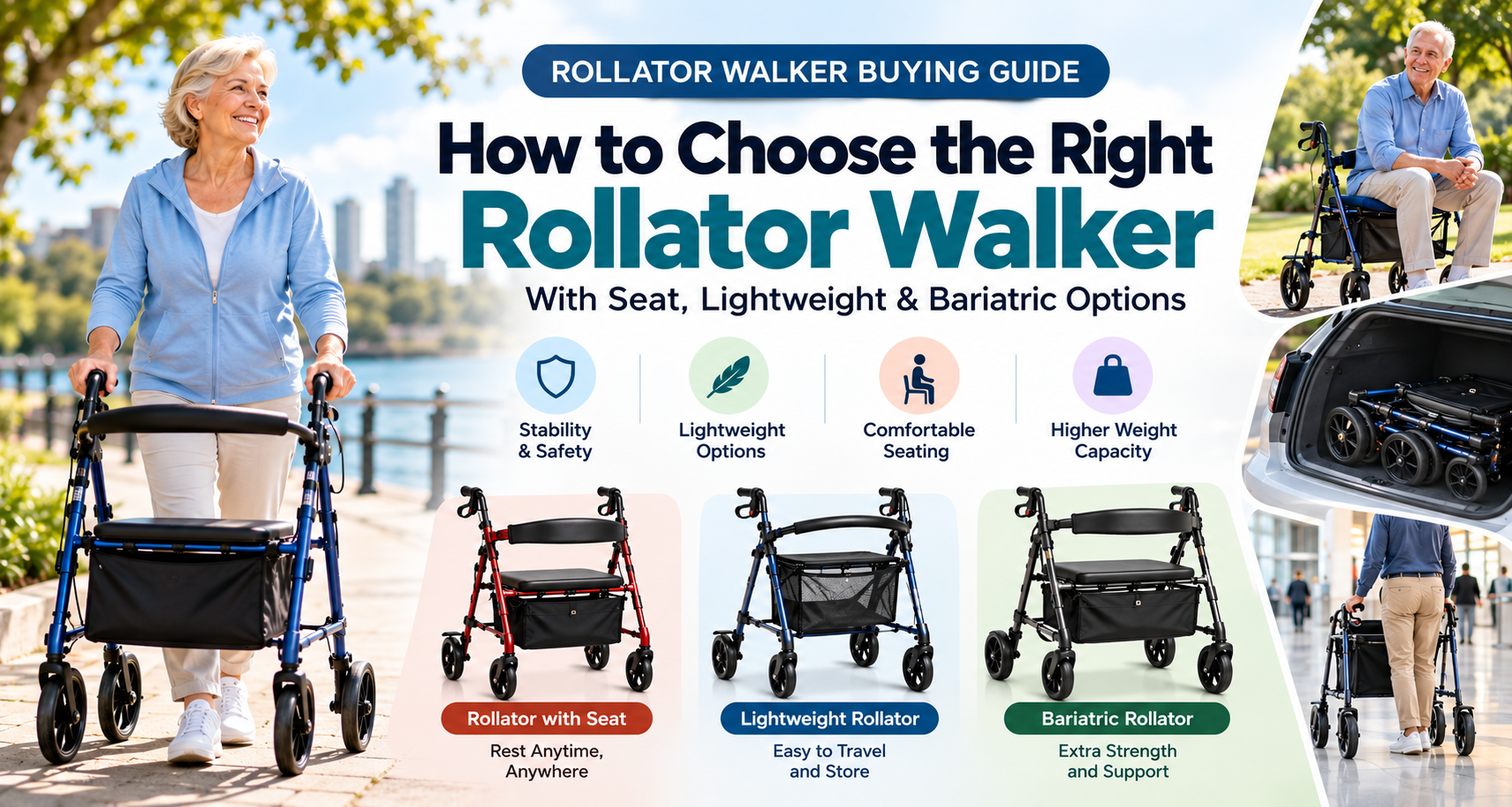
Staying mobile is one of the most important parts of living independently. Whether you are recovering from surgery, managing arthritis or balance problems, or simply want more confidence on your daily walks, the right mobility aid can change how you move through your day. For many people, that aid is a rollator walker.
Unlike a traditional walker that must be lifted with every step, a rollator walker rolls on wheels, giving you a smoother, more natural walking rhythm. Most models include hand brakes, ergonomic grips and a storage basket, and many come with a built-in seat so you can rest whenever you need to.
But with so many styles on the market, choosing one can feel overwhelming. Should you pick a rollator with seat for longer outings? Is a lightweight rollator better for travel and lifting into a car? And if you need extra support and a higher weight capacity, what should you look for in a bariatric rollator?
This complete guide answers those questions. You will learn how rollators work, how they differ from standard walkers, which features matter most, how to size and use one safely, and how to match the right model to your lifestyle. By the end, you will be ready to browse the full range of walkers and rollators at All Care Store with confidence.
What Is a Rollator Walker?
A rollator walker is a wheeled walking aid designed to provide stability, support and a convenient place to rest. Most rollators have three or four wheels, a lightweight frame, handlebars with hand-operated brakes, and often a padded seat and storage pouch or basket.
The term “rollator” comes from combining “roll” and “ambulator,” which describes the device well: it helps you ambulate, or walk, by rolling alongside you. Because the wheels glide over the ground, you do not need to pick the frame up and set it down with each step. This makes walking faster, more fluid and less tiring, especially over longer distances.
Common Parts of a Rollator
-
Frame: Usually aluminum or steel. Aluminum is lighter, while steel is often chosen for added strength.
-
Wheels: Typically 6 to 10 inches in diameter. Larger wheels handle outdoor surfaces better.
-
Handlebars: Height-adjustable grips that should sit at wrist level when your arms hang naturally.
-
Hand brakes: Loop or lever brakes that slow the rollator and lock it in place when you sit.
-
Seat: A padded or sling-style seat for resting, usually with a backrest.
-
Storage: A basket, pouch or under-seat bag for personal items, groceries or a handbag.
Understanding these parts makes it easier to compare models and decide which features are essential for you.
Rollator vs. Standard Walker: What Is the Difference?
People often use the words “walker” and “rollator” interchangeably, but they are not the same. Knowing the difference helps you choose a device that fits your needs and abilities.
Standard Walkers
A standard walker has four legs, usually with rubber tips or small front wheels. You lift it, move it forward, then step into it. This provides very stable, firm support, which is why standard walkers are often recommended after surgery or for people who need to put significant weight through their arms. The trade-off is a slower pace and more physical effort.
Rollator Walkers
A rollator walker has wheels on every leg and brakes you control by hand. It encourages a steadier, more natural gait and suits people who can walk with some balance and coordination but need support, a rest option, or help covering longer distances. Because most rollators include a seat and storage, they are ideal for errands, community outings and everyday use.
Which One Should You Choose?
If you need maximum stability and tend to lean heavily on your device, a standard walker may be safer. If you want smoother movement, the ability to sit and rest, and room to carry belongings, a rollator is often the better fit. Your doctor or physical therapist can tell you which type matches your strength, balance and medical needs.
Who Can Benefit From a Rollator Walker?
Rollators are used by people of many ages and abilities. You may benefit from one if you:
-
Get tired or short of breath when walking longer distances
-
Live with arthritis, joint pain or reduced leg strength
-
Experience balance issues or occasional unsteadiness
-
Have a condition such as COPD, heart conditions, or chronic fatigue that makes frequent rests helpful
-
Are recovering from a hip, knee or back procedure and have been cleared to use a wheeled aid
-
Want to stay active and independent while reducing the risk of falls
A rollator can also help caregivers, because it gives the person they support more freedom to move safely on their own. Always discuss your options with a healthcare professional before choosing a mobility aid, particularly if you have a complex condition.
Rollator with Seat: Walk Farther, Rest Whenever You Need
The single most popular feature on a modern rollator is the built-in seat. A rollator with seat lets you walk, then pause and sit down anywhere, whether you are in a shopping center, at a park, in a doctor’s waiting area or at the end of a long hallway at home.
Benefits of a Rollator with Seat
1. Built-in rest stops. If fatigue, pain or breathlessness strikes, you do not need to look for a bench. Lock the brakes, turn around and sit.
2. Greater confidence outdoors. Knowing you can rest at any time makes it easier to say yes to social events, appointments and walks with family and friends.
3. Better independence. A seat and storage bag combine into a mobile support station that carries your essentials, so you can handle daily tasks yourself.
4. Safer than improvising. Leaning on a shopping cart, a wall or a standard walker that was not designed for sitting can be risky. A rollator seat is built and tested for this purpose.
What to Look for in a Rollator with Seat
-
Seat width and depth: Make sure the seat is wide enough to sit comfortably and deep enough to feel secure.
-
Seat height: A typical seat height is around 19 to 22 inches. Your feet should be able to rest flat on the floor when seated.
-
Backrest: A padded or supportive backrest helps with posture and comfort during longer rests.
-
Brake system: Choose reliable locking brakes that you can engage easily with limited hand strength.
-
Stability: A wider wheelbase and four wheels generally offer more stability when you sit or stand.
-
Weight capacity: Check the maximum user weight and choose a model that exceeds your weight with a comfortable margin.
Safety Reminder When Using the Seat
Always lock both brakes before sitting down, and make sure the rollator is on level ground. Sit all the way back, and never use the seat to transport another person. When you are ready to stand, lock the brakes again, push up from the seat or armrests, and only then release the brakes and begin walking.
Lightweight Rollator: Easy to Lift, Fold and Travel With
If you travel frequently, use public transport, or load a mobility aid into a car trunk, weight matters. A lightweight rollator is built to reduce the effort of lifting, folding and carrying, without giving up the features you rely on.
How Light Is “Lightweight”?
Standard rollators can weigh anywhere from 15 to 25 pounds or more. A lightweight rollator is typically under about 15 pounds, and some ultra-light models weigh even less. Most use aluminum or other lightweight alloys for the frame, which keeps weight low while still providing reliable support.
Benefits of a Lightweight Rollator
-
Easier to lift into a vehicle: Ideal for people who drive or ride as passengers and need to load the rollator themselves or with a caregiver.
-
Travel friendly: Many lightweight models fold compactly for flights, trains, cruises and road trips.
-
Less strain on the user and caregivers: A lighter frame is easier to maneuver, especially around tight corners and in small homes or apartments.
-
Better for indoor use: A lighter, more compact frame can turn easily through doorways and around furniture.
What to Check Before Buying a Lightweight Rollator
Weight capacity: A lighter frame does not automatically mean lower capacity, but you should always confirm the maximum user weight listed by the manufacturer.
Folding mechanism: Look for a simple, one-hand or easy fold design that locks securely when open and when folded.
Wheel size and type: Smaller wheels suit indoor and smooth surfaces. Larger wheels help on sidewalks, grass and uneven ground.
Seat and backrest quality: Some ultra-light models use a slim seat or narrower backrest to save weight. Make sure comfort and support still meet your needs.
Durability: Light does not have to mean fragile. Choose reputable brands with clear warranty information.
Who Is a Lightweight Rollator Best For?
A lightweight rollator is a strong choice for active seniors, frequent travelers, people with limited upper body strength, and anyone who needs to lift or fold the device regularly. It also suits people who want a mobility aid that feels less bulky and more discreet.
Bariatric Rollator: Extra Strength, Width and Stability
Not every mobility aid is designed for every body. A bariatric rollator is built specifically for users who need a higher weight capacity, wider seat and stronger frame than a standard model offers.
What Makes a Rollator “Bariatric”?
Standard rollators typically support around 250 to 300 pounds. A bariatric rollator is reinforced to safely support significantly more, often in the range of 400 to 500 pounds or higher, depending on the model. To achieve this, manufacturers generally use heavy-duty steel or reinforced aluminum frames, stronger wheels and axles, upgraded brakes, and wider, deeper seats.
Key Features of a Bariatric Rollator
-
Higher weight capacity: The most important specification. Always confirm the listed maximum weight and choose a model with a comfortable safety margin.
-
Wider seat: More room helps you sit securely and comfortably, with less pressure on the hips and thighs.
-
Reinforced frame: Thicker tubing and stronger joints reduce flexing and improve long-term durability.
-
Heavy-duty wheels: Larger, sturdier wheels support more weight and roll more smoothly over different surfaces.
-
Strong braking system: Brakes must hold firmly under greater loads, both while walking and while the rollator is parked.
-
Wider wheelbase: A broader stance improves stability, though you should measure doorways and hallways to be sure it will fit.
Why Choosing the Right Bariatric Rollator Matters
Using a standard rollator beyond its rated capacity can put dangerous stress on the frame, wheels and brakes. That may lead to instability, equipment failure and a higher risk of falls. A properly rated bariatric rollator gives you the support you need and peace of mind that the device was engineered for your weight.
Tips for Buying a Bariatric Rollator
1. Measure your space. Wider frames need wider doorways. Check bathrooms, hallways and entryways at home.
2. Check seat height. You should be able to sit and stand with ease and keep your feet comfortably on the floor.
3. Consider the rollator’s own weight. Heavy-duty models are heavier than standard ones. If you need to lift the device often, factor this in.
4. Look for comfort features. Padded seats, supportive backrests and cushioned grips make a real difference during longer use.
5. Review warranty and support. A solid warranty is a good sign of confidence from the manufacturer.
How to Choose the Right Rollator Walker: A Step-by-Step Checklist
With so many options available, it helps to work through your decision methodically. Use this checklist to narrow down your choices.
Step 1: Define How You Will Use It
Will you mostly use the rollator at home, outdoors, or both? Indoor use favors a compact, easy-to-turn model. Outdoor use favors larger wheels and a sturdier build. If you plan to travel, a lightweight and foldable design should be a top priority.
Step 2: Confirm the Weight Capacity
Check the maximum user weight and compare it with your own. If you are close to or above the limit of a standard rollator, step up to a bariatric rollator rather than risk overloading the device.
Step 3: Decide Whether You Need a Seat
If you tire easily or want the freedom to rest, a rollator with seat is the practical choice. If you only need balance support and rarely stop, a simpler model may be enough.
Step 4: Compare Weight and Portability
Think about how often you will lift, fold or carry the rollator. If this will happen often, choose a lightweight rollator that you can handle comfortably.
Step 5: Check Adjustability
Handle height should be adjustable so you can set it to your body. Some rollators also offer adjustable seat heights, which helps if you are particularly tall or short.
Step 6: Test the Brakes and Controls
Hand strength matters. Make sure you can squeeze the brake levers and engage the locking mechanism easily. This is especially important for people with arthritis or limited grip strength.
Step 7: Look at Storage and Extras
A basket, pouch or tray can be extremely handy. Consider cup holders, cane holders, oxygen tank holders or other accessories if they fit your daily needs.
Step 8: Think About Style and Comfort
Mobility aids are personal. Choose a color and design you feel good about using, and focus on padded grips and a comfortable seat. When you like your rollator, you are more likely to use it consistently.
How to Size and Adjust Your Rollator Walker Correctly
A rollator that does not fit your body can cause poor posture, shoulder strain and even increase your risk of falling. Fortunately, adjusting it correctly is quick and simple.
Setting the Handle Height
Stand upright inside the rollator with your shoulders relaxed and your arms hanging naturally at your sides. The handle grips should line up with the crease of your wrist. When you grip the handles, your elbows should have a slight bend of about 15 to 20 degrees. If the handles are too low, you will hunch forward. If they are too high, your shoulders will rise and tire quickly.
Checking Your Posture
While walking, keep your head up, your back straight and your hips close to the rollator’s frame. Avoid pushing the rollator too far ahead of you, because that can make you lean and lose balance.
Checking Seat Comfort
When seated, your knees and hips should be at a comfortable angle, and your feet should rest flat on the floor. If the seat feels too low or too high for easy sitting and standing, ask whether the model offers an adjustable seat or consider another size.
If you are unsure about your measurements, a physical therapist or healthcare provider can help you find the right fit.
Rollator Safety Tips Every User Should Know
A rollator is a powerful tool, but it works best when used correctly. Keep these safety tips in mind.
-
Always lock the brakes before sitting or standing. This is the most important rule of rollator use.
-
Never sit while the rollator is rolling. Come to a full stop, apply both brakes and then sit.
-
Walk inside the frame. Keep your body between the handles and avoid walking behind the rollator or letting it get far ahead.
-
Take it slow on slopes and curbs. Use the brakes to control your speed on slopes, and approach curbs carefully and squarely.
-
Avoid overloading the basket. Heavy items can shift the center of gravity and make the rollator unstable. Check the maximum basket weight.
-
Keep walkways clear. Remove loose rugs, cords and clutter that could catch the wheels.
-
Wear supportive footwear. Non-slip shoes with good grip help you stay stable.
-
Use it only for its intended purpose. Do not stand on the rollator, use it as a ladder, or carry another person on the seat.
If you notice dizziness, pain or unusual fatigue while using your rollator, stop, sit if it is safe to do so, and contact your healthcare provider.
How to Maintain Your Rollator Walker
Regular care keeps your rollator safe and reliable for years. A few minutes of upkeep each month can prevent bigger problems.
Inspect the brakes. Make sure they engage firmly and hold the rollator in place. If they feel loose or weak, have them adjusted or replaced.
Check the wheels. Look for wear, cracks or debris stuck in the wheels and axles. Clean them regularly so they roll smoothly.
Tighten the hardware. Check bolts, handles and folding joints to make sure nothing has loosened over time.
Examine the seat and grips. Look for tears, cracks or excessive wear and replace parts if needed.
Clean the frame. Wipe the frame, seat and handles with a mild disinfectant and a soft cloth. Avoid harsh chemicals that could damage the materials.
Store it properly. Keep your rollator in a dry place away from extreme heat or moisture, which can damage the frame and components.
If you notice anything unusual, stop using the rollator until it has been checked or repaired.
Rollator Walker vs. Rollator with Seat vs. Lightweight vs. Bariatric: Quick Comparison
-
Standard rollator walker: Best for general use, balance support and everyday walking.
-
Rollator with seat: Best for people who need to rest often, enjoy longer outings or want built-in comfort.
-
Lightweight rollator: Best for travelers, caregivers and anyone who lifts or folds the device frequently.
-
Bariatric rollator: Best for users who need a higher weight capacity, a wider seat and a reinforced frame for maximum stability.
Many rollators combine these features. For example, you can find a lightweight rollator with seat or a bariatric rollator with seat and backrest. The key is to match the features to your body, your environment and your lifestyle.
Where to Buy a Rollator Walker
When you are ready to buy, choose a trusted retailer with a wide selection, clear specifications and helpful support. At All Care Store, you can explore a broad range of mobility aids in one place, from everyday rollators to specialty models designed for comfort, portability and strength.
Browse the complete collection of walkers and rollators to compare styles, features and weight capacities. Whether you need a rollator with seat for longer outings, a lightweight rollator for travel, or a bariatric rollator for extra support, you will find options to help you move with confidence.
FAQ
What is a rollator walker used for?
A rollator walker is used to provide balance, support and mobility assistance while walking. Its wheels allow smooth movement without lifting, and most models include brakes, a seat and storage, making it a practical aid for daily activities and longer distances.
Is a rollator with seat better than a regular walker?
It depends on your needs. A rollator with seat is better if you tire easily, want to rest during outings or prefer smoother walking. A regular walker offers firmer support and may be better if you need to lean heavily on the device. A healthcare professional can help you decide.
How much does a lightweight rollator weigh?
Most lightweight rollators weigh under about 15 pounds, and some are even lighter. Standard models are often heavier. Always check the manufacturer’s listed weight and compare it with your ability to lift and carry the device.
What is the weight limit on a bariatric rollator?
Bariatric rollators are commonly rated for 400 to 500 pounds or more, depending on the model. Always confirm the exact capacity before buying, and choose a rollator that comfortably exceeds your body weight.
Can I use a rollator walker outdoors?
Yes. Many rollators are designed for outdoor use, especially those with larger wheels that handle sidewalks, paths and slightly uneven surfaces. Use caution on steep slopes, loose gravel, wet surfaces and curbs.
How do I know if a rollator is the right height for me?
Stand inside the rollator with your arms relaxed at your sides. The handles should line up with the crease of your wrist, and your elbows should bend slightly when you grip them.
Can I travel with a rollator walker?
Yes. Many lightweight rollators fold compactly and are suitable for car trips, public transport and even air travel. Check the airline or transport provider’s policy before you go.
How often should I replace or service my rollator?
There is no single rule, since it depends on how often you use it and the conditions it faces. Inspect it regularly, and replace worn brakes, wheels or grips promptly. If the frame is bent or damaged, stop using it and replace it.
Conclusion: Find the Rollator That Moves With Your Life
Choosing a rollator walker is about more than picking a product. It is about protecting your independence, your safety and your confidence. A rollator with seat gives you freedom to rest and enjoy longer outings. A lightweight rollator makes travel and daily handling effortless. A bariatric rollator delivers the strength, width and stability that many users need to move safely.
Take time to consider how you will use your rollator, confirm the weight capacity, check the fit and features, and speak with your healthcare provider if you have any concerns. With the right information, you can choose a rollator that suits both your body and your lifestyle.
Ready to find yours? Explore the full selection of walkers and rollators at All Care Store and take the next step toward safer, more confident mobility.
Disclaimer: This article is for general information only and is not medical advice. Always consult a doctor, physical therapist or qualified healthcare professional before choosing or using a mobility aid.

 English
 Arabic
 French
 Spanish
 Portuguese
 Deutsch
 Turkish
 Dutch
 Italiano
 Romaian
 Portuguese (Brazil)
 Greek