


How to Use AI SEO Tools to Improve Website Rankings in 2026
Introduction
Search engine optimization is becoming more data-driven, competitive, and complex. Businesses can no longer depend only on basic keyword placement and traditional link-building techniques to improve their search visibility. Search engines now evaluate content relevance, search intent, website experience, topical authority, and overall content quality. As a result, marketers need smarter ways to manage their SEO strategies.
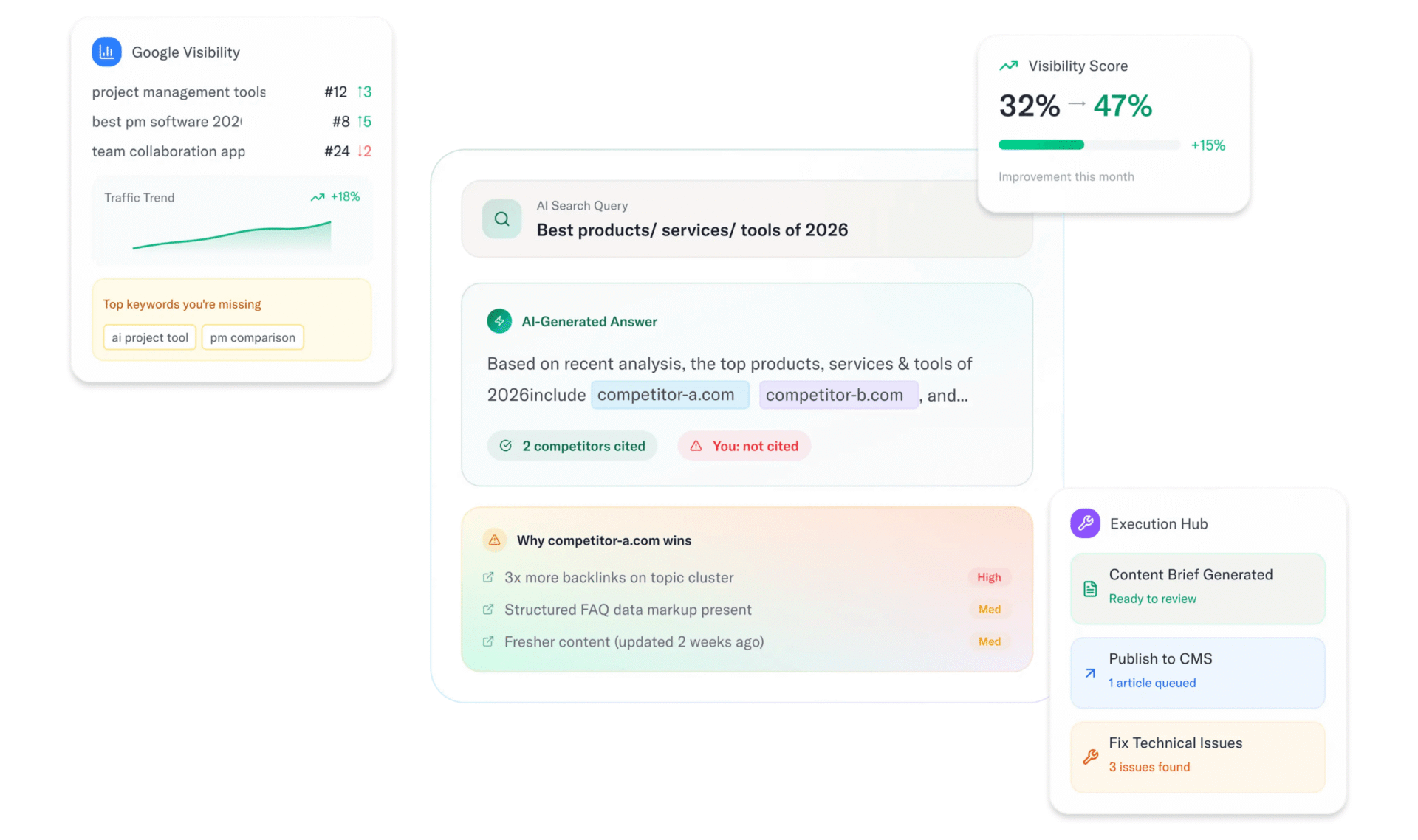
AI SEO tools are changing how businesses approach search engine optimization. These tools help analyze keywords, identify content opportunities, evaluate competitors, optimize website pages, and monitor ranking performance. Instead of spending hours collecting and organizing SEO data manually, marketers can use artificial intelligence to streamline repetitive tasks and make more informed decisions.
In 2026, using AI-powered SEO solutions can help businesses build more efficient optimization workflows while keeping their strategies aligned with changing search engine requirements.
1. What Are AI SEO Tools?
AI SEO tools are software solutions that use artificial intelligence, machine learning, and data analysis to support search engine optimization activities. They help marketers understand search patterns, discover relevant keywords, evaluate content quality, and identify opportunities to improve website performance.
Traditional SEO tools primarily provide keyword metrics, backlinks, ranking information, and technical website data. AI-powered solutions can go further by analyzing relationships between different data points and helping users interpret findings.
Common capabilities include:
-
Keyword research and search intent analysis.
-
Competitor SEO analysis.
-
Content optimization recommendations.
-
Topic and keyword clustering.
-
Website performance monitoring.
-
Technical SEO issue identification.
-
Content gap analysis.
-
Search visibility tracking.
These capabilities make AI SEO tools useful for freelancers, digital marketing agencies, ecommerce businesses, bloggers, and enterprise marketing teams.
2. How AI Is Changing Search Engine Optimization
Artificial intelligence is influencing how people search for information and how search engines interpret content. Search experiences increasingly focus on understanding the meaning behind queries instead of matching individual keywords.
This creates new opportunities and challenges for website owners.
For example, a user searching for "best project management software for small businesses" expects useful comparisons, relevant features, pricing information, and recommendations. A website that simply repeats the target keyword without addressing these needs is unlikely to provide a satisfying experience.
AI-powered SEO solutions help marketers understand these expectations by identifying related queries, common topics, and relevant content patterns.
They can also support optimization for emerging search experiences, including AI-generated search summaries and conversational search platforms.
However, AI recommendations should always be reviewed against real search data, audience needs, and Google's published guidance. Artificial intelligence supports SEO decisions but does not guarantee rankings.
3. Improve Keyword Research With AI-Powered Analysis
Keyword research is one of the most important parts of an effective SEO campaign. Selecting the right keywords helps businesses attract visitors who are genuinely interested in their products, services, or information.
AI-powered keyword research can help identify opportunities beyond obvious primary keywords.
For example, a company offering accounting software might target the primary keyword "accounting software." However, additional opportunities could include:
-
Accounting software for startups.
-
Small business bookkeeping solutions.
-
Automated invoice management software.
-
Cloud accounting tools for freelancers.
-
Best accounting software for growing businesses.
These related searches help businesses develop a broader keyword strategy.
AI SEO tools can also assist with grouping related keywords according to search intent and topic relevance. This makes it easier to organize website pages, create supporting articles, and build topical authority.
Instead of targeting unrelated keywords across multiple pages, businesses can develop a structured content strategy around relevant subjects.
4. Optimize Website Content With AI SEO Tools
Publishing content is not enough to achieve sustainable organic visibility. Website pages must provide useful information, address search intent, and maintain a logical structure.
AI SEO tools can help identify areas where content needs improvement.
For example, an optimization workflow may include:
Content structure: Review headings, subheadings, paragraph organization, and readability.
Keyword relevance: Identify whether important topics and related terms are naturally covered.
Search intent: Evaluate whether the page answers the questions users are likely to have.
Content gaps: Discover missing information by comparing the page with relevant competing content.
Internal linking: Identify relevant pages that could provide additional context and navigation opportunities.
These recommendations can help writers improve existing content without unnecessarily repeating keywords.
The goal should be to create genuinely useful resources rather than content designed exclusively around search engine algorithms.
5. Identify Competitor Strategies and Content Gaps
Understanding competitors is essential for building a successful SEO campaign. Businesses need to know which topics competing websites cover, what keywords generate their organic visibility, and where opportunities exist.
AI-powered competitor analysis can help organize this information.
For example, imagine a digital marketing agency competing with several established agencies. Competitor analysis may reveal that competing websites have dedicated pages for technical SEO, local SEO, ecommerce SEO, and AI search optimization.
If your website covers only general SEO services, these findings may highlight opportunities to expand your content.
Content gap analysis can help identify:
-
Relevant keywords competitors rank for.
-
Topics missing from your website.
-
Questions that existing pages do not answer.
-
Supporting articles needed for topical coverage.
-
Opportunities for better internal linking.
These insights help marketers prioritize content development based on relevance and business objectives.
6. Monitor Keyword Rankings and SEO Performance
SEO requires continuous monitoring because search visibility can change over time. New competitors enter search results, existing pages lose rankings, and search engines regularly update their systems.
AI SEO tools can simplify performance monitoring by helping marketers organize ranking information and identify potential changes.
Important metrics to monitor include:
-
Organic clicks.
-
Search impressions.
-
Average keyword positions.
-
Organic traffic.
-
Click-through rates.
-
Referring domains and backlinks.
-
Indexed website pages.
-
Conversions from organic search.
Google Search Console and Google Analytics 4 remain important sources of performance data. AI-powered tools can complement these platforms by helping interpret patterns and identify areas that deserve attention.
For example, if a page receives significant impressions but relatively few clicks, marketers can investigate whether its title tag, meta description, or search intent alignment needs improvement.
7. Can AI SEO Tools Support Technical SEO?
Technical SEO ensures that search engines can discover, crawl, render, and understand website content effectively.
Even high-quality content may struggle to perform if a website has serious technical problems.
AI-assisted SEO workflows can help identify and prioritize issues such as:
-
Broken internal links.
-
Missing metadata.
-
Duplicate title tags.
-
Incorrect canonical tags.
-
Redirect problems.
-
Indexing inconsistencies.
-
Missing structured data.
-
Website performance issues.
However, automated recommendations should be checked before implementation. Technical changes can affect crawling, indexing, and website functionality, so developers and SEO specialists should validate important fixes.
A combination of technical auditing, search data, and expert review creates a more reliable optimization process.
8. How to Choose the Right AI SEO Tool
Not every SEO platform offers the same functionality. Businesses should evaluate their requirements before selecting a solution.
Consider these factors:
Keyword research capabilities: Look for tools that help discover relevant keywords and understand their search intent.
Content optimization: Choose solutions that support content structure, relevance, and optimization.
Competitor analysis: Competitor insights can reveal keyword opportunities and missing topics.
Technical SEO support: Website auditing capabilities help identify problems that affect search performance.
Ease of use: A straightforward interface makes it easier for teams to integrate SEO into their daily workflows.
Reporting: Useful reporting features help monitor progress and communicate campaign performance.
Businesses should prioritize tools that support their actual SEO objectives instead of selecting software based on the number of features alone.
9. Improve Your SEO Workflow With Pyxa AI
Managing keyword research, content development, and website optimization through separate processes can consume significant time.
Pyxa AI provides AI-powered tools designed to support digital content and SEO workflows. Businesses and marketers can explore its SEO tools to simplify different stages of their optimization process.
Whether you are researching keywords, planning content, or improving website visibility, using an organized AI-assisted workflow can make SEO activities more efficient.
Explore Pyxa AI SEO Tools to discover tools that can support your content and search optimization strategy.
Conclusion
AI SEO tools are making search engine optimization more accessible, organized, and data-driven. From keyword research and competitor analysis to content optimization and technical auditing, artificial intelligence can support many important SEO activities.
However, successful SEO still requires strategic planning, accurate data, useful content, and continuous improvement. AI should strengthen the expertise of SEO professionals rather than replace critical thinking and human judgment.
Businesses that combine AI-powered workflows with effective SEO practices can build stronger search visibility and create better experiences for their audiences.

 English
 Arabic
 French
 Spanish
 Portuguese
 Deutsch
 Turkish
 Dutch
 Russian
 Romaian
 Portuguese (Brazil)
 Greek