


Pool Barrier Inspection in ACT: Common Issues Property Owners Should Check Before an Inspection
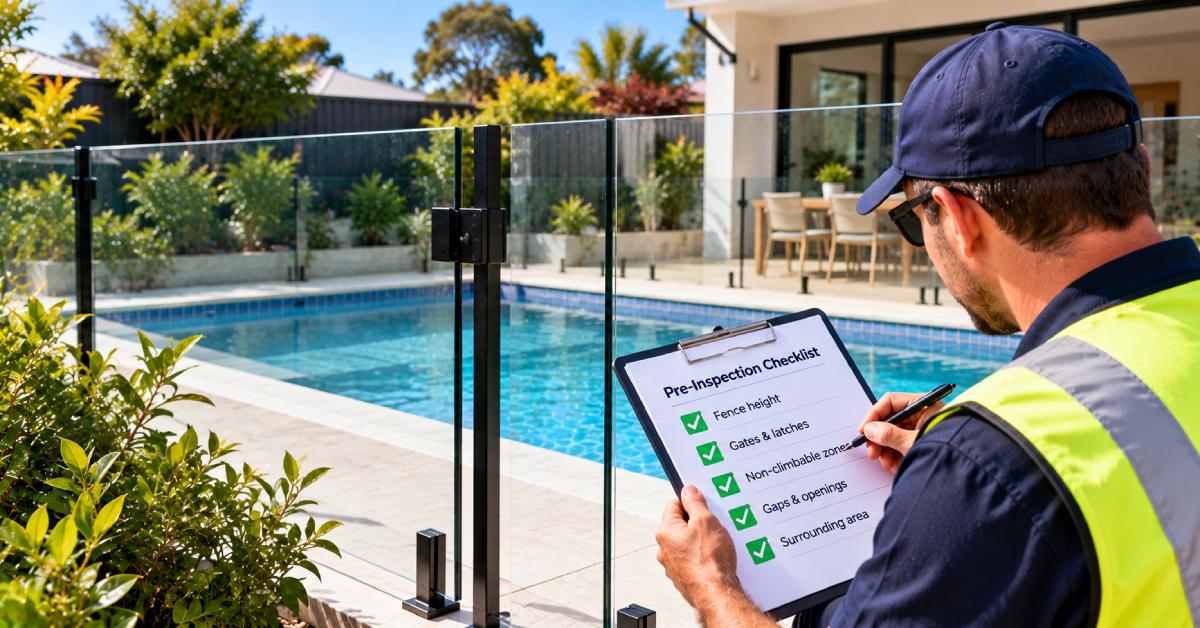
A swimming pool barrier can appear secure at first glance while still having issues that affect compliance. Gate operation, latch performance, fence condition, gaps, and changes around the pool area can all influence whether the barrier continues to meet current safety requirements.
At National Pool Safety, inspectors work with homeowners, property managers, real estate professionals, conveyancers, and body corporate managers across Canberra, the ACT, and surrounding NSW areas to assess pool barriers and identify compliance concerns.
Before arranging an inspection, property owners can carry out a basic visual review of the pool area. This does not replace a professional assessment, but it can help identify obvious maintenance problems before the inspector arrives.
Check How the Pool Gate Operates
The gate is one of the most important parts of a pool barrier because it is the normal access point into the pool area.
During a pool barrier inspection ACT, inspectors assess gates and latches along with the wider barrier system. National Pool Safety specifically checks whether gates operate correctly and whether the barrier remains structurally sound.
Before the inspection, open and close the gate several times and pay attention to whether it moves normally.
A gate that has become difficult to operate, has shifted over time, or no longer functions as intended should be checked before the inspection appointment.
Look at the Latch and Locking Components
A gate may look secure while the latch or locking mechanism has developed a problem.
Repeated use, weather exposure, movement in the gate, or previous repair work can affect how these components function.
National Pool Safety includes gate and latch functionality within its Canberra pool fence inspections, together with fence height, gaps, materials, and overall barrier condition.
Property owners should avoid assuming that a latch is satisfactory simply because the gate can be closed manually. The complete system needs to operate properly.
Check the Condition of the Fence
Pool fencing can change over time.
Weather, ground movement, wear, impact, corrosion, or alterations around the property can affect fence panels and supporting structures.
Walk around the entire barrier and look for anything that appears loose, damaged, unstable, or different from surrounding sections.
A professional pool inspection considers structural condition as well as measurements and functionality.
Even a relatively small damaged section can matter if it affects the effectiveness of the overall barrier.
Pay Attention to Gaps
Gaps are another area inspectors may assess.
National Pool Safety states that its inspections review fence height and gap measurements as part of determining whether a pool barrier meets relevant safety standards.
Before the inspection, look around the bottom of the fence, between panels, near gates, and anywhere the ground level may have changed.
Landscaping work, soil movement, paving changes, or repairs can sometimes alter the relationship between the barrier and surrounding surfaces.
Property owners should not attempt to estimate legal compliance from appearance alone, but obvious changes are worth identifying before the professional assessment.
Review the Area Around the Barrier
The effectiveness of a pool barrier can also be influenced by what is located around it.
National Pool Safety's swimming pool inspection services ACT assess the wider pool area as well as the barrier itself. The company describes its inspections as covering the pool barrier through to the surrounding environment. Furniture, landscaping, storage items, renovations, or other changes near the pool area can affect how the space functions.
This is why the inspection should not be treated as a fence-only exercise.
Check for Changes Since the Barrier Was Installed
A pool area may have passed an earlier inspection but changed since then.
Property owners may have added landscaping, replaced paving, changed a gate, repaired fencing, completed renovations, or altered nearby structures.
Any of these changes may affect how the barrier is assessed. A useful pre-inspection step is to think about what has changed around the pool since the last professional assessment.
If significant work has been completed, mention it when booking the inspection.
Do Not Ignore Small Maintenance Problems
Minor maintenance issues can become important when they affect the operation of a safety feature.
A gate that drags, a loose fence section, or a latch that works inconsistently should not be left simply because the barrier still appears generally intact.
The aim is to have the pool area functioning correctly before the inspector assesses it.
National Pool Safety provides detailed reporting where problems are identified, including recommended improvements or repairs and photographic evidence of issues.
What Happens If an Issue Is Found?
If a pool does not meet the required standard, the inspection process can help identify what needs to change.
National Pool Safety states that failed inspections are followed by reporting and recommendations, with reinspection available after the necessary adjustments have been made.
This means property owners do not have to rely on guesswork. Once the issues are clearly identified, the required work can be completed and the pool can be assessed again.
Pool Safety Compliance Around Canberra and the ACT
National Pool Safety provides pool barrier and compliance inspection services across Canberra, the ACT, Queanbeyan, Googong, Jerrabomberra, Murrumbateman, Bungendore, Sutton, and Yass.
Because properties in the ACT and surrounding NSW areas can fall under different requirements, owners should make sure the inspection service is appropriate for the location of the property.
Professional pool safety compliance Canberra assessment can help property owners understand the current condition of the barrier and whether additional work is required before certification.
Prepare the Whole Pool Area, Not Just the Fence
A good pre-inspection check should consider the barrier as a complete system.
Look at the gate, latch, fence panels, gaps, surrounding environment, and any recent changes around the pool.
The purpose is not to perform your own compliance inspection. It is to identify obvious maintenance concerns and make sure the area is ready for professional assessment.
Conclusion
Pool barrier compliance depends on more than having a fence around the water. Gates, latches, fence condition, gaps, structural integrity, and the surrounding environment all form part of the wider safety assessment.
National Pool Safety provides professional barrier inspections, detailed reporting, reinspection support, and pool safety compliance services across Canberra, the ACT, and surrounding NSW communities.
Preparing for a pool barrier inspection in the ACT? Contact National Pool Safety to arrange a professional inspection, identify any compliance issues, and take the next step toward a safe and compliant pool area.

 English
 Arabic
 French
 Portuguese
 Deutsch
 Turkish
 Dutch
 Italiano
 Russian
 Romaian
 Portuguese (Brazil)
 Greek