


Industrial Connection Solutions for Machinery and Workshops
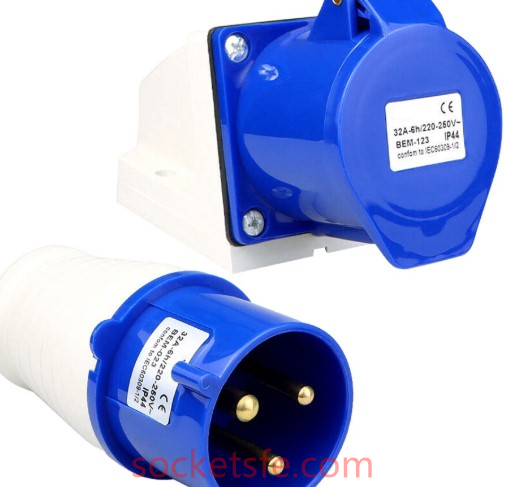
Industrial electrical equipment relies on compatible connectors to establish stable power connections between machinery and distribution systems. Selecting a suitable plug requires attention to voltage, current capacity, contact configuration, cable specifications, and environmental conditions. A 230V Industrial Plug is designed for applications using a compatible nominal 230-volt electrical supply, providing a practical interface for suitable industrial and commercial equipment. Its performance depends on the quality of its materials, contact construction, and compatibility with the complete electrical installation.
The outer housing is an important structural component. Manufacturers may use engineering plastics or other insulating materials selected for mechanical strength, electrical insulation, and resistance to routine industrial handling. Housing design influences grip, cable entry, internal contact positioning, and the ability to withstand ordinary wear. In environments where connectors are frequently moved or connected and disconnected, a durable enclosure can support convenient operation. Material selection should also account for temperature variation, dust, moisture, and possible contact with oils or cleaning substances.
The internal contact system is responsible for transferring electrical power between the plug and its corresponding socket. Copper and copper-alloy materials are commonly considered because of their electrical conductivity and mechanical properties. Contact geometry must match the receiving socket to support proper engagement, while suitable surface finishes can help manage oxidation and wear during repeated use. Terminal construction is also important because conductors must be secured correctly to maintain reliable electrical contact. Proper assembly helps reduce the possibility of loose connections and unwanted heat generation.
Voltage compatibility should always be checked alongside current capacity and electrical configuration. Buyers need to verify rated voltage, rated current, frequency where applicable, pole arrangement, and grounding requirements. A plug designed for a nominal 230-volt supply may not be compatible with every installation using that voltage because regional connector standards and electrical arrangements can differ. Equipment documentation and local electrical regulations should therefore guide product selection. The matching socket must have the appropriate mechanical and electrical configuration.
Different industrial environments create different requirements for connector construction. Manufacturing facilities may use plugs for machinery, production equipment, and auxiliary power connections. Workshops may require connectors for compatible maintenance tools and portable equipment, while commercial installations may prioritize convenient equipment servicing. Outdoor applications introduce additional considerations, including rain exposure, dust, and temperature changes. Buyers should check the ingress protection rating and ensure that the plug and socket provide suitable protection as a connected assembly.
Cable compatibility also contributes to connection reliability. The cable entry must accommodate the intended cable diameter, while the terminal arrangement should support the conductor type and size specified by the manufacturer. Strain-relief structures help reduce mechanical stress on cable terminations when equipment is moved or handled. During installation, each conductor must be connected to the correct terminal according to the product's wiring diagram. Protective earthing and circuit protection must also comply with the electrical system design and applicable safety requirements.
For distributors and equipment manufacturers, detailed technical documentation supports efficient product sourcing. Important information includes rated voltage, rated current, contact configuration, protection rating, housing material, supported cable range, and compatible socket models. Consistent product identification makes it easier to compare alternatives and manage replacement components. For international procurement, checking the relevant standards and connector formats before shipment can help avoid compatibility problems during equipment installation.
When selecting a 230V Industrial Plug, buyers should consider the electrical supply, equipment requirements, cable specifications, and operating environment together. Matching the connector with the correct socket helps establish a suitable power interface for the intended application. For industrial plugs, sockets, and related electrical connection products, visit https://www.socketsfe.com to explore available solutions for machinery and industrial power distribution.

 English
 Arabic
 French
 Spanish
 Portuguese
 Deutsch
 Turkish
 Dutch
 Italiano
 Romaian
 Portuguese (Brazil)
 Greek