


Educational Mobile App Ideas With Useful Features
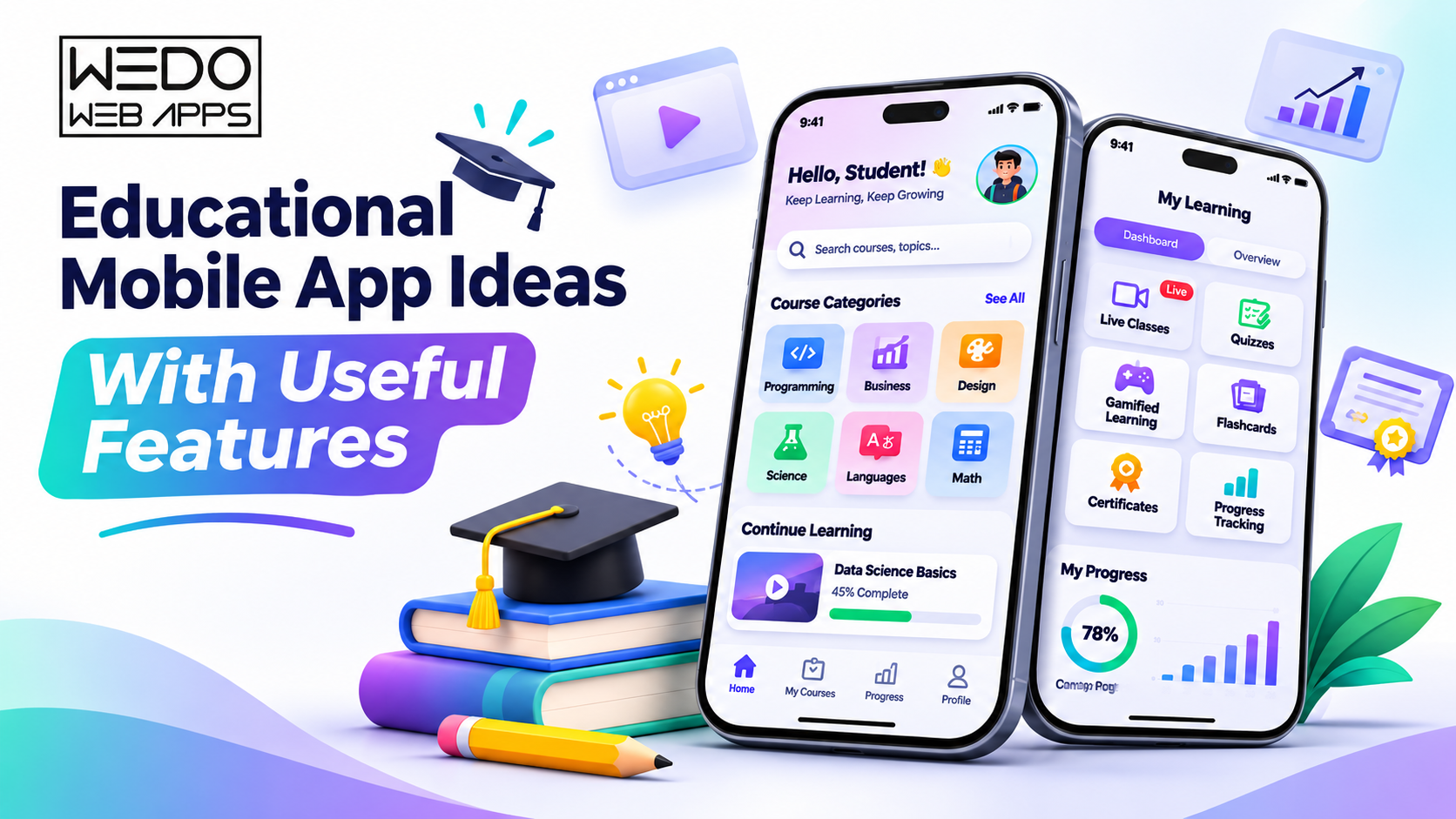
Mobile applications have changed how students access educational resources and manage their studies. From attending virtual classes to practising mathematics and learning new languages, smartphones have become useful tools for everyday education. This shift has created opportunities for businesses, educational institutions, and entrepreneurs to develop applications that address specific learning challenges.
Choosing the right educational app ideas is an important starting point. A useful application should solve a genuine learning problem, provide a convenient experience, and encourage users to participate regularly.
Educational App Ideas That Address Real Learning Needs
Different students have different learning requirements. Some need academic support, while others want to develop practical skills outside their regular curriculum. Here are some application concepts worth considering.
1. AI-Based Study Planning Application
Students often struggle to organize assignments, revision sessions, and examination preparation. A smart study planner can create schedules, send reminders, track completed tasks, and suggest topics that need additional attention.
2. Virtual Classroom and Tutoring Platform
An online tutoring application can connect students with teachers through video classes, scheduled sessions, messaging, and digital learning materials. It can be useful for independent tutors, coaching institutes, and educational organizations.
3. Interactive Examination Preparation App
Students preparing for competitive examinations need regular practice and performance evaluation. An application with mock tests, subject-wise questions, timed assessments, and progress reports can help them identify areas that require improvement.
4. Language Learning Application
A language learning platform can combine vocabulary exercises, pronunciation practice, listening activities, and conversational lessons. Interactive challenges can encourage users to practise regularly.
5. Coding and Programming Learning App
Beginners can use a coding application to understand programming concepts through practical exercises, short lessons, and project-based challenges. It can introduce programming languages in a structured way.
6. Educational Games for Young Learners
Children can develop basic knowledge through puzzles, illustrated stories, spelling activities, and mathematics games. Age-appropriate content and simple navigation are important considerations for this type of application.
7. Career and Skill Development Platform
Students and young professionals can use a career-focused application to explore job roles, develop industry skills, practise interviews, and access professional learning resources.
Essential Features of a Successful Educational App
The usefulness of an educational mobile application depends on how well its features support the learning process. A complicated interface or unnecessary functionality can make students less interested in using the platform.
Some valuable features include:
-
Personalized learning: Recommend lessons and exercises according to individual progress.
-
Interactive assessments: Include quizzes, practice questions, and instant feedback.
-
Progress tracking: Display completed lessons, examination results, and learning milestones.
-
Offline accessibility: Allow students to access selected study materials without an internet connection.
-
Push notifications: Send reminders about classes, assignments, and study schedules.
-
Multimedia content: Combine videos, illustrations, audio lessons, and written resources.
-
Accessibility support: Include captions, adjustable text sizes, and screen-reader compatibility.
The right combination depends on the target audience. A children's learning application may need more visual interactions, while a professional training platform may require detailed course dashboards and assessment reports.
How Artificial Intelligence Is Changing Educational Apps
Artificial intelligence is introducing new ways to support digital learning. AI-powered applications can recommend educational resources, generate practice questions, and provide assistance with subject-related queries.
For example, a student struggling with a particular topic could receive additional explanations and relevant practice exercises. Language learning applications can also use speech recognition to support pronunciation practice.
However, AI should complement educational content rather than replace qualified instruction. Businesses must consider response accuracy, student privacy, and appropriate safeguards when introducing these capabilities.
What to Consider Before Developing an Educational App
Turning an idea into a functional product requires proper planning. Businesses should first identify their target audience and understand the learning problem they want to address.
The next step is deciding which features are essential for the first version. Starting with a minimum viable product (MVP) can help validate the concept without developing every planned feature immediately.
Technology selection also matters. Flutter and React Native are possible options for cross-platform mobile applications, while native development may be appropriate for projects requiring specific platform capabilities.
Developers should also consider data protection, user authentication, application performance, and future integrations. These decisions can influence how easily the application can be maintained as its user base grows.
Turn Your Educational App Idea into a Functional Product
A successful education application begins with a clear understanding of its users. Whether the concept involves online tutoring, AI-assisted study support, coding lessons, or examination preparation, its features should make learning more accessible and organized.
mobile app development and software development services for businesses planning custom digital products. With appropriate planning, UI/UX design, and technical implementation, an educational concept can become a functional application for students, educators, and institutions.
If you are planning a learning platform, explore these educational app ideas for creating engaging mobile learning applications to find inspiration for your next project.
Conclusion
Educational mobile applications are creating new opportunities for students, teachers, and businesses to make learning more accessible and interactive. From AI-powered study planners and online tutoring platforms to coding applications and examination preparation tools, each concept can address a different learning requirement.
The key to building a useful educational application is understanding the target audience, selecting relevant features, and choosing the right development approach. With proper planning and a user-friendly design, businesses can turn promising educational app ideas into practical digital learning solutions that support long-term growth.

 English
 Arabic
 French
 Spanish
 Deutsch
 Turkish
 Dutch
 Italiano
 Russian
 Romaian
 Portuguese (Brazil)
 Greek