


Designing a SaaS User Authentication System Architecture for Modern Full-Stack Applications
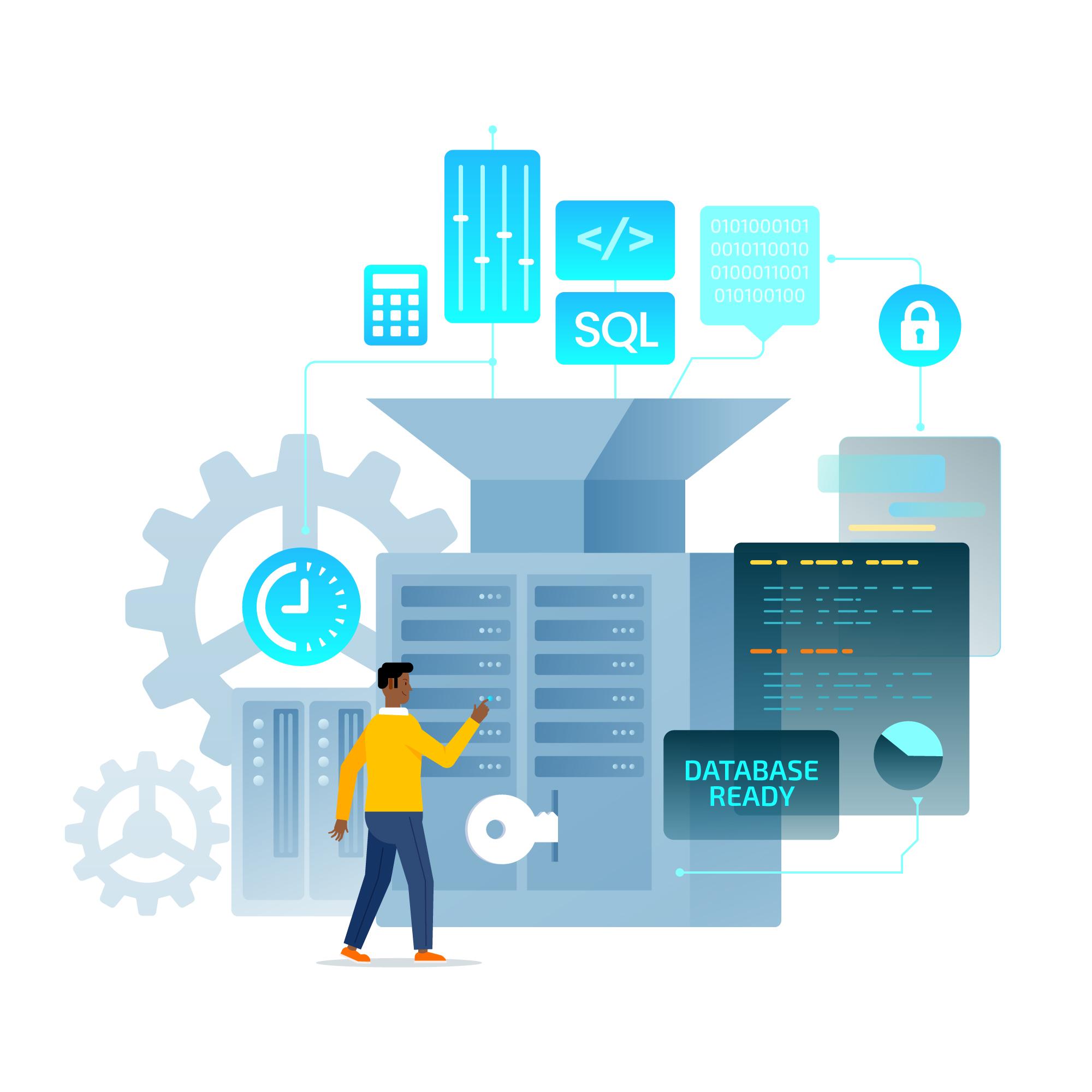
Constructing a triumphant Software-as-a-Service (SaaS) application necessitates a robust technical architecture capable of underpinning security, performance, and scalability.
Central to this foundational framework is the authentication system.Be the endeavor focused on developing a project management ecosystem, a subscription-driven software suite, or a multi-tenant enterprise application, end-users invariably demand a secure and dependable mechanism to access their accounts and associated application resources.
A robustly architected SaaS User Authentication System seamlessly integrates frontend interfaces, backend services, and database infrastructure to govern user identities and access permissions.
Leveraging contemporary full-stack technologies—including Next.js, TypeScript, Node.js, Better Auth, PostgreSQL, and Prisma—developers are equipped to construct highly structured and reliable authentication workflows.
A SaaS User Authentication System is responsible for verifying user identities before allowing access to an application. It determines whether someone is an authorized user and ensures that their account information remains protected.
Understanding Authentication Architecture in SaaS Development
Authentication constitutes the procedural validation of a user's identity prior to the authorization of application access.
Within a Software-as-a-Service (SaaS) ecosystem, this mechanism transcends the rudimentary verification of email credentials and passwords, encompassing a multifaceted array of functions such as account registration, session management, identity confirmation, and the establishment of secure communication channels across diverse application strata.
In a contemporary authentication architecture, responsibilities are strategically partitioned among the frontend, backend, and database layers.
The frontend serves as the interface for user interactions, whereas backend services are tasked with validating credentials and governing authentication requests.Meanwhile, the database retains pertinent account information and preserves the relational structures connecting users to other application entities.
By adopting this structured methodology, the application ensures that authentication remains streamlined and manageable, even as it expands its feature set and welcomes an increasingly large user base.
Building Authentication Workflows with Next.js and Better Auth
Next.js offers a versatile ecosystem for constructing comprehensive SaaS solutions, leveraging its robust frontend and server-side functionalities to seamlessly embed authentication across diverse application segments, thereby obviating the necessity for entirely isolated systems.
Better Auth streamlines the integration of authentication workflows within applications constructed using contemporary JavaScript and TypeScript ecosystems.
Rather than laboriously engineering each authentication mechanism from scratch, developers can leverage a dedicated framework to orchestrate these critical functionalities.
Common authentication workflows include:
- User registration and secure login.
- Email verification and account recovery.
- Password management and session handling.
- Social authentication integrations.
- Protected application routes.
- User account and profile management.
When such workflows are effectively integrated, users are afforded a seamless and uniform experience, while developers simultaneously exert greater command over the security architecture of the application.
Database Architecture and User Data Management
Within every Software-as-a-Service (SaaS) authentication framework, the database assumes a pivotal function by maintaining user profiles, account details, active sessions, and the relational structures essential for application operations.
For numerous full-stack SaaS initiatives, PostgreSQL emerges as a highly appropriate database solution, owing to its robust support for relational data architectures and the execution of intricate queries.
Within this ecosystem, developers leverage Prisma to articulate database schemas, orchestrate relational dependencies, and facilitate interaction with PostgreSQL through a disciplined, structured development pipeline.
Developers leveraging the Neon platform can simultaneously harness its managed PostgreSQL infrastructure.
A meticulously structured database schema must rigorously segregate user identity data from the broader application dataset.
This architectural distinction is of paramount importance when the platform accommodates complex hierarchies involving organizations, teams, subscription models, and a diverse array of user roles.
Building a secure and scalable SaaS platform requires a well-planned approach to user identity, session management, and access control. A reliable SaaS User Authentication System protects user accounts while supporting the complex requirements of modern full-stack applications.
Supporting Multi-Tenant Authentication and Authorization
Contemporary SaaS platforms predominantly adopt a multi-tenant architecture, wherein a unified application infrastructure serves numerous organizations.
Nevertheless, it remains imperative to enforce strict access controls, ensuring that each entity can interact exclusively with its own data.
Within this environment, authentication and authorization fulfill distinct, non-interchangeable functions: while authentication serves to verify and identify the user, authorization dictates the specific resources and data to which that verified user is entitled to access.
Consequently, an organization administrator possesses the capacity to oversee team compositions and configure billing parameters, whereas a standard team member is restricted to accessing only those projects explicitly assigned to them.
Crucially, these authorization protocols must be validated by backend services prior to the execution of any sensitive requests.
Developers must architect explicit relational frameworks connecting users, organizations, memberships, and roles.
Furthermore, every pertinent database query must rigorously enforce tenant ownership constraints to avert unauthorized access to data belonging to other organizations.
Such a methodology establishes a more robust and dependable basis for the development of collaborative SaaS platforms.
Implementing Secure Sessions and Access Protection
Session management constitutes a pivotal element within any robust authentication framework.
Upon successful user authentication, the application must employ a secure mechanism to preserve the authenticated state across disparate requests.
Developers are required to implement robust session expiration policies, enforce secure cookie attributes, and integrate comprehensive logout mechanisms.
Furthermore, sensitive authentication credentials must be strictly prohibited from being stored within insecure client-side environments to mitigate data exposure risks.
Supplementary security protocols encompass password hashing, the implementation of HTTPS, request rate limiting, mandatory email verification, and robust defenses against prevalent authentication exploits.
Furthermore, integrating multi-factor authentication establishes an essential additional security tier for applications managing sensitive corporate data.
Such measures effectively mitigate security vulnerabilities without compromising a reliable user experience.
Creating a Scalable Full-Stack SaaS Foundation
An effective authentication architecture must not merely satisfy present-day demands but also possess the scalability to seamlessly integrate with the expanding needs of future applications.
Architects ought to encapsulate authentication logic within modular, reusable services while decoupling authorization rules from discrete user interface elements.
Such a structural separation facilitates the seamless integration of advanced functionalities, including team invitation protocols, subscription-driven permission tiers, granular administrator controls, and third-party ecosystem integrations.
The integration of Next.js, Better Auth, TypeScript, PostgreSQL, Prisma, and Neon establishes a robust architectural framework for contemporary SaaS solutions.
By assigning each technology a distinct role within the system, this stack ensures cohesive development practices that span frontend interfaces, backend logic, and database management, thereby fostering consistency throughout the entire application lifecycle.
Conclusion
Constructing a robust SaaS user authentication system architecture demands meticulous orchestration across diverse application strata.
Whether managing user registration protocols, orchestrating session lifecycles, defining complex database relationships, or implementing multi-tenant authorization frameworks, each constituent element is instrumental in ensuring the comprehensive security and scalability of the full-stack environment.
The integration of contemporary technologies—including Next.js, Better Auth, PostgreSQL, Prisma, and TypeScript—enables developers to construct authentication frameworks that are inherently more maintainable and extensible.
Furthermore, a rigorously architected foundation furnishes the requisite flexibility to sustain expanding SaaS ecosystems, accommodate intricate user permission structures, and adapt to shifting business imperatives.

 English
 Arabic
 French
 Spanish
 Portuguese
 Deutsch
 Turkish
 Dutch
 Italiano
 Romaian
 Portuguese (Brazil)
 Greek