


Why Quality Industrial Fasteners Are Essential for Modern Manufacturing
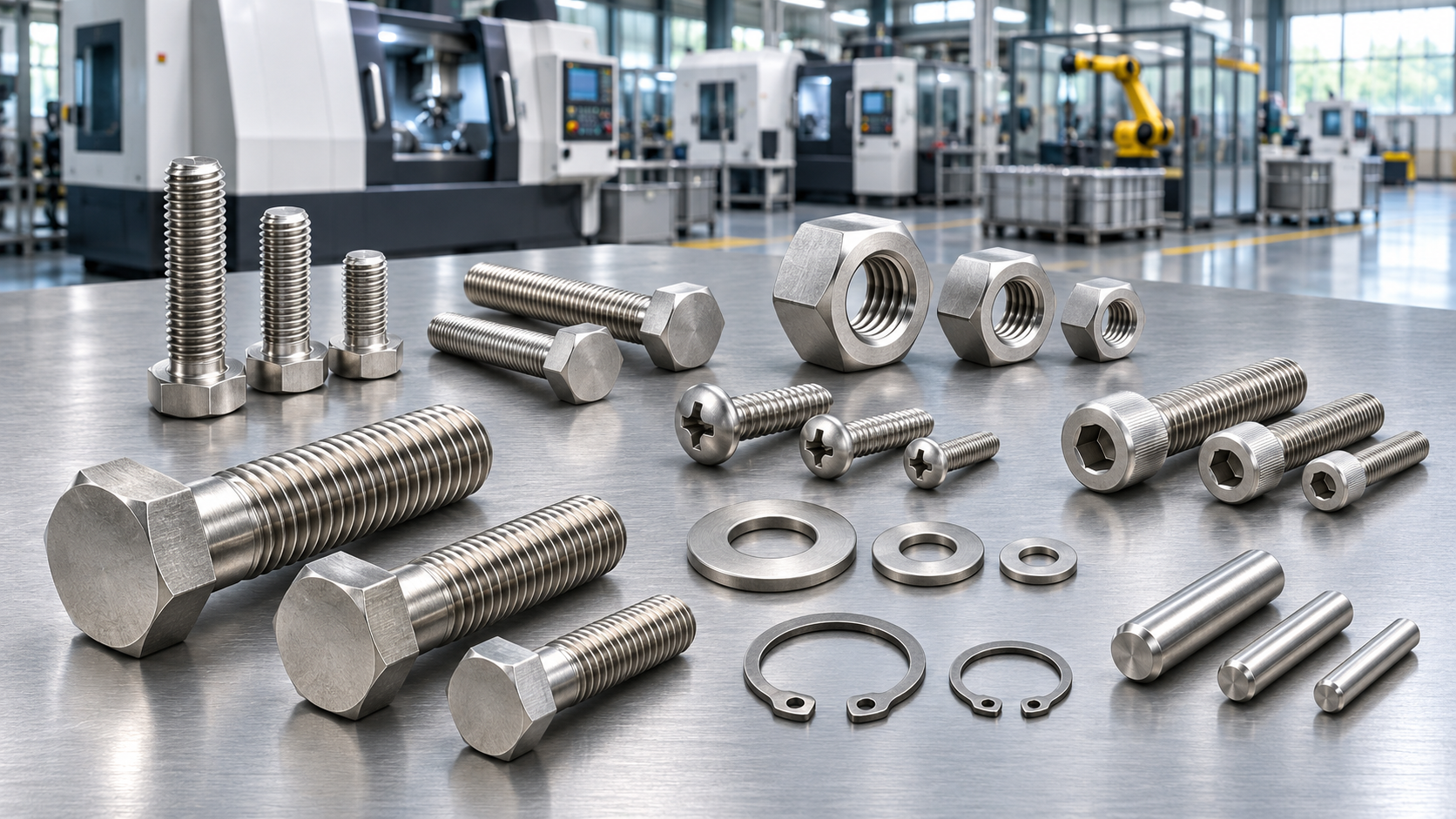
Modern manufacturing depends on thousands of components working together to deliver reliable products and equipment. Among these components, fasteners play a particularly important role in maintaining structural strength, assembly accuracy, and operational stability. From automotive production lines to heavy engineering equipment, the right fastening solutions help manufacturers create dependable mechanical connections.
Although fasteners are often small compared with the machines and structures they support, their quality can directly influence overall performance. Incorrect dimensions, unsuitable materials, or poor installation can lead to joint failures, equipment downtime, and increased maintenance costs. This makes selecting appropriate industrial fastening components an important consideration for every manufacturing business.
The Importance of Fasteners in Industrial Applications
Fasteners are mechanical components designed to join, secure, or retain different parts of an assembly. Their applications extend across automotive manufacturing, construction, agricultural machinery, electrical equipment, railways, and industrial engineering.
Different applications require different fastening solutions. Bolts and nuts are commonly used to create secure mechanical joints, while screws provide threaded connections for machinery and equipment assemblies. Washers help distribute loads and protect contact surfaces.
Other components, such as circlips and dowel pins, support component retention and accurate positioning. Each product serves a specific purpose, making correct selection essential for achieving the intended assembly performance.
Manufacturers should consider factors such as load conditions, vibration, operating temperatures, environmental exposure, and installation requirements before choosing a fastening component.
How Manufacturing Quality Influences Fastener Performance
Product quality begins with selecting suitable raw materials and maintaining control throughout the manufacturing process. The production of industrial fasteners involves operations that may include cutting, forming, machining, threading, heat treatment, surface finishing, and inspection.
Each stage contributes to the final characteristics of the product.
Dimensional accuracy is particularly important because fastening components must fit correctly within their intended assemblies. Incorrect thread dimensions, inconsistent lengths, or unsuitable tolerances can create installation difficulties and affect joint performance.
Material selection also matters. Carbon steel, alloy steel, and stainless steel are commonly used depending on the mechanical and environmental requirements of an application. Heat treatment and surface finishing may further influence hardness, strength, wear resistance, and corrosion protection.
Reliable manufacturing therefore requires appropriate process controls and inspection procedures. Depending on the product specification, these may include dimensional checks, hardness testing, mechanical testing, and material verification.
What Industrial Buyers Should Expect From Fasteners Manufacturers
Selecting a manufacturing partner is an important procurement decision. Businesses need suppliers that understand their technical requirements and can provide products suitable for their intended applications.
When comparing fasteners Manufacturers, purchasing professionals should evaluate more than the quoted price.
Manufacturing Experience and Product Range
A manufacturer should have capabilities relevant to the required product categories. Buyers should check whether the supplier can provide the necessary dimensions, materials, grades, and configurations.
A broad product range can also simplify sourcing when multiple fastening components are required for the same project.
Quality Inspection and Documentation
Quality assurance helps businesses verify that supplied products meet agreed specifications. Buyers should ask about inspection procedures, material certificates, testing capabilities, and batch traceability where applicable.
For specialized or critical applications, technical documentation should be discussed before production begins.
Compliance With Industry Standards
Industrial fastening products may need to comply with standards such as ISO, DIN, or ASTM, depending on their design and application.
Procurement teams should clearly identify the required standard, material grade, dimensional tolerances, and mechanical properties. This reduces the possibility of receiving components that appear similar but are technically unsuitable.
The Role of Material Selection and Corrosion Protection
Environmental conditions can significantly influence the service life of fastening components. Products used in outdoor equipment, industrial plants, and machinery exposed to moisture or chemicals may require additional corrosion protection.
Stainless steel is frequently selected for applications requiring corrosion resistance, while appropriately coated carbon steel may offer a practical solution for other operating environments.
However, coating selection should consider the base material, exposure conditions, friction requirements, and compatibility with the assembled components.
Engineers should also consider galvanic corrosion when dissimilar metals come into contact. Selecting compatible materials and suitable protective measures can help reduce premature deterioration.
Why Proper Fastener Selection Supports Manufacturing Efficiency
Incorrect fastening components can create problems throughout the production process. Poor fitment may increase assembly time, while inconsistent product quality can result in rejected parts, rework, and additional inspection costs.
Choosing suitable fasteners helps manufacturers maintain consistent assembly procedures and reduce avoidable disruptions.
A structured procurement process should include clearly documented specifications, approved material grades, dimensional requirements, and incoming quality checks.
Businesses should also maintain communication with suppliers regarding order quantities, production schedules, packaging, and delivery expectations. These practices help purchasing teams maintain a more predictable supply chain.
Exploring Industrial Fastening Solutions From EASCO
For businesses looking to source industrial fastening components, finding a supplier with relevant product categories and an understanding of manufacturing requirements is an important starting point.
EASCO offers a range of industrial products, including bolts, screws, nuts, washers, circlips, dowel pins, and CNC-machined components. These product categories serve different requirements across engineering, manufacturing, and industrial applications.
Businesses can explore the EASCO fasteners webpage to learn more about its fastening product range.
Before placing an order, buyers should communicate their technical drawings, material requirements, applicable standards, dimensions, and expected quantities. This helps establish whether the available products are suitable for their particular application.
Conclusion
Industrial fasteners contribute significantly to the strength, stability, and reliability of manufactured products. Their performance depends on several factors, including material selection, manufacturing precision, dimensional accuracy, surface treatment, and correct installation.
For procurement professionals, choosing suitable fasteners Manufacturers involves evaluating technical capabilities, quality procedures, product consistency, and supply reliability.
By focusing on these considerations, businesses can make informed sourcing decisions, improve assembly efficiency, and support dependable manufacturing operations.
Frequently Asked Questions (FAQs)
1. Why are industrial fasteners important in manufacturing?
Industrial fasteners connect and secure components in machinery, vehicles, equipment, and structures. Their quality and suitability influence assembly reliability and operational performance.
2. What are the most commonly used industrial fasteners?
Common types include bolts, screws, nuts, washers, studs, circlips, and dowel pins. Each component serves a different fastening, positioning, or retention purpose.
3. How do fasteners Manufacturers maintain product quality?
Manufacturers use appropriate raw materials, controlled production processes, dimensional inspections, and relevant mechanical or material testing to verify product specifications.
4. Which fastener material is best for industrial applications?
There is no single best material for every application. Carbon steel, alloy steel, and stainless steel are selected according to strength requirements, environmental conditions, and operating needs.
5. What information should buyers provide when ordering fasteners?
Buyers should provide product dimensions, material grades, applicable standards, thread specifications, quantities, technical drawings, and any special finishing or inspection requirements.
6. Where can businesses explore EASCO's industrial fasteners?
Businesses can visit EASCO's official fasteners webpage to explore its range of industrial fastening products and review the available product information.

 English
 Arabic
 French
 Spanish
 Portuguese
 Turkish
 Dutch
 Italiano
 Russian
 Romaian
 Portuguese (Brazil)
 Greek