


Why Alloy Steel Round Bars Are Essential for Modern Industrial Engineering
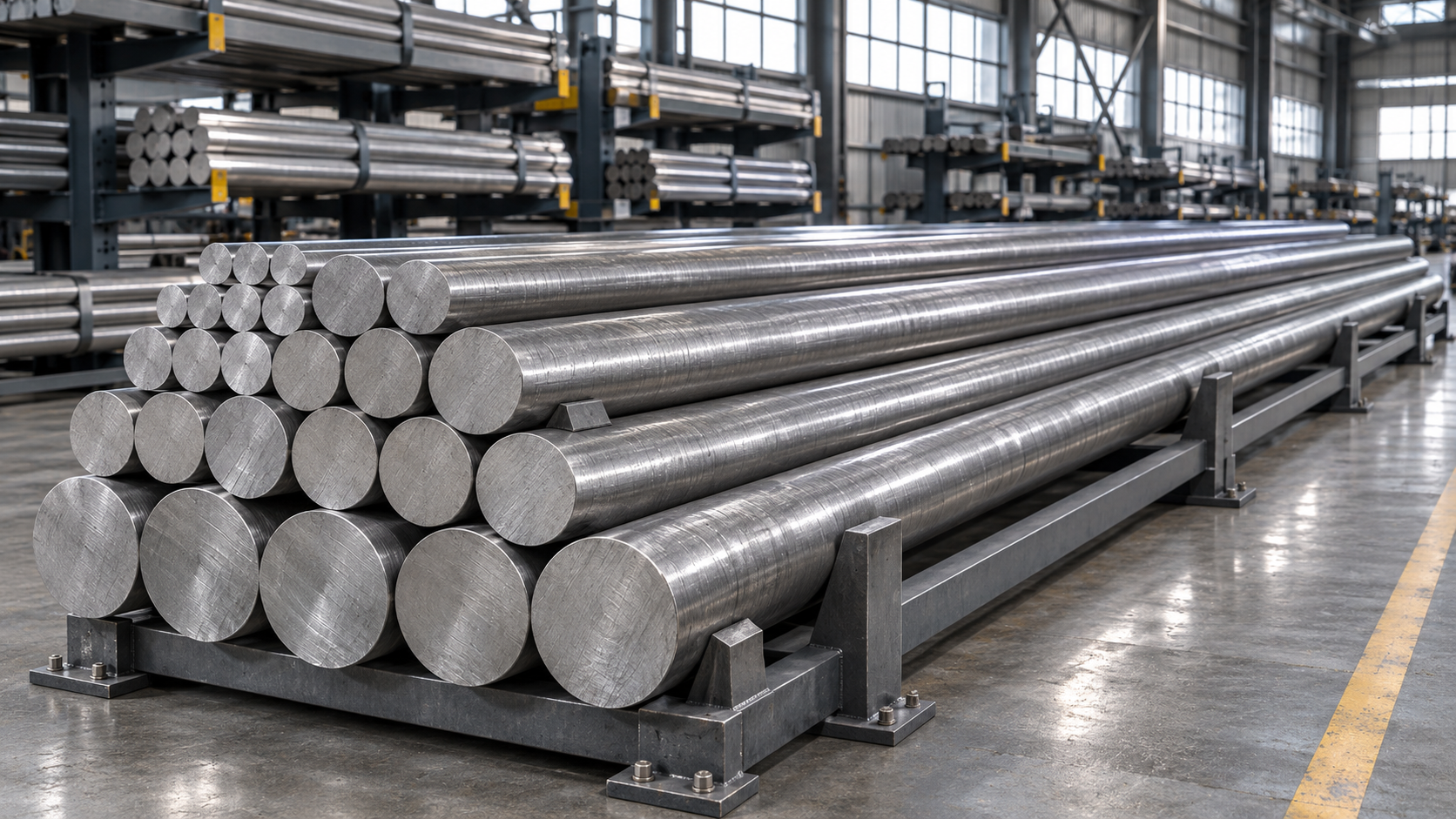
Industrial manufacturing depends on materials that deliver consistent performance under demanding working conditions. Components used in automobiles, heavy machinery, construction equipment and industrial plants often experience continuous pressure, friction, vibration and mechanical stress. To meet these requirements, manufacturers frequently rely on Alloy Steel Round Bars because of their strength, toughness and adaptable mechanical properties.
These steel products are manufactured using carefully controlled combinations of carbon and alloying elements. Depending on their composition and heat treatment, they can provide the mechanical characteristics required for different engineering applications. Understanding their properties, manufacturing processes and selection criteria can help businesses make better material procurement decisions.
Understanding the Importance of Alloy Steel Round Bars
Alloy steel round bars are solid cylindrical metal products manufactured with alloying elements such as chromium, nickel, molybdenum, manganese and vanadium. These elements influence properties such as hardenability, tensile strength, toughness and wear resistance.
Unlike ordinary carbon steel, alloy steel can be engineered to achieve specific performance requirements through appropriate chemical composition and heat treatment. This makes it a valuable material for industries where component reliability and dimensional consistency are important.
Available in different diameters, grades, lengths and surface finishes, these bars support a wide range of machining, forging and manufacturing operations.
Major Properties That Make Alloy Steel Valuable
The performance of alloy steel round bars depends on the selected grade, manufacturing route and material condition. Some important properties include:
1. Excellent Strength and Load-Bearing Capacity
Many alloy steel grades offer high tensile and yield strength, making them suitable for shafts, gears and mechanical components exposed to significant loads.
2. Improved Hardenability
Alloying elements such as chromium and molybdenum can improve hardenability, helping suitable grades achieve desired hardness through appropriate heat-treatment processes.
3. Good Toughness
Certain alloy steel compositions provide a balance between hardness and toughness. This is important for components exposed to impact, vibration and repeated mechanical loading.
Common Alloy Steel Grades and Their Applications
Selecting the correct grade is essential for achieving the desired component performance. Some commonly used engineering grades include:
-
EN19: A chromium-molybdenum steel used in shafts, gears, axles and other engineering components.
-
EN24: A nickel-chromium-molybdenum steel suitable for heavily stressed mechanical parts.
-
EN31: A high-carbon chromium steel commonly used in bearing-related and wear-resistant applications.
-
EN8: A medium-carbon engineering steel used for general-purpose shafts, studs and machine components.
-
42CrMo4: A chromium-molybdenum alloy steel used in automotive, machinery and heavy engineering applications.
Each grade has different chemical and mechanical characteristics. Buyers should confirm material specifications, applicable standards and test requirements before procurement.
Industries That Depend on Alloy Steel Round Bars
The versatility of alloy steel makes it useful in several industrial sectors.
Automotive Manufacturing: Used for crankshafts, transmission shafts, gears, axles and other automotive components where strength and fatigue performance are important.
Heavy Engineering: Supports the production of machine components, industrial shafts, connecting parts and equipment used under heavy mechanical loads.
General Manufacturing: Used in fasteners, mechanical assemblies, tools and various engineered products.
The final material selection should always be based on engineering requirements rather than grade names alone.
How to Select a Reliable Alloy Steel Round Bars Supplier
Material quality and sourcing reliability are important for businesses that depend on uninterrupted manufacturing operations. Choosing an experienced Alloy Steel Round Bars Supplier can help buyers obtain products that meet their technical and commercial requirements.
Here are some important factors to evaluate:
-
Product Range: Look for suppliers offering different grades, diameters and material conditions.
-
Quality Assurance: Request Mill Test Certificates and relevant inspection documentation.
-
Material Testing: Verify whether chemical analysis, hardness testing and mechanical testing reports are available.
-
Dimensional Specifications: Confirm diameter, length, tolerance and surface-finish requirements.
A supplier with strong technical knowledge and transparent documentation can make industrial procurement more efficient.
Why Consider Steel Exchange for Industrial Steel Requirements?
Steel Exchange, operated by TSB Global LLP, caters to industrial steel sourcing requirements through its range of steel products. Its Alloy Steel Round Bars offering is intended for businesses operating in automotive, engineering, manufacturing and other industrial sectors.
The company highlights different material conditions, including bright-drawn, peeled and forged bars, along with customized size and processing options. Buyers can explore product specifications, discuss their material requirements and enquire about suitable supply arrangements.
For businesses searching for an Alloy Steel Round Bars Supplier, Steel Exchange offers an option to explore industrial steel sourcing and product availability.
Visit the Alloy Steel Round Bars product page to learn more and submit your enquiry.
Frequently Asked Questions
1. What makes Alloy Steel Round Bars different from carbon steel bars?
Alloy steel contains additional alloying elements such as chromium, nickel and molybdenum. These elements can improve hardenability, strength, toughness and other mechanical properties compared with conventional carbon steel grades.
2. Which industries commonly use Alloy Steel Round Bars?
Automotive, heavy engineering, oil and gas, machinery manufacturing, forging and general engineering industries use these products for various mechanical components.
3. Are Alloy Steel Round Bars available in different sizes?
Yes. They are manufactured and supplied in different diameters and lengths. Actual availability depends on the grade, production route and supplier inventory.
4. What is the role of heat treatment in alloy steel?
Heat treatment modifies the microstructure and mechanical properties of steel. Processes such as hardening and tempering can help achieve the required combination of hardness, strength and toughness.
5. How can buyers verify alloy steel quality?
Buyers should review Mill Test Certificates, chemical composition reports and relevant mechanical and hardness test results. Independent inspection can also be arranged when required.
6. Why is choosing the right Alloy Steel Round Bars Supplier important?
A reliable supplier helps ensure suitable grade selection, consistent material specifications, quality documentation, dimensional accuracy and dependable order fulfilment.
Conclusion
Alloy steel round bars are important materials for industries that require dependable mechanical performance and application-specific properties. Their versatility, strength and heat-treatment capabilities make them suitable for a wide range of engineering and manufacturing requirements.
However, selecting the right grade and working with a dependable supplier are equally important. By evaluating technical specifications, testing documentation, processing options and supply capabilities, industrial buyers can make informed procurement decisions and maintain better manufacturing standards.

 English
 Arabic
 French
 Portuguese
 Deutsch
 Turkish
 Dutch
 Italiano
 Russian
 Romaian
 Portuguese (Brazil)
 Greek