


Natural Saffron Ingredients Gain Ground in Skincare and Personal Care
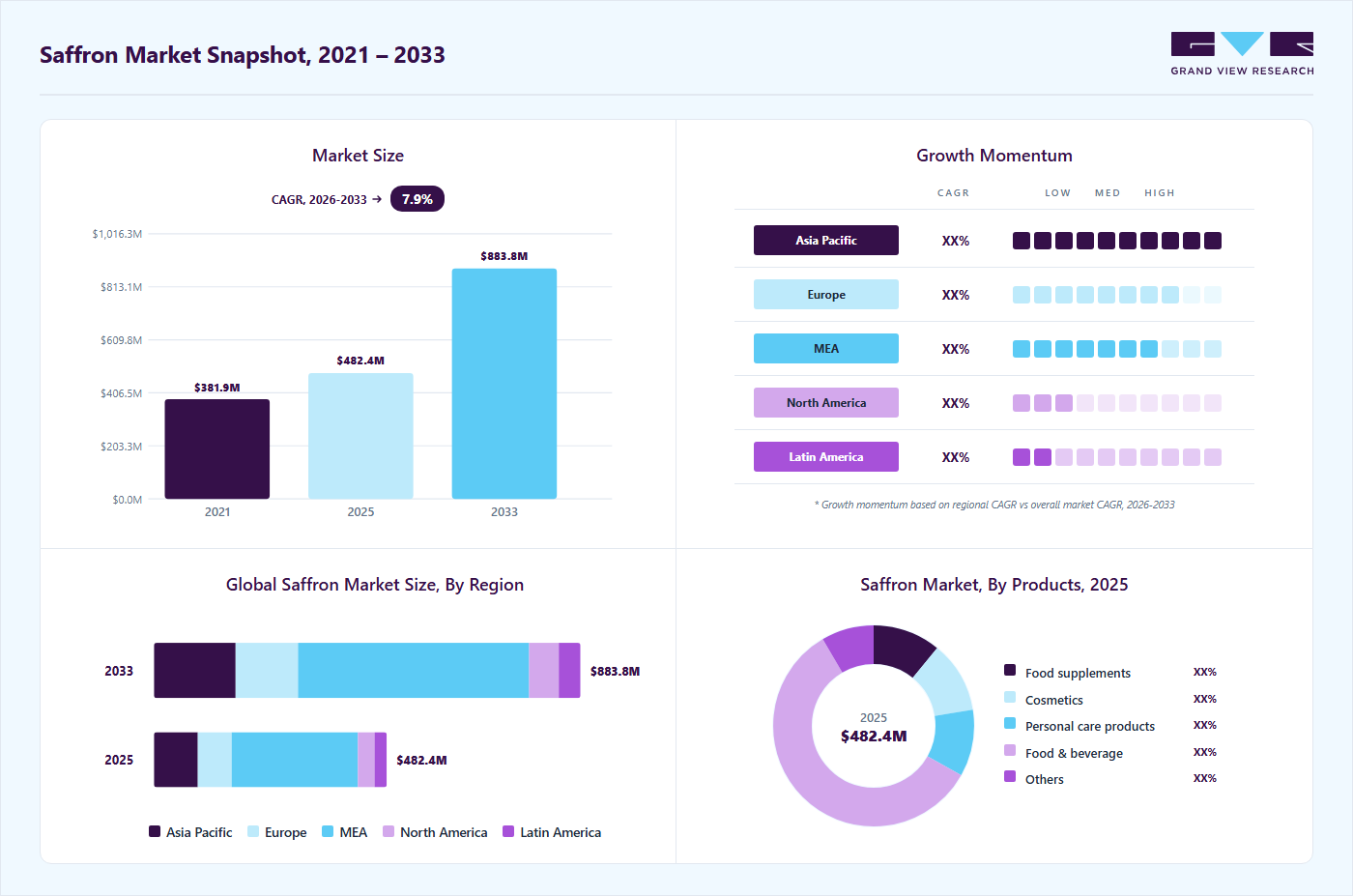
Saffron is gaining wider commercial importance as a premium spice and a versatile natural ingredient across food and beverages, cosmetics, personal care, and food supplements. Known for its distinctive color, aroma, and flavor, saffron is increasingly valued by manufacturers seeking natural alternatives to synthetic ingredients. Its traditional culinary significance, combined with growing interest in botanical extracts and premium wellness products, is creating new opportunities across the global saffron industry.
According to Grand View Research, the global saffron market was valued at USD 482.4 million in 2025. The market is projected to increase from USD 517.4 million in 2026 to USD 883.8 million by 2033, registering a CAGR of 7.9% from 2026 to 2033. Increasing demand for saffron in cosmetic and medical applications is expected to support this expansion.
Premium Saffron Grades Strengthen Product Value
Product quality plays a significant role in saffron purchasing decisions because its color strength, aroma, and flavor influence both application suitability and pricing. The Grade I segment, covering saffron with a reading above 190, accounted for 52.4% of market revenue in 2025 and is expected to record the fastest growth during the forecast period.
Grade I includes premium varieties such as Negin and Sargol, which are valued for their strong coloring and flavoring properties. These characteristics make them suitable for premium culinary products, fragrances, and personal care formulations. Meanwhile, Grade II saffron is gaining relevance among buyers seeking a balance between quality and affordability. Its potential for everyday household and restaurant use supports demand in price-sensitive markets.
Traditional Saffron and Organic Alternatives Shape Consumer Choices
Traditional saffron held the largest revenue share of 63.2% in 2025, supported by its established use in cooking, cosmetics, and traditional medicine. Its distinctive sensory characteristics and cultural significance continue to influence consumption across major saffron-producing and importing markets.
Organic saffron is expected to grow at the fastest rate among type categories. Consumer interest in naturally cultivated ingredients, clean-label food products, and environmentally conscious sourcing is creating opportunities for organic producers. This trend is particularly relevant to premium food, wellness, and beauty brands seeking recognizable botanical ingredients.
Food and Beverage Applications Lead Product Demand
The food and beverage segment accounted for 58.3% of the saffron market revenue in 2025, maintaining its position as the leading product category. Saffron is used in traditional dishes, gourmet preparations, ready-to-eat products, beverages, and premium culinary offerings. Its ability to provide color, aroma, and flavor makes it a differentiated ingredient for food manufacturers and hospitality businesses.
Cosmetics is projected to register the fastest growth from 2026 to 2033. Saffron contains bioactive compounds such as crocin and safranal, which contribute to its appeal in antioxidant-focused and skin-brightening formulations. Increasing demand for natural ingredients in skincare, anti-aging products, serums, and haircare is encouraging cosmetic manufacturers to explore saffron-based formulations.
Stigma Remains the Preferred Form as Extracts Gain Attention
Stigma was the leading saffron form in 2025. These dried threads are highly valued for their quality characteristics and are used in established grading and quality assessment processes. Their concentrations of compounds associated with saffron's color, aroma, and taste help maintain their premium positioning.
Liquid saffron is expected to record the fastest growth among form categories. Its convenience and versatility make it suitable for culinary preparations, fragrances, traditional applications, and other formulations. Demand for saffron extracts, powders, and related derivatives is also creating opportunities across food, cosmetics, nutraceuticals, and pharmaceutical research.
Go Deeper! Ask Prism AI about the Saffron Market.
B2B Distribution Maintains a Strong Market Position
B2B distribution accounted for the largest share of the saffron market in 2025, reflecting procurement by food manufacturers, processors, restaurants, and other commercial buyers. The use of saffron as a natural coloring and flavoring ingredient supports bulk purchasing and established supplier relationships.
B2C distribution is expected to grow at the fastest rate during the forecast period. E-commerce platforms and online specialty retailers are improving consumer access to packaged saffron, supplements, and saffron-based personal care products. Direct-to-consumer channels also give producers opportunities to build brand recognition and reach niche customer groups.
Regional Demand Reflects Culinary Traditions and Emerging Applications
Middle East & Africa held the largest regional revenue share of 54.2% in 2025, supported by saffron's importance in regional cuisine, traditional practices, and premium food products. Asia Pacific is expected to register the fastest regional growth, with a projected CAGR of 8.2% from 2026 to 2033. Long-standing culinary and traditional uses in India and China, together with rising demand for premium natural ingredients, are supporting the regional outlook.
North America is benefiting from growing interest in natural ingredients across food, cosmetics, and wellness products. The U.S. held the largest share of the North American market in 2025. In Europe, demand for organic and high-quality saffron, along with innovation in cultivation and processing, is contributing to market development.
Quality Assurance and Processing Innovation Influence Competition
High prices and growing demand make saffron vulnerable to adulteration, creating challenges for product authenticity and consumer confidence. Quality standards such as ISO 3632 help assess important characteristics, including color strength, flavor, and aroma. Producers are also exploring image-processing technology and automated systems to improve sorting and processing efficiency. Recycling is not relevant to this agricultural product; instead, cultivation practices, traceability, grading consistency, and reliable sourcing remain important areas of industry development.
FAQs
1. What is the projected value of the global saffron market by 2033?
The global saffron market is projected to reach USD 883.8 million by 2033, growing at a CAGR of 7.9% from 2026 to 2033.
2. Which segment is expected to grow fastest in the saffron market?
Grade I is expected to register the fastest growth among grade categories. Organic saffron, liquid saffron, cosmetics, B2C distribution, and Asia Pacific are also identified as high-growth segments.
Request a Sample Report to Explore Detailed Market Insights and Industry Analysis.
Key Saffron Companies:
· Esfedan Saffron
· Tarvand Saffron Ghaen
· Gohar Saffron
· Rowhani Saffron Co.
· Mehr Saffron
· Florasaffron
· Royal Saffron Company
About us:
Grand View Research, a market research and consulting company, provides syndicated research reports, customized research reports, and consulting services. Grand View Research database is used by the world's renowned academic institutions and Fortune 500 companies to understand the global and regional business environment. Our database features thousands of statistics and in-depth analysis on 46 industries in 25 major countries worldwide.

 English
 Arabic
 French
 Spanish
 Portuguese
 Deutsch
 Turkish
 Dutch
 Italiano
 Russian
 Romaian
 Greek