


How to Combine SEO and PPC: An Integrated Search Marketing Strategy
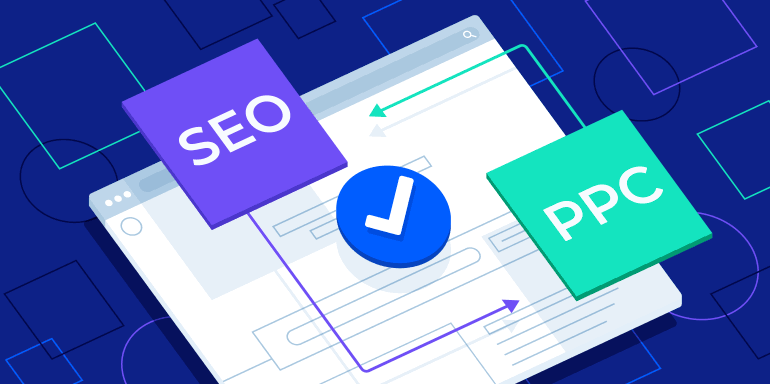
Search engines play an important role in how people discover products, services, and businesses. Some users click organic results because they trust unpaid listings, while others respond to paid advertisements that offer a direct solution to their needs.
For businesses, relying on only one search marketing channel can limit opportunities. Search engine optimization (SEO) helps build long-term organic visibility, while pay-per-click advertising (PPC) can bring targeted visitors through paid placements.
Instead of treating these channels as competitors, businesses can combine SEO and PPC to create a more complete search marketing strategy. Both channels can share keyword research, landing pages, audience insights, and performance data.
This guide explains how to combine SEO and PPC, where the two channels support each other, and how to build an integrated strategy that improves marketing efficiency.
What Does Combining SEO and PPC Mean?
Combining SEO and PPC means coordinating organic search optimization and paid search campaigns to achieve shared marketing goals.
SEO focuses on improving a website’s visibility in unpaid search results. It involves keyword research, technical improvements, content development, internal linking, and authority building.
PPC involves paying for advertising placements, usually through platforms such as Google Ads. Advertisers select keywords, create campaigns, set budgets, and pay when users interact with their ads under the campaign’s bidding model.
When these channels work together, businesses can use information from one channel to improve the other.
For example, a company may use PPC to test which search terms generate qualified leads. Once it identifies valuable keywords, its SEO team can create useful content or improve relevant service pages to target those searches organically.
The objective is not simply to appear twice on a search results page. It is to create a connected strategy that supports visibility, relevant traffic, and business outcomes.
Why Should Businesses Use SEO and PPC Together?
An integrated search strategy offers several practical advantages.
1. Reach More Search Opportunities
SEO and PPC can help a business appear in different areas of search results.
A paid campaign may reach users searching for a specific service, while organic pages can attract visitors researching related questions.
Using both channels can increase the number of relevant search opportunities a business can target.
However, appearing in both paid and organic listings does not automatically guarantee more clicks or conversions. Results depend on search intent, competition, ad quality, page relevance, and user preferences.
2. Test Keywords Before Investing in SEO Content
SEO content often requires planning, production, optimization, and time to gain visibility.
PPC can provide earlier feedback about how search terms perform in advertising campaigns.
Businesses can examine:
- Which search terms generate clicks.
- Which keywords attract relevant visitors.
- Which searches produce leads or sales.
- Which queries have high costs but weak results.
- Which landing pages generate meaningful engagement.
This information can help content teams prioritize organic opportunities instead of choosing topics based only on estimated search volume.
3. Improve Landing Page Performance
SEO and PPC campaigns frequently direct users to the same or closely related landing pages.
If visitors leave a page without taking action, both teams can investigate the problem.
Possible improvements include clearer headlines, stronger value propositions, useful supporting information, faster loading times, and simpler forms.
A better landing page can support both organic user experience and paid campaign performance, although the specific ranking and advertising effects depend on each platform’s systems.
4. Understand Customer Search Intent
Search queries reveal what people want to accomplish.
Some users are researching a problem, while others are comparing providers or preparing to purchase.
SEO data can help identify informational search opportunities. PPC search-term reports can reveal the specific language users employ when looking for products and services.
Combining these insights helps businesses create more relevant content and advertisements.
5. Build a More Balanced Marketing Strategy
PPC can provide targeted traffic while a business develops its organic visibility. SEO can also create a long-term source of relevant visitors.
Using both channels helps reduce dependence on a single traffic source.
The right balance depends on the business model, available budget, competition, and marketing objectives.
How to Combine SEO and PPC: 8 Practical Steps
A successful integrated strategy needs coordination between keyword research, advertising, content, landing pages, and analytics.
Step 1: Set Shared Marketing Goals
Start by identifying what the business wants to achieve.
Possible objectives include:
- Generating qualified leads.
- Increasing online sales.
- Promoting a new product.
- Improving visibility for important services.
- Increasing demo requests or sign-ups.
- Reaching customers in new markets.
SEO and PPC should support the same business objectives, even if their individual responsibilities differ.
For example, an online software company may use PPC to attract users searching for a specific software solution. Its SEO strategy can target educational searches, comparison queries, and detailed product-related topics.
Both channels can direct potential customers toward a relevant conversion path.
Step 2: Conduct Shared Keyword Research
Keyword research should not happen in separate departments without communication.
Create a shared keyword list that includes search terms, intent, competition, landing pages, and business relevance.
Useful keyword categories include:
Informational keywords: Searches from users who want to understand a topic or solve a problem.
Commercial keywords: Searches from people comparing products, providers, or solutions.
Transactional keywords: Searches that indicate a stronger intention to purchase, subscribe, or contact a business.
For example, a website design company might target:
- What is responsive web design?
- Website design services.
- Best website design company.
- Hire a website designer.
The first keyword may be suitable for an educational SEO article, while the last two could be relevant to service pages and carefully targeted PPC campaigns.
Do not assume every keyword belongs in both channels. Match each term with its search intent and business value.
Step 3: Use PPC Data to Find SEO Opportunities
One of the most useful ways to connect the two channels is to use paid search data to inform organic content planning.
Review Google Ads search-term reports to identify actual queries that triggered advertisements.
Look for terms that generate relevant conversions, not simply high click volumes.
For example, a business might discover that a specific service-related search term consistently attracts qualified enquiries. Its SEO team can then review the existing website to determine whether a dedicated page, supporting article, or improved service description is needed.
This approach can help prioritize SEO work based on observed customer behaviour.
Remember that paid search performance does not guarantee organic rankings. It provides useful research data, not a ranking shortcut.
Step 4: Use SEO Research to Improve PPC Campaigns
The information collected through SEO can also strengthen paid campaigns.
Organic keyword research may reveal:
- Relevant long-tail keywords.
- Frequently asked customer questions.
- Search intent differences.
- Topics that attract potential customers.
- Content gaps on competitor websites.
These insights can help advertisers organize campaigns into more relevant ad groups and create advertisements that reflect users’ needs.
For example, a business offering accounting software might discover separate search interests around invoicing, payroll, and tax reporting.
Instead of sending every visitor to one generic page, it can create more specific campaigns and direct users to relevant pages.
Step 5: Align Landing Pages With Search Intent
A successful search campaign requires more than selecting the right keywords.
The landing page must deliver what the advertisement or organic result promises.
Consider these improvements:
- Use a clear and relevant page headline.
- Explain the product or service in simple language.
- Include useful information about features and benefits.
- Add relevant testimonials or evidence where appropriate.
- Make contact forms easy to complete.
- Use clear calls to action.
- Improve mobile usability.
- Reduce unnecessary distractions.
For SEO, pages should provide genuinely useful information that satisfies the search query.
For PPC, the page should closely match the advertisement and campaign objective.
A single page may support both channels, but some campaigns may require dedicated landing pages for different audiences or offers.
Step 6: Coordinate Content and Advertising Campaigns
SEO content and PPC campaigns should follow a shared content calendar.
For example, when a business launches a new service, it can coordinate several activities:
- Publish a detailed service page.
- Create an educational article about the problem the service solves.
- Launch a targeted PPC campaign for high-intent searches.
- Use paid advertisements to test different messaging.
- Review user engagement and conversion data.
- Update the website content based on useful findings.
This coordination creates a consistent experience across paid and organic search.
It also helps marketing teams avoid producing disconnected campaigns that target different audiences or communicate conflicting messages.
Step 7: Create a Shared Measurement System
An integrated strategy requires consistent performance tracking.
SEO and PPC teams should understand how their activities contribute to business results.
Important metrics include:
Organic search metrics
- Organic clicks.
- Search impressions.
- Organic click-through rate.
- Keyword visibility.
- Organic landing page performance.
- Organic leads and sales.
PPC metrics
- Advertising impressions.
- Paid clicks.
- Click-through rate.
- Average cost per click.
- Conversion rate.
- Cost per conversion.
- Advertising return on investment or return on ad spend, where applicable.
Combined business metrics
- Total search-generated leads.
- Total search-attributed revenue.
- Cost per qualified lead.
- Conversion quality.
- Customer acquisition cost.
- Performance by landing page and search intent.
Use consistent conversion definitions and reporting periods. Otherwise, different teams may report the same outcome differently.
Google Search Console can help monitor organic search performance, while Google Analytics 4 can support website and conversion analysis. Google Ads provides campaign and advertising performance information.
Official resources:
- Google Search Console: https://support.google.com/webmasters/
- Google Analytics Help: https://support.google.com/analytics/
- Google Ads Help: https://support.google.com/google-ads/
Step 8: Review Results and Adjust the Strategy
An integrated search strategy should be reviewed regularly.
Look for opportunities to improve performance rather than simply increasing advertising budgets or publishing more content.
For example:
- If a PPC keyword generates qualified leads, assess its organic potential.
- If an organic page receives impressions but few clicks, review its title and description.
- If both channels attract visitors but conversions remain low, investigate the landing page.
- If a paid keyword is expensive and produces weak results, review its targeting and relevance.
- If an organic page attracts irrelevant visitors, reassess its keyword targeting and content.
The aim is continuous improvement based on evidence.
Should You Use the Same Keywords for SEO and PPC?
Sometimes, but not always.
Using the same keywords across both channels can make sense when a search term has strong business value and both paid and organic visibility are relevant.
However, businesses should consider the purpose of each campaign.
For example, a transactional keyword such as “hire an SEO consultant” may be suitable for a paid campaign and a service page.
An informational keyword such as “how does keyword research work” may be better suited to an educational article.
Some keywords may also be too expensive for a limited PPC budget or too competitive for a new website to target immediately through SEO.
A shared keyword strategy should therefore classify each term by:
- Search intent.
- Business relevance.
- Organic competition.
- Advertising cost.
- Conversion potential.
- Existing website content.
- Available budget.
This creates a more practical approach than copying the entire PPC keyword list into the SEO content plan.
How to Allocate Budget Between SEO and PPC
There is no universal budget split that works for every business.
The right allocation depends on how quickly the business needs traffic, how competitive its market is, and how much it can invest in long-term organic growth.
A new business with limited organic visibility may initially need more paid advertising to test demand and attract targeted visitors.
An established website with strong organic performance may use PPC more selectively for new products, competitive search terms, or specific campaigns.
Consider these factors when allocating the budget:
Business stage: New businesses may need paid campaigns to generate early visibility while SEO foundations are developed.
Competition: Highly competitive search terms can require significant advertising budgets and sustained organic work.
Conversion value: Keywords that generate valuable customers may deserve greater attention across both channels.
Organic performance: Strong organic visibility may reduce the need to advertise on certain searches, but this should be tested rather than assumed.
Marketing resources: SEO requires content, technical work, and ongoing optimization. PPC requires campaign management, creative testing, and budget monitoring.
Review the allocation regularly using actual business results.
Common Mistakes to Avoid When Combining SEO and PPC
Even when businesses use both channels, poor coordination can reduce their effectiveness.
1. Managing SEO and PPC Separately
When teams do not share information, they may miss valuable keyword insights and duplicate work.
Use shared reporting and regular planning meetings to coordinate activities.
2. Targeting Every Keyword With Both Channels
Not every search term deserves an organic page and a paid campaign.
Prioritize keywords based on intent, relevance, competition, and business value.
3. Sending All Paid Traffic to the Homepage
A homepage is not always the best destination for a specific advertisement.
Direct visitors to the most relevant service, product, or campaign page.
4. Measuring Traffic Instead of Business Outcomes
High traffic does not necessarily mean a successful campaign.
Monitor qualified leads, sales, conversion rates, and customer acquisition costs.
5. Expecting Immediate SEO Results
PPC campaigns can begin delivering traffic after launch and approval, but SEO improvements may take time to produce meaningful results.
Set realistic expectations for each channel.
6. Ignoring Search Intent
A page or advertisement may receive clicks but still fail to satisfy the user’s needs.
Review the actual search queries and make sure the destination provides relevant information.
7. Assuming Paid Ads Directly Improve Organic Rankings
PPC advertising does not directly purchase better organic search positions.
Use paid search to support visibility and gather marketing insights, while improving organic rankings through relevant SEO practices.
A 90-Day Plan for Integrating SEO and PPC
Businesses can use a structured three-month plan to coordinate their search marketing activities.
Days 1–30: Research and Setup
- Define shared marketing goals.
- Review existing SEO and PPC performance.
- Collect keyword and search-term data.
- Identify high-value search opportunities.
- Review existing landing pages.
- Set up conversion tracking and shared reporting.
Days 31–60: Campaign Execution
- Launch or refine relevant PPC campaigns.
- Optimize existing organic landing pages.
- Publish content for selected keyword groups.
- Test advertisement messaging.
- Improve calls to action and landing page structure.
- Review search-term and conversion data.
Days 61–90: Analysis and Improvement
- Identify PPC keywords with strong conversion potential.
- Find organic content gaps.
- Review landing page performance.
- Improve underperforming campaigns.
- Compare organic and paid search contributions.
- Create the next quarterly search marketing plan.
This framework can be adjusted according to the business’s budget, website condition, and campaign complexity.
Frequently Asked Questions
1. Can SEO and PPC work together?
Yes. SEO and PPC can support the same marketing goals by sharing keyword research, audience insights, landing pages, and performance data. Each channel has a different role, but coordinating them can improve search marketing decisions.
2. Does PPC help SEO rankings?
PPC does not directly improve organic search rankings. However, paid campaigns can provide useful keyword and conversion insights that help businesses make better SEO decisions.
3. Should a small business invest in SEO or PPC first?
The answer depends on its goals, budget, competition, and existing website visibility. PPC may be useful when a business needs targeted traffic quickly, while SEO supports long-term organic growth. A combination may be appropriate when resources allow.
4. How can PPC data improve SEO?
PPC search-term reports can reveal actual queries, customer interests, and keywords that generate qualified leads. SEO teams can use this information to prioritize relevant content and optimize existing pages.
5. Should SEO and PPC use the same landing pages?
They can use the same pages when the content matches the search intent and campaign objective. However, some paid campaigns benefit from dedicated landing pages with more focused messaging and calls to action.
6. How do you measure combined SEO and PPC performance?
Track organic clicks, paid clicks, conversions, qualified leads, cost per conversion, and revenue where available. Use consistent conversion definitions and attribution settings to understand how both channels contribute.
7. How long does an integrated SEO and PPC strategy take to show results?
PPC can begin generating traffic after campaigns are approved and launched. SEO usually requires ongoing improvements and time to build visibility. The timing of meaningful business results varies by industry, competition, website quality, and budget.
Conclusion
Combining SEO and PPC allows businesses to connect paid advertising with long-term organic search development.
PPC can help identify valuable search terms, test campaign messaging, and attract targeted visitors. SEO can use these insights to develop useful content, improve website visibility, and build sustainable organic traffic.
The most effective approach is to coordinate both channels around shared goals, relevant keywords, strong landing pages, and reliable performance measurement.
Rather than treating SEO and PPC as separate marketing activities, businesses should view them as complementary parts of an integrated search strategy. Regular analysis and continuous optimization can help make better use of marketing resources and improve the quality of search-generated leads and customers.

 Arabic
 French
 Spanish
 Portuguese
 Deutsch
 Turkish
 Dutch
 Italiano
 Russian
 Romaian
 Portuguese (Brazil)
 Greek