


What Should Buyers Ask About CNC Metal Machining Costs?
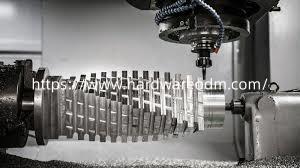
CNC Metal Machining supports the production of custom components for industrial equipment, automation systems, machinery, and mechanical assemblies. Before placing an order, buyers should review more than the quoted unit price. Technical documents, material specifications, dimensional requirements, production quantities, and delivery arrangements all influence the manufacturing process. Preparing these details in advance helps purchasing teams communicate their expectations and reduce unnecessary changes during production.
Prepare Accurate Engineering Drawings
Technical drawings provide the information a manufacturer needs to understand a component before preparing a quotation. Buyers should provide a readable 2D drawing and, where available, a matching 3D CAD model.
Check that the files include the part number, measurement units, revision date, overall dimensions, hole positions, thread specifications, and relevant technical notes. If the drawing and 3D model contain conflicting details, clarify which document should govern production.
It is also useful to explain how the component will be installed or used. For example, a housing connected to another assembly may require specific mounting positions and alignment features. Application details help the engineering team review the design with greater context.
Specify the Required Material Grade
Material selection affects component weight, corrosion resistance, mechanical properties, machinability, and project costs. Different applications may require different grades and conditions.
Aluminum alloys may suit applications where low weight is important. Stainless steel can be considered for components exposed to moisture or certain corrosive environments. Carbon steel may be suitable for structural applications, while copper alloys are used in some electrical and thermal applications.
Buyers should specify the exact grade rather than simply writing aluminum, steel, or stainless steel. Temper, hardness, material condition, and approved alternatives should also be clarified when relevant.
If material certificates or batch identification records are required, include these requests in the original inquiry. This allows the supplier to consider sourcing and documentation arrangements before production begins.
Identify Critical Dimensions and Tolerances
Not every dimension has the same effect on component function. Some measurements determine whether a part fits into an assembly, while others describe general external dimensions or non-functional features.
Buyers should identify important areas such as bearing seats, threaded holes, locating surfaces, mounting positions, and mating interfaces. These features may require specific dimensional tolerances or geometric controls.
Avoid applying tight tolerances to every dimension without considering the actual application. More demanding requirements can influence production time, inspection procedures, equipment selection, and overall costs.
During quotation review, ask the manufacturer to assess whether the specified tolerances are practical for the component geometry and selected material. If an adjustment is proposed, confirm that it will not affect assembly or intended function.
Clarify Surface Finishing Requirements
The required surface condition should be defined before production. Depending on the application, a component may need anodizing, polishing, plating, passivation, bead blasting, painting, or another finishing process.
Buyers should distinguish between functional surfaces and visible areas. A mounting face may require dimensional accuracy, while an external housing may have appearance requirements. These expectations should be identified separately in the technical documents.
Also consider whether finishing operations could affect dimensions. Coating thickness, masking areas, and post-treatment inspection may need to be included in the production plan.
If the component requires deburring, cleaning, marking, or assembly after production, list these operations in the original inquiry rather than adding them after the quotation has been prepared.
Request Samples and Inspection Records
Sample evaluation gives buyers an opportunity to compare manufactured components with the approved design before proceeding with larger quantities.
During sample review, check critical dimensions, hole positions, thread conditions, surface appearance, edge quality, and assembly compatibility. If a component has several important mating features, test how those areas interact with the corresponding parts.
Buyers should also discuss inspection documentation. Depending on the project, useful records may include dimensional inspection reports, material certificates, or initial sample inspection results.
Agree on which dimensions need recorded measurements and how nonconforming parts will be handled. A clearly defined inspection arrangement helps both parties understand the acceptance requirements.
Confirm Order Quantity and Delivery Arrangements
Order quantity can influence production arrangements, setup requirements, material purchasing, and unit pricing. Buyers should provide estimated quantities for prototypes, initial batches, and possible repeat orders when this information is available.
Delivery planning deserves similar attention. Confirm the expected production schedule, packaging method, shipping destination, and required documentation. If components have polished or coated surfaces, explain the protective packaging requirements.
For repeat orders, discuss how drawing revisions and production records will be managed. Using an agreed document version helps reduce confusion when a design changes.
Compare Quotations by Their Full Scope
A quotation should clearly explain the services included. Buyers can compare material costs, production operations, finishing services, inspection arrangements, packaging, and delivery terms.
A quotation may exclude certain operations or documents unless they are specifically requested. Ask suppliers to identify exclusions and assumptions so different offers can be evaluated on a consistent basis.At hardwareodm, buyers can share drawings and project requirements for technical discussion before confirming an order. This creates an opportunity to review component details, material options, processing needs, and inspection expectations. Businesses sourcing customized components can visit https://www.hardwareodm.com/product/ to review product information and contact hardwareodm about project drawings, specifications, and manufacturing requirements.

 English
 Arabic
 French
 Spanish
 Portuguese
 Deutsch
 Dutch
 Italiano
 Russian
 Romaian
 Portuguese (Brazil)
 Greek