


Olympiad Books for Class 7: A Complete Guide for Students and Parents
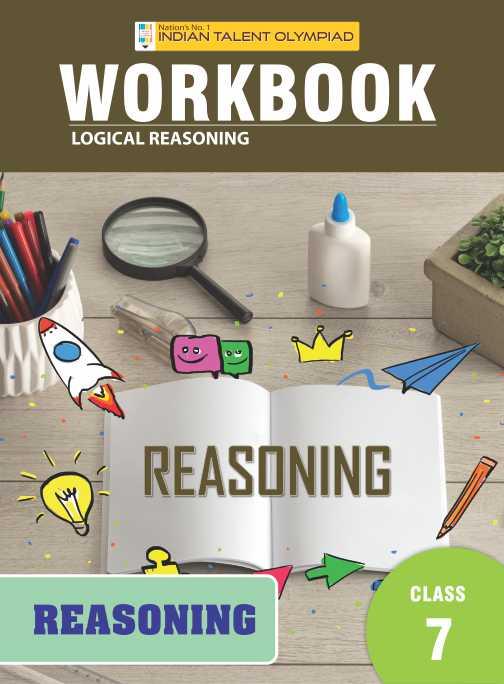
Class 7 is an exciting stage in a student's academic journey. Children begin exploring more advanced concepts in mathematics, science, English, and other subjects. At this stage, learning is not just about remembering answers but also about understanding concepts, thinking logically, and applying knowledge to solve problems.
For students who want to participate in Olympiad examinations, choosing the right study material can make preparation easier. The right books help students practice different question types, improve their understanding, and develop confidence.
Olympiad Books for Class 7 can be a useful learning resource for students who want to strengthen their academic foundation and explore questions beyond regular classroom exercises. With a consistent study routine and suitable practice materials, students can make their preparation more organized and enjoyable.
Why Are Olympiad Exams Important for Class 7 Students?
Olympiad examinations encourage students to explore subjects in greater depth. Instead of focusing only on textbook questions, these exams often include problems that require logical thinking, observation, and conceptual understanding.
For example, a mathematics question may ask students to identify a number pattern rather than simply solve a direct calculation. A science question may require them to apply a familiar concept to a new situation.
These learning experiences can help students develop:
-
Logical and analytical thinking.
-
Better conceptual understanding.
-
Problem-solving skills.
-
Confidence in attempting unfamiliar questions.
-
Independent learning habits.
Olympiad preparation can also make regular school studies more interesting. When students understand the reason behind a concept, they often find it easier to remember and apply it.
How to Choose the Right Olympiad Books for Class 7
Every student has different learning needs. Some children enjoy mathematics, while others are more interested in science, English, or logical reasoning.
Before selecting a book, parents and students should consider the following points.
1. Check the Subject and Syllabus
The first step is to identify the subject in which the student wants to participate. Mathematics, science, English, computer science, and general knowledge are some of the areas in which students may find Olympiad preparation resources.
Check the official syllabus of the chosen examination and select a book that covers the relevant topics.
2. Look for Concept-Based Explanations
A good preparation book should help students understand concepts instead of simply presenting questions.
Clear explanations, worked examples, and practice exercises make it easier for students to learn independently. This is particularly helpful when a child is studying at home without additional classroom support.
3. Choose Books with Different Question Types
Olympiad examinations may include direct questions, application-based problems, reasoning exercises, and multiple-choice questions.
A book that provides different question formats allows students to practice a wider range of skills.
4. Check the Practice and Answer Sections
Practice questions help students understand how concepts are tested. Answer keys allow them to check their work and identify mistakes.
Students should not simply look at the correct answer. They should also understand why their original answer was incorrect.
Subject-Wise Olympiad Preparation for Class 7
A subject-wise approach makes preparation more manageable. Students can focus on one subject at a time and gradually build confidence.
Mathematics Olympiad
Mathematics Olympiads encourage students to apply mathematical concepts and identify patterns. Class 7 students may encounter questions involving integers, fractions, algebraic expressions, geometry, percentages, and other grade-level topics.
Regular practice helps students become comfortable with different problem-solving methods.
The Olympiad Books for Class 5 available on OlympiadBooks.com includes important questions organized by topic, practice opportunities, and a self-analysis feature for reviewing performance.
Students should begin with familiar concepts and gradually attempt more challenging questions.
Science Olympiad
Science is a subject that becomes more interesting when students connect classroom learning with real-life observations.
For example, students can explore how plants grow, why shadows change during the day, or how different materials behave.
Science preparation should focus on understanding concepts, reading carefully, and applying scientific knowledge to different situations.
English Olympiad
English Olympiads help students improve grammar, vocabulary, reading comprehension, and language skills.
Class 7 students can practice identifying grammatical errors, understanding passages, choosing appropriate words, and constructing meaningful sentences.
The Class 7 English Olympiad book listed on OlympiadBooks.com includes syllabus-based practice questions and an answer key for checking responses.
Regular reading and vocabulary-building activities can also support English preparation.
Logical Reasoning Olympiad
Logical reasoning helps students recognize patterns, analyze information, and solve puzzles.
Questions may involve number sequences, coding patterns, classification, relationships, or visual reasoning.
Students should practice these questions regularly because reasoning skills improve through experience and careful analysis.
How to Use Olympiad Books Effectively
Having the right study material is only the beginning. Students also need a practical routine that helps them use their books effectively.
Step 1: Understand the Topic
Begin by reading the chapter or reviewing the concept taught in school. Make sure the basic idea is clear before attempting difficult questions.
Step 2: Solve Practice Questions
Start with simple exercises and gradually move towards more challenging problems. Avoid rushing through the questions just to finish a chapter.
Step 3: Check and Understand Your Answers
After completing an exercise, use the answer key to review your responses.
If an answer is incorrect, revisit the concept and try solving the question again. This helps students understand the reasoning behind the correct solution.
Step 4: Maintain a Mistake Notebook
Write down difficult questions, common mistakes, and important concepts in a separate notebook.
Review these notes regularly, especially before attempting a practice test.
Step 5: Take Mock Tests
Mock tests help students practice answering questions within a fixed time. They also make it easier to identify topics that need additional attention.
Students should review their performance after every test instead of focusing only on the final score.
Creating a Simple Olympiad Study Timetable
A balanced timetable can help students prepare without feeling overwhelmed.
Here is an example of a weekly routine:
| Day | Preparation Activity |
|---|---|
| Monday | Mathematics concepts and practice |
| Tuesday | Science revision and questions |
| Wednesday | English grammar and vocabulary |
| Thursday | Logical reasoning exercises |
| Friday | Revise difficult topics. |
| Saturday | Attempt a practice test. |
| Sunday | Review mistakes and relax. |
Students can adjust this schedule according to their schoolwork, examination dates, and individual learning needs.
Even 30–45 minutes of focused preparation on selected days can be useful when students practice consistently.
Olympiad Books for Class 7 and the Importance of Early Learning
Building strong academic habits during middle school can support students in the years ahead.
Students who develop an interest in problem-solving may find it easier to explore advanced topics later. However, preparation should remain enjoyable rather than becoming an additional source of pressure.
Parents can encourage children by providing suitable study materials, creating a quiet learning environment, and appreciating their efforts.
Students should also remember that making mistakes is a normal part of learning. Each incorrect answer provides an opportunity to understand a concept more clearly.
Frequently Asked Questions (FAQs)
1. Which Olympiad books are useful for Class 7 students?
Students can choose subject-specific preparation books for mathematics, science, English, and logical reasoning. The best choice depends on the examination syllabus and the student's learning needs.
2. Can students prepare for Olympiads at home?
Yes. Students can prepare at home using suitable books, practice worksheets, sample papers, and a consistent study schedule.
3. How much time should a Class 7 student spend on Olympiad preparation?
The duration depends on the student's school workload and preparation level. A focused session of 30–45 minutes on selected days can be a reasonable starting point.
4. Are Olympiad books helpful for school examinations?
Yes. Practice books can strengthen conceptual understanding and provide additional questions. However, students should also revise their regular school textbooks and syllabus.
5. How can students improve their Olympiad scores?
Students should practice regularly, understand their mistakes, revise difficult topics, and take mock tests. Consistent preparation is more useful than last-minute studying.
6. Are Olympiad books available for younger classes?
Yes. Students can begin developing reasoning and problem-solving skills at an early age. For example, Olympiad Books for Class 5 can help children practice age-appropriate concepts, while Olympiad Books for Class 1 can introduce younger learners to simple questions, patterns, and basic reasoning activities.
Final Thoughts
Class 7 is a wonderful time for students to strengthen their academic foundation and explore new ways of learning. With the right study materials, a realistic timetable, and regular practice, Olympiad preparation can become a rewarding learning experience.
The key is to focus on understanding concepts rather than memorising answers. Students should take their time, learn from mistakes, and celebrate small improvements along the way.
Choosing suitable Olympiad Books for Class 1 can support this journey by providing structured practice and helping students develop confidence in their abilities. A curious mind, consistent effort, and a positive attitude can make learning more meaningful both inside and outside the classroom.

 English
 Arabic
 French
 Spanish
 Portuguese
 Deutsch
 Turkish
 Dutch
 Russian
 Romaian
 Portuguese (Brazil)
 Greek