


What Does wendaelectronics Offer for Flexible Cable Projects?
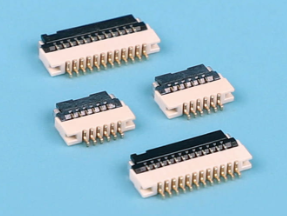
Flat Connector purchasing decisions should begin with a clear understanding of the electronic product and its internal connection requirements. For manufacturers, selecting a suitable component involves more than checking a catalogue or comparing external dimensions. Cable construction, contact arrangement, installation direction, and electrical conditions all influence compatibility. Buyers who prepare these details before contacting a supplier can make technical discussions more productive and reduce unnecessary adjustments during product development.
Define the Product Application
Start by explaining where the component will be installed and what role it will perform. Display modules, control panels, camera assemblies, portable devices, and industrial electronic equipment may have different connection requirements.
The application also determines how much installation space is available. A compact device may require a low-profile structure, while equipment with a larger enclosure may allow more flexibility in component placement.
Buyers should describe the working environment, expected maintenance frequency, and intended service conditions. These details help the manufacturer understand the practical requirements rather than relying only on a product name or general description.
Prepare the Cable Information
Cable compatibility is one of the key points during product selection. Buyers should identify the cable type, width, thickness, conductor quantity, and exposed contact length.
The reinforcement section also deserves attention. Some flexible circuits include a stiffener near the insertion end, which changes the total thickness and may affect how the cable fits into the housing.
Before requesting product recommendations, prepare:
- Cable width and thickness
- Number of conductive contacts
- Contact pitch and exposed length
- Reinforcement dimensions
- Cable insertion direction
- Available installation clearance
A technical drawing or physical sample can provide useful reference information. When these details are available, the supplier can review the proposed configuration more accurately.
Check Contact Position and Connection Direction
The position of the exposed conductive area must correspond with the internal contact arrangement. Buyers should verify whether the cable requires top-contact, bottom-contact, or dual-contact construction.
Connection direction is equally important. A horizontal insertion structure may suit one product layout, while a vertical arrangement may be more appropriate for another. The surrounding enclosure and nearby components can influence this decision.
Before confirming a model, engineers should compare the cable drawing with the product drawing. This simple check can help prevent a situation in which the cable dimensions appear compatible but the contact surfaces face the wrong direction.
Evaluate Electrical Parameters
The electrical requirements should be based on the actual circuit rather than assumptions. Buyers should confirm rated voltage, current capacity, contact resistance, insulation resistance, and operating temperature.
If the component handles several types of signals, the engineering team should explain the contact assignment and expected electrical load. This information helps determine whether the proposed configuration matches the application.
High-speed transmission projects may require additional attention to impedance, crosstalk, and signal integrity. These considerations should be evaluated together with the PCB layout and the complete electrical path.
A clear technical specification allows the supplier to identify which product details need further confirmation before samples are prepared.
Review the Locking Structure
The locking method influences installation convenience and cable retention. Buyers should consider whether the product will be assembled once or disconnected repeatedly during maintenance.
Some designs use a movable actuator to secure the inserted cable. Others use different retention structures according to their intended applications.
The available working space around the locking section should also be checked. If nearby components make the actuator difficult to reach, assembly personnel may experience installation problems.
For manufacturing projects, buyers should discuss the installation procedure with the production team. This helps ensure that the selected structure is suitable for both the product design and the factory assembly process.
Confirm PCB Dimensions and Assembly Compatibility
A suitable electrical configuration must also fit the actual PCB. Buyers should compare the recommended footprint, mounting position, overall dimensions, and assembled height with the circuit drawing.
Pay attention to nearby capacitors, resistors, shielding parts, and enclosure walls. These components may restrict installation space or interfere with cable operation.
The mounting method should also match the factory's production process. Buyers can discuss soldering conditions, placement equipment, and inspection arrangements before approving a model.
If the PCB is still under development, communicate which dimensions are fixed and which may be adjusted. This gives both parties more flexibility during technical evaluation.
Verify Samples and Prepare for Production
Sample testing provides an opportunity to examine the complete assembly before a large purchasing commitment. Engineering teams should check cable insertion, locking operation, contact alignment, electrical continuity, and enclosure clearance.
If the product requires repeated maintenance, include appropriate connection and removal checks in the evaluation plan. Record any issues and confirm whether design changes are necessary.
After approval, retain the product drawing, sample identification, material details, and inspection requirements. These records can help purchasing teams maintain consistent specifications during repeat orders.For projects requiring flexible circuit connection components, wendaelectronics provides product information and manufacturing communication support. Buyers can share their cable drawings, PCB requirements, and application details to discuss suitable product options. Visit https://www.wendaelectronics.com/ to review the available product range and contact the team about your next electronic manufacturing project.

 English
 Arabic
 French
 Portuguese
 Deutsch
 Turkish
 Dutch
 Italiano
 Russian
 Romaian
 Portuguese (Brazil)
 Greek