


Is Nonsurgical Rhinoplasty Better Than Traditional Surgery?
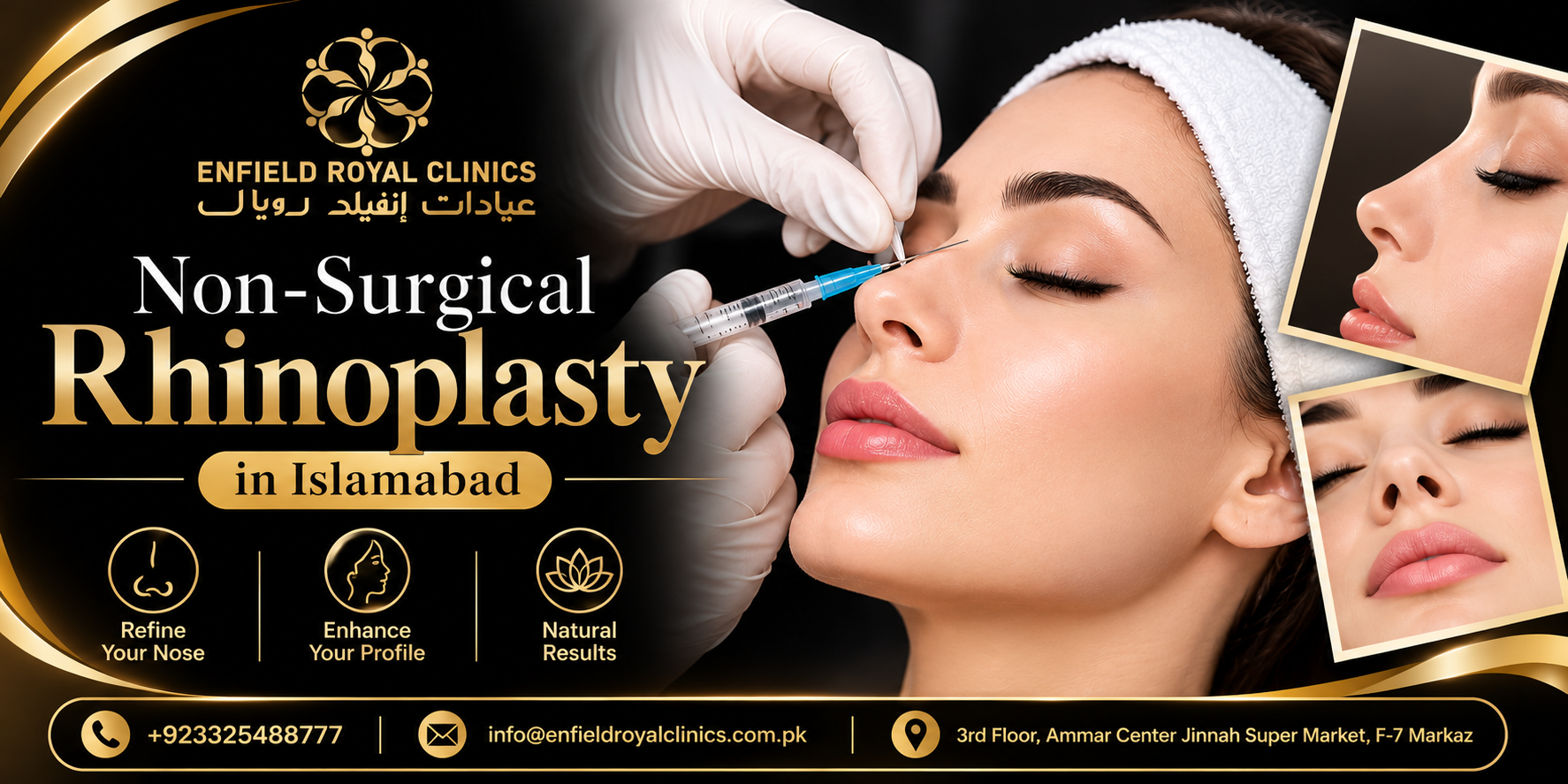
Choosing the right nose enhancement procedure can be challenging for individuals who want to improve their facial appearance. Some people prefer subtle changes, while others want a significant transformation that addresses the structure and size of their nose. Traditional rhinoplasty has been a common surgical option for many years, but nonsurgical rhinoplasty has introduced another approach for people seeking minor cosmetic improvements without an operation.
Nonsurgical Rhinoplasty in Islamabad uses injectable dermal fillers to adjust selected areas of the nose and create a smoother-looking contour. Traditional rhinoplasty, on the other hand, involves surgically reshaping the nasal bones, cartilage, and sometimes surrounding tissues. Both procedures have different purposes, benefits, limitations, and recovery requirements.
Neither option is automatically better for everyone. The right choice depends on the patient's nasal structure, cosmetic goals, medical needs, and expectations.
1. Understanding the Difference Between Nonsurgical and Traditional Rhinoplasty
The biggest difference between these procedures is how they change the appearance of the nose.
Nonsurgical rhinoplasty, also known as liquid rhinoplasty, generally uses hyaluronic acid-based dermal fillers. These injections add volume to selected areas, helping improve certain contour irregularities. The treatment may create a smoother nasal bridge, improve the appearance of small indentations, or make minor asymmetries less noticeable.
Traditional rhinoplasty is a surgical procedure that changes the underlying nasal structure. Depending on the patient's needs, it may involve reshaping cartilage, adjusting nasal bones, reducing a prominent hump, or refining the nasal tip.
The two approaches are designed for different concerns:
-
Nonsurgical rhinoplasty: Suitable for selected minor cosmetic contour improvements.
-
Traditional rhinoplasty: Suitable for people who need more significant structural changes.
-
Nonsurgical treatment: Adds temporary volume without removing nasal tissue.
-
Surgical treatment: Can remove, reshape, or reposition nasal structures.
Understanding these differences helps patients avoid choosing a procedure based only on popularity or convenience.
2. Benefits of Choosing Nonsurgical Rhinoplasty
One reason nonsurgical rhinoplasty attracts attention is that it can improve selected nasal features without traditional surgery. It may be an option for individuals who are generally satisfied with their nose but want to refine a particular area.
Some potential benefits include:
No surgical incisions: The procedure uses injections rather than surgical cuts, so it does not require the same type of tissue alteration as traditional rhinoplasty.
Shorter recovery period: Many patients return to routine activities relatively soon, although temporary swelling, redness, or bruising can occur.
Quick treatment process: The injection procedure is generally shorter than an operation, but proper consultation and assessment remain essential.
Temporary results: The effects gradually fade as the body breaks down the filler, allowing patients to reconsider their cosmetic preferences over time.
Subtle contour improvements: Carefully placed filler may help smooth minor bridge irregularities and improve selected areas of the nasal profile.
However, these advantages do not mean the procedure is risk-free. Nasal filler injections require specialised anatomical knowledge because of the complex blood supply around the nose.
3. When Is Traditional Rhinoplasty a Better Choice?
Although fillers can improve certain nasal contours, they cannot address every cosmetic or functional concern. Traditional rhinoplasty may be more suitable when a patient wants substantial changes to the nose.
Surgery may be considered for individuals who want to:
-
Reduce the overall size of the nose.
-
Remove a prominent bony or cartilaginous hump.
-
Narrow wide nostrils.
-
Correct significant nasal deviation.
-
Reshape a broad or bulbous nasal tip.
-
Address certain structural problems affecting breathing.
Traditional rhinoplasty can make permanent structural changes that injectable fillers cannot achieve. It may also be combined with functional procedures when an appropriate assessment identifies an internal nasal problem.
However, surgery involves greater recovery requirements and carries its own potential complications. Swelling, bruising, bleeding, infection, scarring, changes in sensation, and the possibility of revision surgery should be discussed before treatment.
A detailed surgical consultation helps determine whether the expected benefits justify the risks.
4. Recovery Time and Results: How Do They Compare?
Recovery is an important consideration when comparing both procedures.
Nonsurgical rhinoplasty generally involves less downtime. Patients may experience temporary redness, tenderness, bruising, or swelling around the injection area. These effects usually improve over time, although recovery varies.
Traditional rhinoplasty requires a longer healing process because it involves changes to nasal tissues, cartilage, or bone. Swelling and bruising may remain noticeable during the initial recovery period, while the final nasal shape can take many months to develop.
The duration of results is another major difference.
|
Feature |
Nonsurgical Rhinoplasty |
Traditional Rhinoplasty |
|---|---|---|
|
Treatment method |
Dermal filler injections |
Surgical reshaping |
|
Structural changes |
No |
Yes |
|
Results |
Temporary |
Generally long-lasting |
|
Recovery |
Usually shorter |
Usually longer |
|
Nose size reduction |
Not possible |
Possible |
|
Major deformity correction |
Limited |
Possible, depending on the case |
Hyaluronic acid filler results commonly last around 6–18 months, depending on the product and individual factors. Surgical results are generally long-lasting, although natural ageing and healing can influence the appearance over time.
5. Safety Considerations Before Choosing Either Procedure
Safety should be one of the most important factors when deciding between nonsurgical and surgical rhinoplasty.
Nonsurgical treatment may appear simple because it involves injections, but nasal filler placement is considered a high-risk cosmetic procedure. The nose contains blood vessels connected to important facial and eye structures.
Potential complications include vascular occlusion, skin tissue damage, and, in rare cases, vision loss or blindness. Severe pain, pale or dusky skin, unusual discoloration, or visual changes after treatment require immediate emergency medical attention.
Hyaluronic acid filler complications may sometimes be treated with hyaluronidase, but reversal is not guaranteed to prevent all damage.
Traditional rhinoplasty also carries risks, including bleeding, infection, anaesthesia-related complications, persistent swelling, changes in nasal sensation, and dissatisfaction with the final result.
For anyone considering Nonsurgical Rhinoplasty in Islamabad, treatment should only be performed by an appropriately qualified medical professional with specific experience in nasal injections and immediate complication-management capabilities.
Similarly, traditional rhinoplasty requires assessment and treatment by a suitably qualified surgical specialist.
Patients should ask about the practitioner's experience, treatment limitations, possible complications, and emergency arrangements before making a decision.
6. Which Procedure Is More Suitable for Different Nasal Concerns?
The most appropriate procedure depends on what the patient wants to change.
For someone with a minor indentation or small bridge irregularity, nonsurgical rhinoplasty may provide a suitable cosmetic improvement. It can create a smoother visual contour without removing tissue.
However, a person with a large nasal hump who wants a smaller nose may not benefit from filler injections. Adding volume could make the nose appear fuller rather than smaller. Traditional rhinoplasty may be more appropriate in that situation.
Individuals with breathing difficulties also require a functional nasal assessment. Dermal fillers cannot correct a deviated septum or internal nasal obstruction.
A consultation should consider the patient's facial proportions, nasal anatomy, medical history, previous treatments, and expectations. Photographs from different angles may also help evaluate the concerns.
A responsible practitioner should explain when a requested result is not realistically achievable through the selected procedure. Sometimes, choosing no treatment is more appropriate than proceeding with an unsuitable cosmetic intervention.
7. How Can Patients Make the Right Decision?
Choosing between nonsurgical and traditional rhinoplasty should involve more than comparing recovery time or convenience. Patients should first identify the specific concern they want to address.
A person interested in minor cosmetic refinement may explore nonsurgical options, while someone seeking significant structural changes may benefit more from a surgical evaluation.
Before deciding, patients should:
-
Discuss their expectations during a detailed consultation.
-
Ask which changes are realistically possible.
-
Understand the temporary or long-term nature of the results.
-
Review possible complications and recovery requirements.
-
Share previous nasal treatments and relevant medical history.
-
Choose a qualified professional with experience in the selected procedure.
For individuals exploring Nonsurgical Rhinoplasty in Islamabad, the most important consideration is whether filler treatment can safely achieve the desired improvement. A temporary, nonsurgical approach may be appropriate for selected concerns, but it should not be considered a universal replacement for traditional surgery.
Ultimately, the better procedure is the one that matches the patient's anatomy, cosmetic goals, and medical needs while prioritising safety and realistic results.
For more information visit Enfield royal clinic in islamabad
Frequently Asked Questions
1. Is nonsurgical rhinoplasty better than traditional rhinoplasty?
Neither procedure is better for everyone. Nonsurgical rhinoplasty may suit minor contour improvements, while traditional surgery is more appropriate for significant structural changes, nose reduction, or certain functional concerns.
2. Does nonsurgical rhinoplasty provide permanent results?
No. Dermal fillers gradually break down in the body. Results commonly last around 6–18 months, depending on the filler type, individual metabolism, and treatment area.
3. Can nonsurgical rhinoplasty improve breathing problems?
No. Injectable fillers cannot correct internal nasal obstruction, a deviated septum, or other structural breathing problems. These concerns require an appropriate medical assessment.
4. Is recovery easier after nonsurgical rhinoplasty?
Recovery is generally shorter than after traditional surgery. However, swelling, bruising, and tenderness may occur, and serious complications are possible. Patients should follow professional aftercare instructions and seek immediate attention if warning signs develop.

 English
 Arabic
 French
 Portuguese
 Deutsch
 Turkish
 Dutch
 Italiano
 Russian
 Romaian
 Portuguese (Brazil)
 Greek