


What Quality Really Means at a Stamping Parts Manufacturer
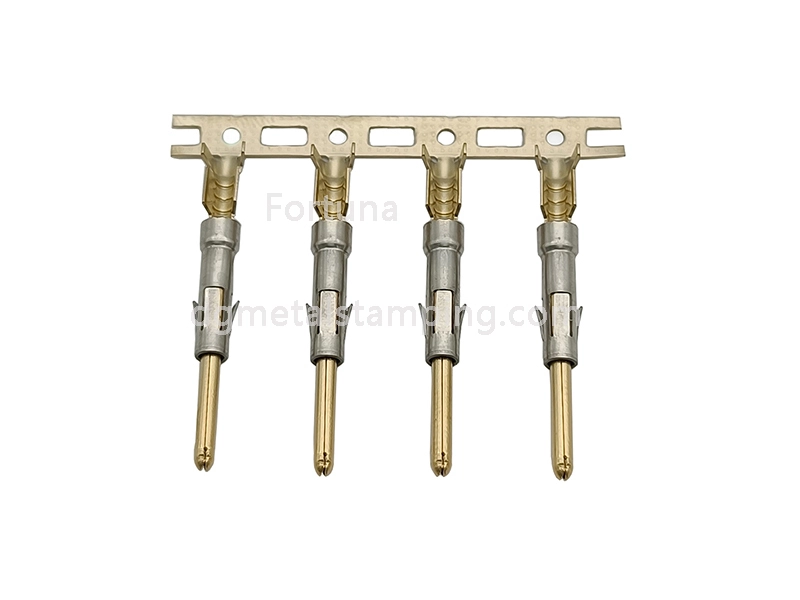
Every stamping factory claims quality. Few can prove it — with certificates, inspection records, and a defect rate measured in parts per million instead of percentages. stamping parts manufacturer Fortuna proves it the same way every day: a quality system built to IATF 16949, enforced at every step from incoming material to final shipment.
IATF 16949: The Certificate That Changes Everything
IATF 16949 is the automotive industry's quality management standard, and it is far harder to earn than a generic ISO 9001 certificate. It demands documented processes, statistical control, failure-mode analysis, and continuous improvement — audited regularly by an independent body. Fortuna's quality system complies with IATF 16949, which means the factory's stamping, CNC machining, injection molding and assembly lines all run under the same discipline that global carmakers require from their suppliers. A buyer who sources from an IATF 16949-compliant factory inherits that discipline without paying for a separate audit. That shared discipline is the first thing a stamping parts manufacturer should be able to show a new buyer.
0 PPM: Zero Defective Parts Per Million
The headline number is "0 PPM" — zero defective parts per million on automotive products. That is not a slogan; it is a target enforced by the inspection chain: incoming inspection on every material batch, first-piece inspection on every production run, in-process inspection while the press runs, and final inspection before anything ships. Add CCD full inspection — camera-based checking of every single part — and the system catches the defects that sampling would miss. A stamping parts manufacturer that holds itself to 0 PPM does not ship a bad part and hope the customer doesn't notice; it stops the bad part before it leaves the building.
SPC, MSA, FMEA, APQP, PPAP: The Alphabet of Prevention
The five tools behind the certificate are what make the target achievable. Statistical process control (SPC) watches the press in real time and flags drift before it becomes scrap. Measurement system analysis (MSA) proves the gauges themselves are trustworthy — because a bad measurement is worse than no measurement. Failure mode and effects analysis (FMEA) maps every way a part could fail and builds prevention into the die and the process. Advanced product quality planning (APQP) structures the whole program from prototype to production, and the production part approval process (PPAP) is the customer's sign-off that the part, the process, and the paperwork all match. Together they mean quality is designed into the part, not inspected into it afterwards. These five tools are what separate a serious stamping parts manufacturer from a shop that only inspects at the end.
Tolerances You Can Measure
The numbers on the page are measurable promises. Stamping tolerances run ±0.01–±0.05mm across 85 high-speed punching machines; CNC machining reaches ±0.005mm with a surface finish of Ra 0.8μm on parts from 1 to 32mm in diameter. Progressive dies punch, bend and stretch in a single pass at 0.1 to 3 seconds per stroke, and the average mold lasts about 5 million shots — so the tolerance holds not just on the first part, but on the five-millionth. A buyer who asks for the inspection data gets it, because the data is the product. A stamping parts manufacturer that publishes its tolerances is one that expects to be measured against them.
Third-Party Proof: SGS and CTI
Internal inspection is necessary but not sufficient — which is why Fortuna offers third-party testing through SGS and CTI. An independent lab's report on material composition, plating thickness, or dimensional accuracy is the proof a customer's own quality team wants to see, and it is available when the program requires it. RoHS and REACH compliance is built into material and surface treatment, so the parts are legal in every market they ship to — and the paperwork proves it. Independent testing is the fastest way to tell whether a stamping parts manufacturer means what its brochure says.
After-Sales: Quality After the Delivery
Quality does not end at the loading dock. Fortuna's after-sales team responds within 12 hours and resolves issues within 24 — a commitment that only makes sense when issues are rare, because a factory drowning in complaints could never promise a 24-hour resolution. Prototypes arrive in 7 to 12 days and the fastest mold lead time is 15 days, so a quality concern can be tested and fixed before volume commits. The buyers who stay are the ones who never needed the after-sales promise in the first place.
Getting Started
Ask for the IATF 16949 certificate, the inspection plan, and the last PPAP file — and watch how fast they arrive. A stamping parts manufacturer that answers those three questions in one email is a factory that has nothing to hide.

 English
 Arabic
 French
 Spanish
 Portuguese
 Deutsch
 Turkish
 Dutch
 Russian
 Romaian
 Portuguese (Brazil)
 Greek