


How Precision Metal Stamping Manufacturers Actually Hit ±0.01mm
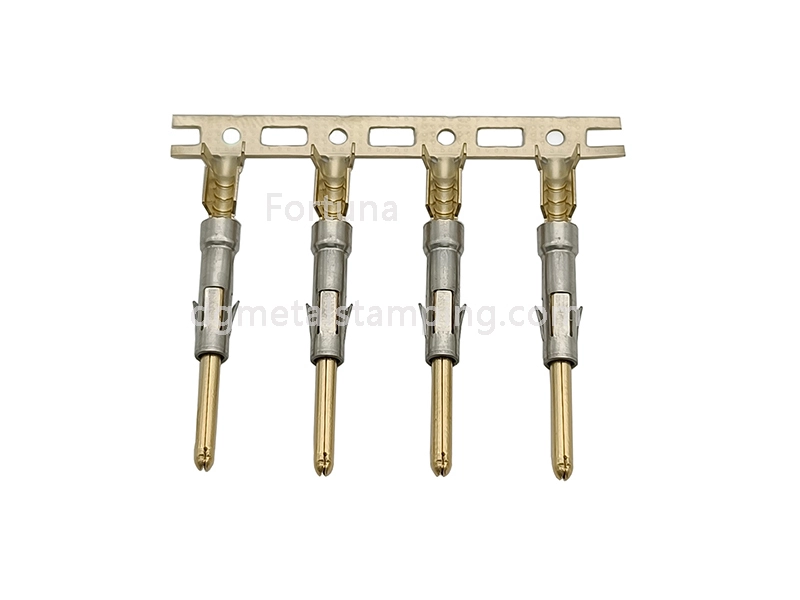
Precision" is the most abused word in stamping. Every factory claims it; almost none can show the machines, the dies, and the inspection records that make it real. precision metal stamping manufacturers like Fortuna earn the word with hardware: 85 high-speed punching machines, 42 Japanese CNC machines, and a tolerance chain that holds from the first part to the five-millionth.
The Die Is the Difference
Precision starts before the press ever runs — in the die. Fortuna's 45 mold technicians and 5 mold design engineers build progressive dies in-house, with the fastest mold lead time at 15 days and 12 sets of continuous molds per month. A progressive die punches, bends and stretches in a single pass at 0.1 to 3 seconds per stroke, so the part never leaves the die to be re-fixtured — and every re-fixture is a chance to lose tolerance. The average progressive mold lasts about 5 million shots, which means the tolerance the die was cut to is the tolerance the millionth part still holds. A factory that outsources its dies cannot control this; a factory that builds them owns it. That in-house die shop is the first thing precision metal stamping manufacturers should be able to show a buyer.
The Press: Speed Without Drift
Eighty-five high-speed punching machines sound like a volume story, and they are — but speed without control is scrap at scale. The press must hold its stroke, its feed, and its alignment through millions of cycles, and that is where the ±0.01–±0.05mm stamping tolerance comes from: not a single lucky measurement, but a process held inside its limits all day. Statistical process control watches the press in real time and flags drift before it becomes scrap, so the tolerance is maintained, not just achieved once and forgotten. Holding tolerance all day is what separates precision metal stamping manufacturers from shops that measure one good part and call it a process.
CNC: The Precision Behind the Precision
Some features cannot be stamped at any tolerance, and pretending otherwise is how parts fail. Fortuna's 42 Japanese 5- and 6-axis CNC machines hold ±0.005mm with a surface finish of Ra 0.8μm on parts from 1 to 32mm in diameter — ten times tighter than the stamping tolerance itself. When a part needs a stamped shell and a machined bore, the CNC side finishes what the press started, under the same roof and the same quality system. The combination is what makes the word "precision" honest: stamping where stamping is best, machining where machining is required, and no gap between the two. The honest ones among precision metal stamping manufacturers will tell you which features belong on the press and which belong on the mill.
Material: The Variable Nobody Sees
Copper, aluminium, stainless steel and iron each spring back differently, expand differently, and wear a die differently — and the tolerance budget has to account for all of it. The die is cut for the material, not just the drawing: strip layout, nesting, and bend allowances are all set by how the specific metal behaves under the press. A factory that stamps one material well and guesses at the rest will hold tolerance on the first and lose it on the second. Fortuna's range across all four metals is why the same ±0.01mm promise holds whether the part is a copper busbar or a stainless bracket. Material behaviour is the variable precision metal stamping manufacturers plan for before the die is ever cut.
Inspection: Measuring Every Part, Not Sampling
A tolerance is only real if it is measured — and sampling is not measuring. Fortuna runs incoming inspection on every material batch, first-piece inspection on every run, in-process inspection while the press runs, and final inspection before anything ships — plus CCD full inspection, camera-based checking of every single part. The quality system complies with IATF 16949 and runs SPC, MSA, FMEA, APQP and PPAP, with automotive products held to "0 PPM" requirements. Third-party SGS and CTI testing is available when the program needs independent proof. The buyer who asks for the inspection data gets it, because the data is the product. That inspection chain is the proof precision metal stamping manufacturers offer when a buyer asks how the tolerance is held.
Prototypes: Proving Precision Before Volume
Prototypes arrive in 7 to 12 days, and that short loop is where precision is proven. Run the prototype, measure it against the drawing, adjust the die — then commit to volume, where unit costs drop by at least 60% on high-volume orders. The buyers who prototype once never pay for the same mistake twice, and the factory that welcomes the prototype is the one confident its tolerance will survive the measurement.
Getting Started
Ask for the tolerance sheet, the inspection plan, and the last PPAP file — and watch how fast they arrive. precision metal stamping manufacturers that answer those three questions in one email are factories that have nothing to hide.

 English
 Arabic
 French
 Spanish
 Portuguese
 Deutsch
 Dutch
 Italiano
 Russian
 Romaian
 Portuguese (Brazil)
 Greek