


FUE Hair Transplant for Mid Scalp Thinning at Glamorous
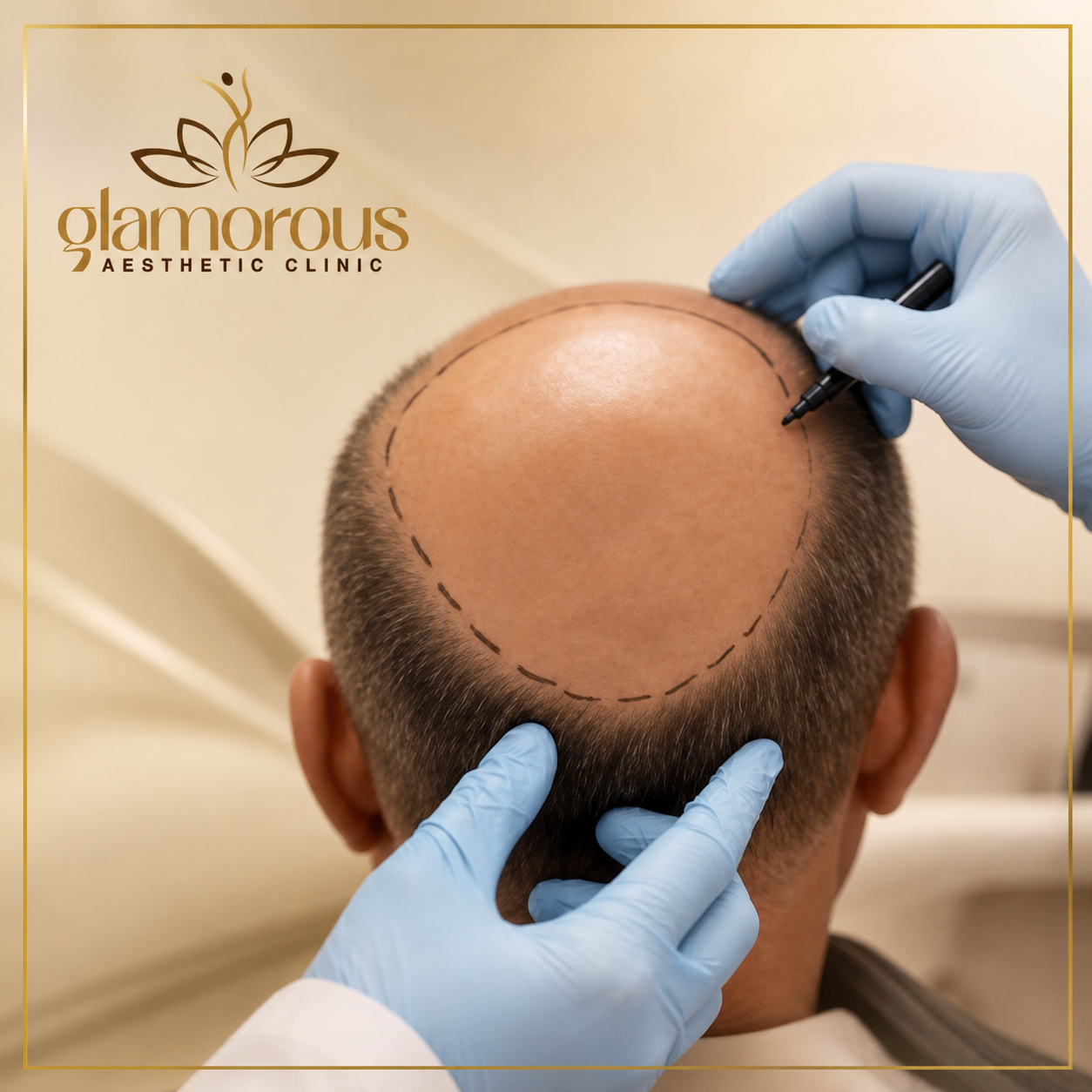
Mid scalp thinning is one of the most overlooked forms of hair loss, yet it affects a large number of men and women who notice their hair becoming sparse across the central area of the head. Unlike a receding hairline or a thinning crown, the mid scalp sits between these zones, and thinning here can make the entire top of the head look uneven. Many people try shampoos, serums, and supplements for months before realizing that the affected follicles may need a more lasting solution. For those who want a permanent and natural-looking result, FUE Hair Transplant in Islamabad at Glamorous offers a carefully planned approach to restoring density in the mid scalp.
Understanding Mid Scalp Thinning
The mid scalp is the central part of the head, stretching from behind the frontal hairline to just before the crown. Thinning in this region often appears as a widening part line, visible scalp under bright light, or a gradual loss of volume when the hair is styled.The most common cause is androgenetic alopecia, a genetic condition in which hair follicles become sensitive to the hormone dihydrotestosterone. Over time, sensitive follicles shrink, produce thinner hairs, and eventually stop producing visible hair. Other contributors include chronic stress, nutritional deficiencies, hormonal changes, thyroid disorders, and certain medications. Because the causes vary, a proper diagnosis is the first step toward the right treatment.
What Is FUE Hair Transplantation?
Follicular Unit Extraction, commonly known as FUE, is a modern hair restoration technique in which individual follicular units are harvested directly from a donor area, usually the back and sides of the scalp. These areas are genetically resistant to the hormone that causes balding, so the transplanted follicles tend to keep growing for life.Each graft, containing one to four hairs, is extracted with a fine micro punch and then placed into tiny incisions in the thinning area. Since the method does not require a strip of scalp to be removed, it avoids a linear scar and generally allows a quicker, more comfortable recovery. This makes FUE especially suitable for people who like to wear their hair short or want to avoid visible marks in the donor region.
Why FUE Suits Mid Scalp Thinning?
The mid scalp demands a particular kind of precision. Hair here must blend smoothly with the existing hair in front and behind, and it must follow the natural direction, angle, and flow of the surrounding growth. FUE allows the surgeon to select grafts individually and place them with careful control over depth, angle, and density.Another advantage is that transplantation can be done in a way that protects the native hair. Many patients with mid scalp thinning still have some healthy hair in the area, and a skilled team works around these hairs to avoid damaging them. Experienced planning helps the transplanted hair merge with the existing hair so that the result looks like natural growth rather than a treated area.
Who Is a Good Candidate?
Ideal candidates are generally adults whose hair loss pattern has stabilized or can be managed with medication, and who have a sufficient supply of healthy donor hair. Good overall health, realistic expectations, and a clear understanding of the process also matter.Younger patients with rapidly progressing hair loss are often advised to begin medical therapy first, because transplanting into an area that is still actively thinning can lead to an uneven look later. Women with diffuse thinning may need additional evaluation, including blood tests, to rule out treatable causes before surgery is considered. A thorough consultation at Glamorous helps determine whether the procedure is appropriate and what outcome can reasonably be expected.
The Consultation and Planning Stage
Every successful hair transplant begins with a detailed consultation. The specialist examines the scalp, assesses the extent and pattern of thinning, evaluates donor hair quality and density, and reviews the patient’s medical history. Magnified scalp analysis may be used to measure hair thickness and follicle health.During this stage the patient and the doctor discuss the desired density, the number of grafts likely to be required, and the design of the treated area. A personalized plan is then created, so the patient knows what to expect before the day of surgery. Open discussion about limitations is part of professional care, because results depend on donor supply, hair texture, scalp laxity, and individual healing.
The Procedure Step by Step
On the day of the procedure, the donor area is trimmed and the scalp is cleaned. Local anesthesia is administered, which keeps the patient comfortable throughout. Grafts are then extracted one at a time and kept in a carefully maintained solution to preserve their viability.Once extraction is complete, the surgeon creates recipient sites in the mid scalp, paying close attention to angle, direction, and spacing. The grafts are then implanted into these sites. Depending on the number of grafts, the session may take several hours, and patients are usually able to rest, listen to music, or take short breaks during the process. Most people return home the same day.
Recovery and Aftercare
Recovery after FUE is typically straightforward. Mild redness, swelling, and small scabs around the treated area are common in the first few days. Patients receive clear instructions on washing, sleeping position, activity restrictions, and medication, and following these closely supports healing and graft survival.Small scabs usually fall away within the first two weeks. Around this time, many patients notice that the transplanted hairs shed, which is a normal part of the cycle. This is often alarming for those who are unprepared, but the follicles remain beneath the skin and begin producing new hair in the following months.
Expected Results and Timeline
Hair growth after transplantation is gradual. New growth generally begins around the third to fourth month, with hairs starting out fine and slowly becoming thicker and stronger. By six to nine months, most patients see a visible improvement in coverage, and final results are typically evident at twelve to eighteen months.Because the transplanted hair is taken from genetically resistant areas, it can be cut, styled, colored, and washed like normal hair. Maintaining the native hair around the transplanted area is also important, so some patients are advised to continue medical treatments or supportive therapies alongside the surgery to preserve long-term density.
Possible Risks and How They Are Minimized
Like any procedure, FUE carries potential side effects, including temporary swelling, itching, numbness in the donor area, folliculitis, and in rare cases infection or uneven growth. Most of these are mild and resolve with proper care.The risk of complications is reduced by choosing an experienced medical team, following sterile protocols, and adhering to the aftercare plan. Ethical clinics also avoid overpromising and are transparent about what can and cannot be achieved, which builds trust and leads to more satisfying outcomes.
Choosing the Right Clinic in Islamabad
The skill of the team matters as much as the technique itself. When selecting a clinic for FUE Hair Transplant in Islamabad, patients should look for qualified doctors, a clean and modern facility, personalized treatment planning, and honest communication. Reviewing before and after cases, asking about the surgeon’s experience with mid scalp work, and understanding the follow-up arrangements are all sensible steps.Glamorous focuses on individualized care, with each treatment plan designed around the patient’s hair pattern, facial features, and long-term goals. This attention to detail helps ensure that the transplanted hair looks balanced and natural from every angle.
Conclusion
Mid scalp thinning can affect confidence and appearance, but it does not have to be permanent. FUE hair transplantation provides a refined, minimally invasive way to restore density in this challenging area by using a patient’s own resistant follicles. With a proper diagnosis, careful planning, skilled surgical technique, and disciplined aftercare, patients can achieve natural, lasting results that blend seamlessly with their existing hair. If you are considering FUE Hair Transplant in Islamabad, a consultation at Glamorous is a practical first step toward understanding your options and building a clear path to fuller, healthier-looking hair

 English
 Arabic
 French
 Spanish
 Portuguese
 Deutsch
 Turkish
 Dutch
 Italiano
 Russian
 Portuguese (Brazil)
 Greek