


Wall Rendering in Spain: How to Get a Smooth Finish That Actually Lasts
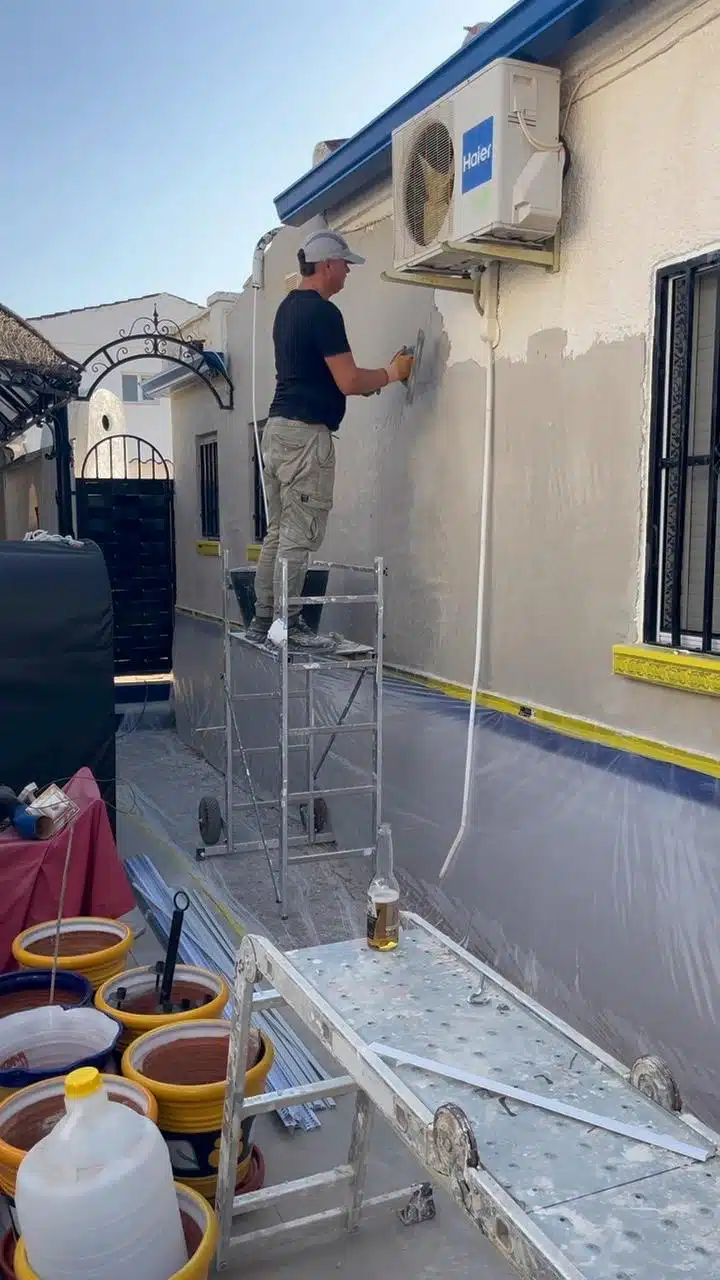
If you own a home in Spain, you already know how hard the climate works on your walls. Strong summer sun, sudden heavy rain, salty coastal air and the occasional cold snap inland all take a toll. Over time, paint fades, small cracks appear, and damp starts to creep in.
That is usually the moment people begin searching for wall rendering in Spain. And it makes sense. A good render does two jobs at once: it protects the structure of your house and it gives the outside a clean, modern look.
This guide walks you through what rendering really involves, why a smooth finish is so popular, and how to choose the right option for your property.
What Is Wall Rendering, Exactly?
Rendering means applying a protective coating over the exterior walls of a building, usually over brick, block or concrete. The render forms a durable outer skin that shields the masonry underneath. It is then finished with a decorative coat or paint.
Think of it as a raincoat and a fresh outfit for your house, all in one.
Why Homeowners in Spain Choose Rendering
There are a few very practical reasons rendering is so common here.
1. Protection from sun and rain
Bare brick and old paint are porous. Water soaks in, then dries out, then soaks in again. Over the years that cycle breaks down the surface. A quality render seals the wall and helps stop moisture from reaching the structure.
2. Less damp and mould
Damp walls lead to mould, peeling finishes and that musty smell nobody wants indoors. Rendering will not remove damp that is already inside the house, but it is one of the best ways to stop fresh water getting in from outside.
3. A better-looking home
Mismatched materials, patched repairs and weathered paint can make even a well-built house look tired. Rendering ties everything together into one clean surface, which is why it is so popular for renovations and for homes being prepared for sale.
4. A chance to improve insulation
If you are already paying for scaffolding and wall preparation, it is a smart moment to think about energy efficiency too. Combining rendering with thermal insulation can help keep your home cooler in summer and warmer in winter.
Why Smooth Rendering Is So Popular
Smooth rendering has become the go-to choice for modern Spanish homes, and it is easy to see why.
- Clean, contemporary look. Smooth walls suit everything from white Mediterranean villas to sharp, minimalist new builds.
- Easier to keep tidy. Fewer ridges and textures means less dust and dirt clinging to the surface.
- Plays well with colour. Whites, creams, greys and soft earth tones all look crisp on a smooth base.
- Flexible finish. It works on new walls, repaired walls and previously rendered surfaces, provided the preparation is done properly.
The keyword there is preparation. A smooth finish shows every flaw underneath it, so the base needs to be sound, level and clean before any coating goes on. This is where an experienced team earns its fee.
Types of Render: Which One Is Right for You?
Not every render suits every wall. Here is a quick, honest overview.
Sand and cement render
The traditional option. It is strong, widely used and usually the most affordable. The downsides are a longer drying time and a greater tendency to crack if it is not applied carefully.
Acrylic render
Acrylic render includes a flexible additive that helps it resist cracking. It dries faster, comes in a wide range of colours and textures, and gives a very neat smooth finish. It also offers good protection against water and UV exposure, which matters under the Spanish sun. You can see more on our acrylic mortar page.
Monocouche render
A pigmented powder applied in a single layer. Because the colour is mixed in, you do not need to paint it afterwards, which saves time. It is breathable and weather resistant.
Polymer render
A polymer-modified mix that bonds strongly to difficult surfaces. It is often recommended for walls that have had moisture trouble because it adds extra water resistance.
If you are unsure, the surface, the climate where you live and your budget will usually point to the right choice. That is exactly what a site visit is for.
What Does the Rendering Process Look Like?
Every project is different, but a professional job generally follows these steps:
- Survey and assessment. The walls are checked for cracks, damp, loose material and old render that has failed.
- Repairs and preparation. Damaged areas are repaired and the surface is cleaned so the new render can bond properly.
- Base coat application. The main render layer is applied evenly to build a strong, level surface.
- Smoothing. The surface is carefully worked to achieve that clean, even finish.
- Final coat or paint. A protective finish in your chosen colour completes the job.
You can read a fuller breakdown on our process page.
Is Rendering Worth the Investment?
Honestly, it depends on your situation, and it is worth thinking it through before you commit.
Rendering is not the cheapest exterior job, especially on a large property, and removing or replacing it later can be costly. But if your walls are damaged, damp-prone or simply looking worn, a well-applied render can protect the building for years and noticeably lift its appearance and market appeal.
The real money-wasters are rushed prep work and the wrong material for the wall. Getting those two things right matters far more than the price per square metre.
Quick Tips Before You Start
- Fix damp at the source first. Render will not cure existing moisture problems.
- Ask what material is being used and why. A good contractor can explain their choice clearly.
- Check finished projects. Photos of previous work tell you a lot. Take a look at our gallery.
- Plan the timing. Avoid applying render in extreme heat or heavy rain, as conditions affect curing.
- Think about insulation now. Adding it later means repeating much of the work.
Frequently Asked Questions
How long does wall rendering last?
With proper preparation and a suitable material, a render can last many years. Lifespan depends on the product, the exposure of the wall and how well it is maintained.
Can you render over old render or painted walls?
Often yes, provided the existing surface is sound and well bonded. Loose or failing render needs to be removed first. A site survey will confirm what your walls need.
Does smooth rendering crack more than textured finishes?
Not necessarily. Cracking is mostly down to the base, the mix and the application. Flexible options such as acrylic render are particularly good at resisting it.
Do I need to repaint after rendering?
It depends on the type. Monocouche is coloured through, while sand and cement or acrylic renders usually get a finishing coat.
Ready to Give Your Walls a Fresh Start?
Wall rendering is one of those upgrades that protects your home and improves the way it looks at the same time. The secret is choosing the right material and trusting the job to people who take preparation seriously.
At Ever Coat, we offer professional rendering for homes and buildings across Spain, with smooth, durable finishes designed to handle local conditions. Not sure where to begin? Book a free site survey and we will look at your walls, talk through your options and give you honest advice, with no pressure.
You can also call us on +34 966 942 022 or email info@ever-coat.com.

 English
 Arabic
 French
 Spanish
 Portuguese
 Deutsch
 Turkish
 Dutch
 Italiano
 Russian
 Portuguese (Brazil)
 Greek