


Is JavaScript Enough to Start a Full Stack Development Career?
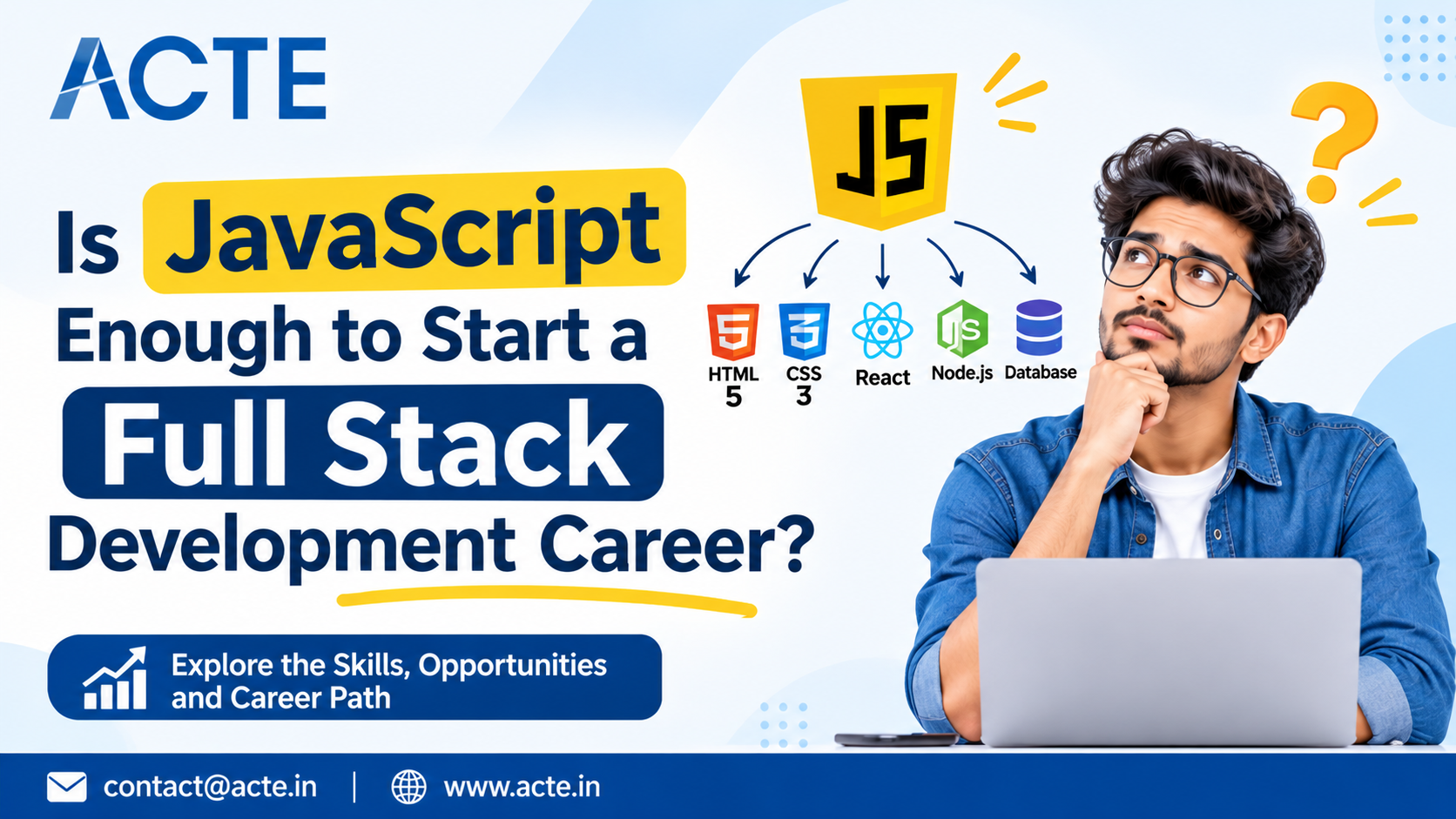
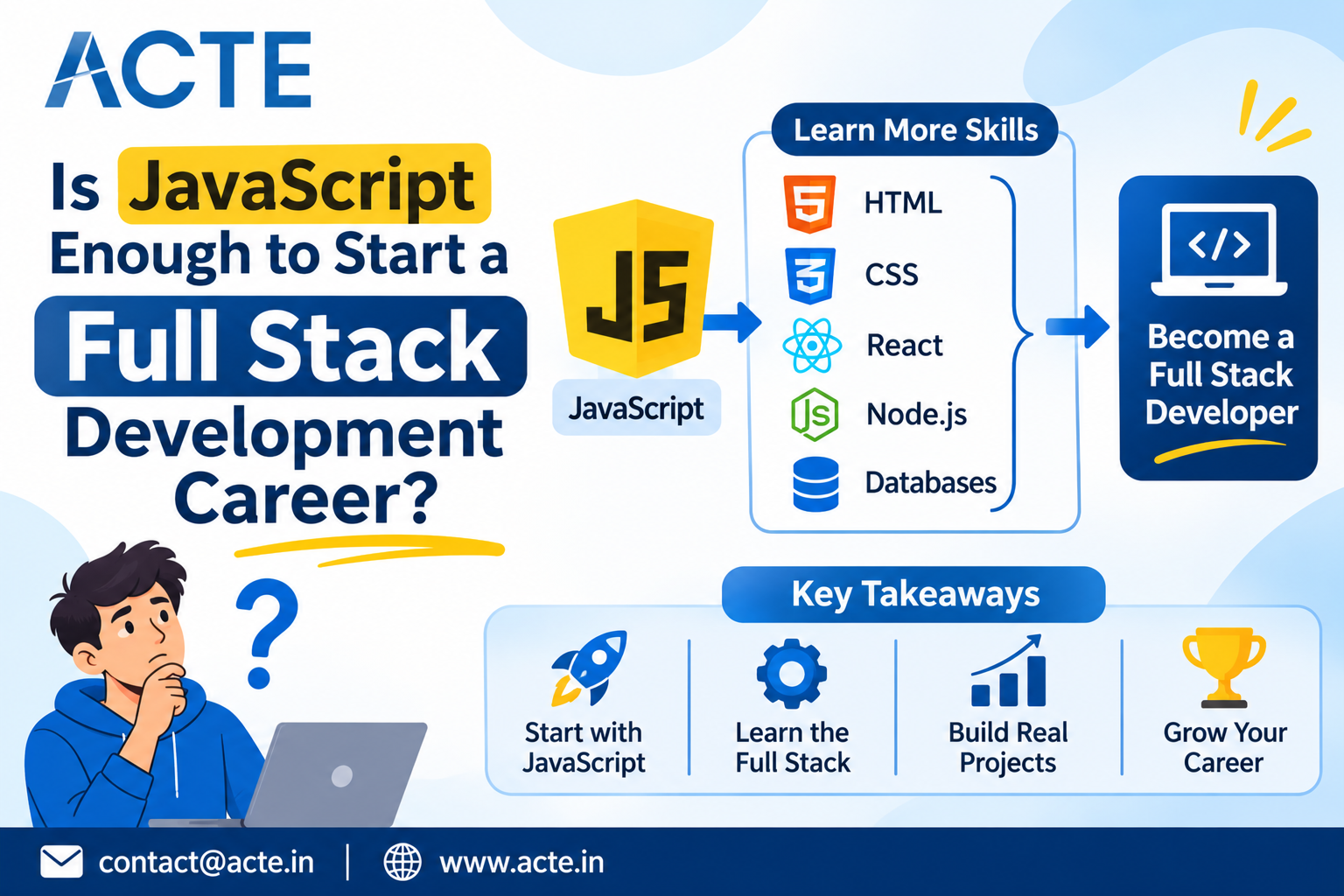
JavaScript is one of the most popular programming languages for building modern web applications. It allows developers to create interactive websites, develop server-side applications, and connect different components of a web application. For beginners interested in full stack development, JavaScript provides a strong foundation because it can be used for both frontend and backend programming. However, learning JavaScript alone is not enough to become a job-ready full stack developer. Understanding HTML, CSS, frameworks, databases, APIs, and deployment is equally important. Through practical projects and structured learning, aspiring developers can build the technical skills required to work on complete web applications.
Understanding the Role of JavaScript in Full Stack Development
JavaScript plays an important role in full stack development because it helps developers build both the user interface and the application logic behind a website. On the frontend, it manages user interactions, validates forms, updates content, and creates dynamic experiences. On the backend, technologies such as Node.js allow developers to process requests, manage application logic, and communicate with databases. This flexibility makes JavaScript a valuable starting point for beginners. Learners exploring Full Stack Developer Training can strengthen their programming fundamentals and understand how different web technologies work together to build complete applications.
Learning HTML and CSS Alongside JavaScript
Although JavaScript provides functionality, HTML and CSS are essential for creating complete web pages. HTML defines the structure of a website, including headings, forms, images, and navigation elements. CSS controls the layout, colours, typography, and responsive design that help websites work across different screen sizes. JavaScript adds interactive features that make these elements more useful. Beginners should learn how to combine all three technologies to create functional and visually appealing websites. Practising by building landing pages, registration forms, and personal portfolio websites helps learners understand how frontend technologies complement one another and prepares them for more advanced development tasks.
Exploring Frontend Frameworks and Libraries
Once the fundamentals of JavaScript are clear, learning a frontend library or framework can help developers build more complex applications. React is widely used for creating reusable interface components and managing changing application data. Developers should understand components, props, state, event handling, hooks, and basic routing before working on larger projects. They should also learn how to fetch information from APIs and display the results dynamically. These concepts help developers create applications that are easier to maintain and expand. Learners interested in Full Stack Training in Chennai can focus on developing their frontend skills through practical exercises and projects that reflect common web development requirements.
Developing Backend Skills with Node.js and Express.js
Full stack development involves more than designing the pages users see. Developers must also understand how applications process information, manage requests, and deliver responses. Node.js enables JavaScript to run on the server, while Express.js simplifies the development of backend applications and REST APIs. Beginners should practise routing, middleware, error handling, data validation, and authentication. Understanding HTTP methods such as GET, POST, PUT, and DELETE is also important when building applications that communicate with a frontend. These skills help developers create the server-side functionality required for login systems, user profiles, order processing, and other application features.
Understanding Databases and API Integration
Databases are essential for storing and managing information in full stack applications. Developers should learn how relational databases such as MySQL organise data into tables and how document databases such as MongoDB store information in flexible structures. Understanding queries, relationships, CRUD operations, and data validation helps developers retrieve and manage information effectively. API integration is another important skill because it allows different applications and services to exchange data. For example, an e-commerce website may use APIs to display products, manage customer accounts, and process orders. Learners pursuing Full Stack Developer Training in Bangalore can build a stronger technical foundation by practising database operations and connecting frontend interfaces with backend services.
Building Practical Projects to Strengthen Development Skills
Practical projects help beginners apply JavaScript and related technologies to realistic development challenges. A personal portfolio website is a useful starting point because it introduces page design, navigation, and interactive elements. After gaining confidence, learners can build a task management application with user authentication, database storage, and CRUD functionality. More advanced projects may include an e-commerce platform, an online learning portal, an appointment booking system, or an employee management application. These projects demonstrate how frontend, backend, and database components work together. Working through the complete development process also helps learners improve debugging, testing, problem-solving, and application design skills.
Preparing for Full Stack Developer Career Opportunities
Learning JavaScript alongside other web development technologies can prepare beginners for several career opportunities. Depending on their skills and project experience, they may pursue junior JavaScript developer, frontend developer, React developer, backend developer, or full stack developer positions. Employers often look for candidates who can explain their code, solve programming problems, collaborate with teams, and demonstrate practical project experience. Familiarity with Git, GitHub, deployment platforms, responsive design, and basic web security can further strengthen a candidate's profile. Learners can explore Full Stack Developer Training in Hyderabad to continue developing relevant skills and prepare for industry expectations through structured learning and practical development exercises.
Conclusion:
JavaScript is an excellent starting point for a full stack development career because it supports both frontend and backend programming. However, becoming a capable full stack developer requires knowledge of HTML, CSS, frontend frameworks, server-side development, databases, APIs, and deployment. Practising these technologies through real-world projects helps learners develop problem-solving abilities and understand how complete applications are built. With consistent learning, practical experience, and a well-organised project portfolio, beginners can establish a strong foundation and work towards a successful career in full stack development.

 English
 Arabic
 French
 Spanish
 Portuguese
 Deutsch
 Turkish
 Italiano
 Russian
 Romaian
 Portuguese (Brazil)
 Greek