


How Do Modular IVF Labs Manufacturers Help Laboratories Achieve Accreditation?
Introduction
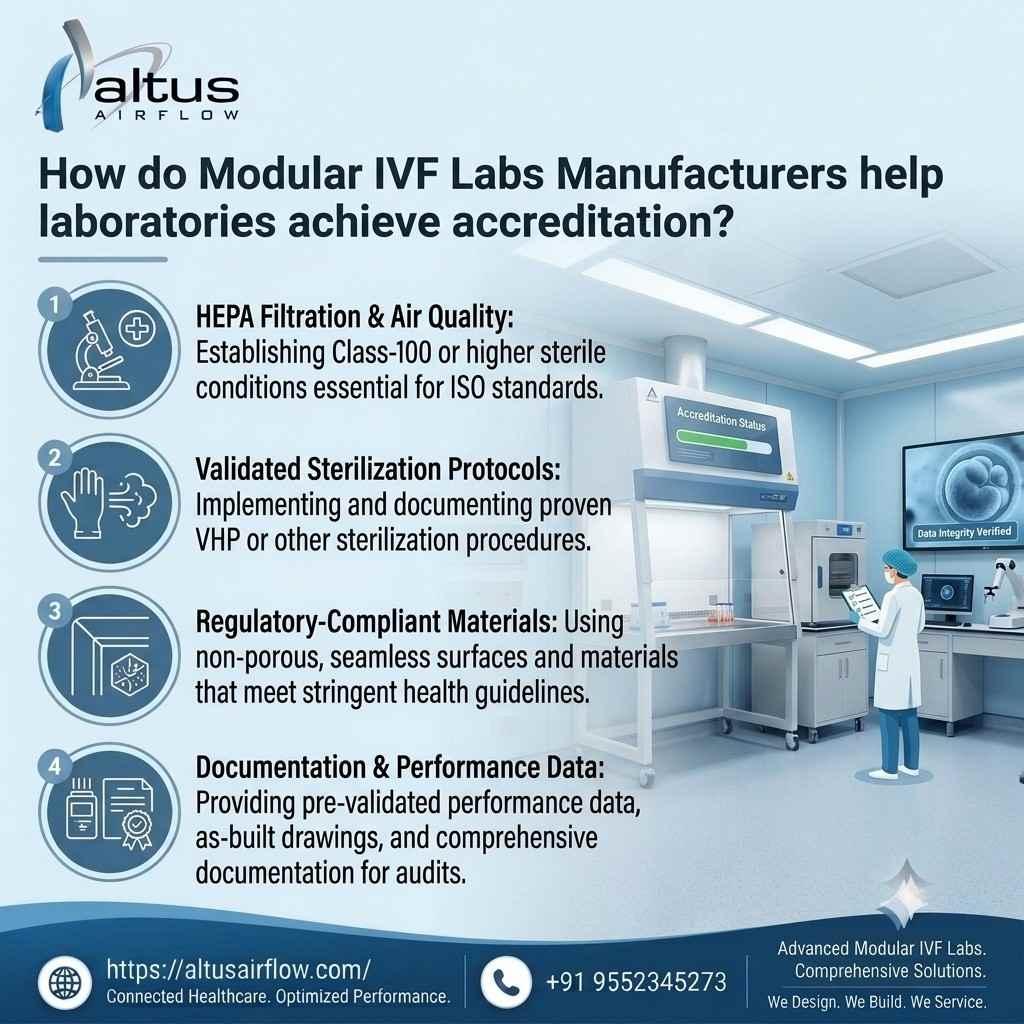
Altus Airflow provides specialized modular infrastructure solutions for fertility clinics and reproductive healthcare facilities. Modular IVF Labs Manufacturers help laboratories prepare for accreditation by developing controlled environments, organized workflows, reliable ventilation systems, and infrastructure that supports quality management. Accreditation requires more than installing laboratory equipment; facilities must demonstrate that their spaces, procedures, documentation, and environmental controls meet applicable requirements. A carefully planned modular laboratory can make compliance easier to manage while supporting consistency, traceability, and safe embryology practices.
Accreditation is an important step for IVF laboratories seeking to demonstrate their commitment to quality and patient care. It involves evaluating infrastructure, equipment, personnel, operating procedures, and quality assurance systems. A coordinated laboratory design helps establish the physical foundation needed for these requirements.
1. Understanding Accreditation Requirements
The first step towards accreditation is understanding the standards and guidelines applicable to the laboratory. Requirements may differ depending on the country, accreditation body, regulatory framework, and services provided by the fertility centre.
An IVF laboratory may need to demonstrate compliance in areas such as:
-
Laboratory infrastructure and space planning.
-
Environmental monitoring and control.
-
Equipment installation and maintenance.
-
Standard operating procedures (SOPs).
-
Sample identification and traceability.
-
Staff training and competency.
-
Quality control and documentation.
-
Cleaning, disinfection, and waste management.
An experienced modular laboratory design team reviews these requirements with the clinic's management and quality personnel. This helps translate accreditation expectations into practical infrastructure and layout decisions.
Manufacturers and project specialists should not assume that a particular modular design automatically guarantees accreditation. The laboratory must also establish and maintain the required operational procedures, records, and quality systems.
2. Designing Infrastructure for Controlled Laboratory Conditions
Embryology laboratories require carefully controlled environmental conditions to support sensitive procedures. Temperature, humidity, air quality, and other environmental parameters may influence laboratory operations and must be managed according to the facility's protocols.
The laboratory layout should support different activities without creating unnecessary movement or workflow conflicts. Areas for sample handling, embryo culture, preparation, storage, and documentation should be arranged according to operational requirements.
Modular construction can support this process through:
-
Smooth, cleanable wall and ceiling surfaces.
-
Carefully planned equipment locations.
-
Suitable flooring and interior finishes.
-
Accessible service routes.
-
Organized laboratory workstations.
-
Integrated environmental control systems.
These features help create a structured environment that can be maintained and inspected more efficiently. The final design should be reviewed against the applicable accreditation criteria before construction begins.
3. HVAC Systems and Air Quality Management
Heating, ventilation, and air-conditioning systems are important elements of IVF laboratory infrastructure. The HVAC design should support the environmental conditions specified for the laboratory's activities.
A suitable system may include air handling equipment, filtration, controlled air distribution, temperature regulation, and humidity monitoring. Where required by the design criteria, pressure relationships between different rooms may also be established and monitored.
Important considerations include:
-
Appropriate filtration arrangements.
-
Controlled supply and return airflow.
-
Temperature and humidity management.
-
Accessible filter replacement locations.
-
Environmental monitoring points.
-
Preventive maintenance provisions.
The HVAC system should be designed and commissioned by qualified specialists. Airflow measurements, filter checks, and other specified performance tests should be documented.
These records can help the laboratory demonstrate that its environmental systems have been assessed and maintained. However, accreditation depends on the complete quality and operational framework, not HVAC performance alone.
4. Supporting Cleanroom Design and Contamination Control
Contamination control is a significant consideration in IVF laboratories because reproductive cells and embryos require carefully managed handling conditions. Laboratory interiors should support effective cleaning and reduce avoidable sources of contamination.
Modular wall panels, ceiling systems, sealed joints, and suitable surface finishes can help create interiors that are easier to clean and inspect.
A contamination-control strategy may include:
-
Selecting appropriate non-shedding and cleanable materials.
-
Planning separate areas for different laboratory activities.
-
Managing personnel and material movement.
-
Providing suitable handwashing and cleaning facilities.
-
Establishing approved cleaning and disinfection procedures.
-
Monitoring environmental conditions according to laboratory protocols.
The choice of materials should be reviewed against chemical compatibility, durability, cleaning requirements, and relevant standards.
A well-organized interior helps the laboratory implement its contamination-control procedures consistently. Staff training and routine monitoring remain essential to maintaining these conditions.
5. Efficient Workflow and Functional Zoning
Accreditation assessments often consider whether laboratory activities are organized in a way that supports safe, consistent operations. Poorly arranged spaces can create unnecessary movement, interfere with sample handling, and make procedures harder to standardize.
Modular laboratory planning allows the facility to define functional zones according to its services and workflow.
These may include:
-
Embryology work areas.
-
Andrology and semen analysis areas.
-
Oocyte and embryo handling spaces.
-
Cryopreservation and storage areas.
-
Media preparation areas, where applicable.
-
Equipment and utility zones.
-
Documentation and administrative workstations.
The layout should consider the movement of staff, samples, consumables, and equipment. It should also provide sufficient access for cleaning, maintenance, and inspection.
Modular IVF Labs Manufacturers can support workflow planning by coordinating modular partitions, workstations, utility connections, and equipment positions. The clinic's embryologists and laboratory managers should participate in this process to ensure that the design reflects actual clinical activities.
6. Equipment Integration and Qualification
IVF laboratories depend on specialized equipment such as incubators, microscopes, laminar airflow workstations where specified, refrigerators, freezers, and cryopreservation systems.
For accreditation, equipment should be suitable for its intended use, correctly installed, maintained, and supported by appropriate records.
The infrastructure design should provide:
-
Correct electrical supply and outlet positions.
-
Suitable equipment dimensions and clearances.
-
Appropriate ventilation around heat-generating devices.
-
Backup power connections where required.
-
Convenient access for servicing.
-
Space for calibration and performance checks.
Equipment qualification and validation should follow the manufacturer's recommendations and the laboratory's quality management procedures. Records may include installation checks, calibration certificates, service reports, maintenance logs, and performance verification results.
The design and installation team can coordinate equipment placement and utility requirements, while the laboratory and qualified service providers remain responsible for the relevant operational checks and records.
7. Environmental Monitoring and Data Recording
Accreditation generally requires laboratories to demonstrate that important environmental conditions are monitored and managed. Depending on the laboratory's procedures, monitoring may cover temperature, humidity, equipment performance, and other specified parameters.
Monitoring systems can include sensors, data loggers, alarms, and centralized display interfaces.
Useful features may include:
-
Continuous or scheduled temperature recording.
-
Humidity monitoring where required.
-
Alerts for defined operating limits.
-
Equipment temperature records.
-
Data storage and retrieval.
-
Documented response procedures for deviations.
The monitoring plan should identify responsible personnel, acceptable limits, review frequency, and escalation procedures.
Digital monitoring can make it easier to retrieve historical records during internal reviews and external assessments. However, the laboratory must also establish procedures for responding to alarms, documenting corrective actions, and reviewing data integrity.
8. Documentation and Quality Management Support
Documentation is a central part of accreditation. A laboratory must be able to demonstrate not only that suitable infrastructure exists but also that systems are operated and maintained consistently.
Infrastructure-related documentation may include:
-
Approved architectural and engineering drawings.
-
HVAC design and commissioning reports.
-
Electrical inspection and test records.
-
Equipment installation documents.
-
Filter and airflow test reports, where applicable.
-
Maintenance schedules.
-
Cleaning and disinfection procedures.
-
Utility system operating instructions.
The laboratory's wider quality management system may also include SOPs, staff training records, equipment calibration logs, sample traceability records, incident reports, and internal audit documents.
Modular IVF Labs Manufacturers can contribute by supplying relevant design, installation, and commissioning documentation for the infrastructure within their project scope. The laboratory's quality team must integrate these records into its document-control system and ensure that procedures are implemented.
9. Electrical Safety and Backup Infrastructure
Reliable electrical infrastructure is essential for equipment that supports embryo culture, sample storage, and laboratory analysis. Power interruptions may affect critical processes, so the laboratory should identify which systems require backup support.
Electrical planning may include:
-
Dedicated circuits for selected instruments.
-
Proper earthing and protective devices.
-
UPS connections for critical equipment.
-
Generator-backed emergency supply.
-
Clearly labelled distribution boards.
-
Surge protection where required.
The backup strategy should be based on equipment priorities, risk assessments, and the required duration of support.
Electrical installations must be inspected and tested by qualified professionals. The laboratory should maintain records of relevant inspections, backup tests, battery maintenance, and corrective actions.
These arrangements help demonstrate that risks associated with power interruptions have been considered and managed.
10. Supporting Cleaning, Maintenance, and Hygiene Procedures
Accreditation assessments may examine how laboratories maintain cleanliness and prevent contamination. The physical design should make routine cleaning practical and provide access to areas that require inspection.
Modular surfaces and accessible service panels can support cleaning and maintenance when selected and installed appropriately.
The laboratory should establish documented procedures covering:
-
Daily and periodic cleaning.
-
Approved disinfectants and their use.
-
Cleaning responsibilities.
-
Cleaning schedules and records.
-
Maintenance of walls, floors, and ceilings.
-
HVAC filter inspection and replacement.
-
Handling of spills and waste.
Maintenance access is also important. Electrical panels, HVAC components, and utility connections should be reachable without unnecessary disruption to laboratory activities.
The facility should document completed maintenance and investigate recurring issues. Infrastructure design can support these processes, but consistent implementation depends on trained personnel and effective supervision.
11. Installation Testing and Commissioning
Before an IVF laboratory becomes operational, its installed infrastructure should undergo appropriate inspection, testing, and commissioning.
Commissioning verifies that systems have been installed according to approved specifications and perform as intended.
Typical activities may include:
| System | Relevant verification |
|---|---|
| HVAC | Airflow, temperature, humidity, and control performance |
| Filtration | Filter installation and specified integrity testing |
| Electrical | Earthing, circuit protection, and outlet functionality |
| UPS | Backup operation and battery performance |
| Plumbing | Water flow, pressure, and leakage checks |
| Interiors | Surface finish, joint quality, and cleanability review |
| Monitoring | Sensor functionality, alarms, and data recording |
The scope of testing depends on the design, equipment, and applicable standards. Reports should identify the tests performed, results, deviations, and corrective actions.
A documented handover helps the laboratory understand its systems and plan ongoing maintenance.
12. Preparing for Accreditation Assessments
Accreditation preparation requires cooperation between laboratory management, embryologists, quality personnel, engineers, and infrastructure specialists.
Before an assessment, the facility should review whether its physical environment and records align with the applicable requirements.
A preparation process may include:
-
Reviewing the accreditation criteria.
-
Conducting an internal gap assessment.
-
Inspecting laboratory infrastructure and equipment.
-
Checking environmental monitoring records.
-
Reviewing SOPs and maintenance documentation.
-
Verifying staff training and competency records.
-
Closing identified non-conformities.
-
Preparing relevant evidence for the assessment.
Modular IVF Labs Manufacturers can support the infrastructure-related part of this preparation by providing drawings, specifications, installation records, and commissioning documents within their responsibilities.
The accreditation body makes the final assessment based on its own criteria. A modular laboratory design can support readiness, but it cannot replace quality management, staff competency, clinical governance, or regulatory compliance.
Conclusion
Achieving IVF laboratory accreditation requires a combination of suitable infrastructure, controlled environmental conditions, reliable equipment, documented procedures, and continuous quality management. Modular planning can help fertility clinics organize laboratory spaces, integrate essential services, and maintain accessible infrastructure records.
By coordinating design, installation, and commissioning requirements, Altus Airflow supports healthcare facilities in developing functional modular laboratory environments. Working with Altus Airflow can help clinics establish an infrastructure foundation that supports quality processes, operational consistency, and long-term laboratory development.
Frequently Asked Questions (FAQs)
1. How do Modular IVF Labs Manufacturers help laboratories achieve accreditation?
Modular IVF Labs Manufacturers support accreditation readiness through planned laboratory layouts, controlled environmental systems, suitable finishes, equipment integration, and infrastructure documentation.
2. Does a modular IVF laboratory guarantee accreditation?
No. Accreditation also depends on staff competency, clinical procedures, quality management, documentation, and compliance with the applicable standards.
3. Why is HVAC important for IVF laboratory accreditation?
HVAC systems help maintain specified temperature, humidity, filtration, and airflow conditions required by the laboratory's environmental control plan.
4. What documents are needed for infrastructure assessment?
Documents may include approved drawings, commissioning reports, electrical test records, HVAC reports, equipment documents, and maintenance schedules.
5. How does modular design support contamination control?
Suitable modular surfaces, sealed joints, functional zoning, and accessible cleaning areas can support documented contamination-control procedures.
Read Our Previous Blog ---------------> How does an Andrology Room Setup Company install utility and service systems?

 English
 Arabic
 French
 Spanish
 Portuguese
 Deutsch
 Turkish
 Dutch
 Russian
 Romaian
 Portuguese (Brazil)
 Greek