


How Can kingschains Review Label Fit and Robot Access?
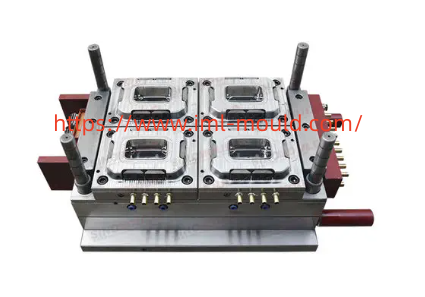
Iml Mould selection requires buyers to examine more than a quotation or a product photograph. A successful packaging project depends on the relationship between product geometry, label material, resin characteristics, automation equipment, and production conditions. Buyers should evaluate these elements before approving a supplier proposal. A detailed review helps clarify technical responsibilities, avoid unnecessary design changes, and establish measurable expectations for the finished product.
Start with the Product and Its Intended Application
Before contacting a supplier, prepare the product drawing, sample, target capacity, and application information. These details help engineers understand the required container shape, wall thickness, rim structure, label area, and functional features.
Different packaging applications have different requirements. A yogurt cup may need reliable stacking and rim dimensions, while a takeaway container may require lid compatibility, leak resistance, and sufficient structural strength. Buyers should explain how the finished item will be filled, stored, transported, and used.
Annual demand and expected output should also be discussed. These figures influence cavity quantity, equipment selection, production planning, and the proposed manufacturing arrangement. Providing realistic project information allows the supplier to prepare a quotation based on actual requirements rather than general assumptions.
Review Label Material and Positioning Requirements
Label specifications deserve attention before the tooling structure is finalized. Buyers should provide label artwork, dimensions, thickness, material type, seam position, and any printing requirements.
The supplier should explain how the label will be positioned and held during production. Depending on the application, this may involve vacuum channels, static control, or another positioning arrangement. The proposed method should suit the label material and the geometry of the finished package.
It is also important to examine the relationship between label edges, gate location, cavity surfaces, and product contours. Poor coordination can result in wrinkles, bubbles, shifting, or visible alignment differences. Buyers should request a technical explanation of how these risks will be evaluated during design and testing.
Confirm Machine and Automation Compatibility
A tooling proposal should match the equipment available at the buyer's production site. If an existing machine will be used, provide its model and relevant specifications before the supplier completes the design.
Important information includes clamping force, platen dimensions, tie-bar spacing, opening stroke, shot capacity, and ejector arrangement. These parameters help determine whether the proposed structure can operate within the available machine space and operating range.
Automation also needs careful consideration. Buyers should discuss robot entry direction, label magazine position, cavity spacing, vacuum connections, product removal, and stacking arrangements. The robot must have sufficient clearance to complete each movement without interfering with the opening and closing sequence.
When the machine, tooling, and robot are planned together, buyers can reduce the possibility of discovering interface problems after installation.
Compare Cavity Configuration and Cooling Design
Cavity quantity affects equipment requirements, production output, tooling cost, and process management. Buyers should avoid selecting a cavity number based only on an estimated production target. The decision should also consider product size, shot capacity, machine capability, robot speed, and cooling requirements.
Ask the supplier how filling balance will be evaluated across the cavities. For multi-cavity projects, differences in part weight, dimensions, or appearance may indicate an imbalance that needs attention.
Cooling channel placement is another important design consideration. A suitable arrangement should account for product geometry, wall thickness, resin properties, and the expected operating cycle. Buyers can request drawings showing the proposed water circuits and ask how access for cleaning and maintenance will be provided.
Ask for Practical Trial and Inspection Evidence
A trial should use the agreed resin, label material, machine conditions, and automation settings. Samples produced under unrelated conditions may not represent the buyer's actual production environment.
Before testing, agree on the inspection criteria. These may include:
Label alignment and edge position
Wrinkles, bubbles, and visible surface defects
Product dimensions and wall thickness
Rim shape and lid compatibility
Part weight and cavity consistency
Stacking performance and functional fit
Cycle conditions and repeated operation
Request samples from every cavity rather than relying on a single selected piece. Inspection reports, operating parameters, trial photographs, and records of corrections provide useful evidence for evaluating the result.
If any sample does not meet the agreed requirements, document the issue and confirm the correction plan. Final approval should follow the agreed acceptance criteria rather than an informal visual assessment.
Examine Communication, Delivery, and Maintenance
Technical communication can influence the progress of a custom packaging project. Buyers should confirm who handles drawing questions, how design revisions are approved, and how changes are recorded. A clear communication process helps prevent outdated files or misunderstood specifications from affecting production.
The delivery schedule should identify important stages, including design approval, material preparation, machining, assembly, trial production, sample inspection, and final acceptance. Buyers should also clarify which milestones require their approval.
After delivery, maintenance documents and technical assistance become relevant to continued operation. Ask whether the supplier provides spare-part information, cleaning instructions, lubrication guidance, connection diagrams, and support for troubleshooting.For buyers working with kingschains, preparing drawings, label samples, resin information, machine specifications, and expected production volumes can make project discussions more organized. Before placing an order, review the technical proposal, trial requirements, delivery scope, and after-sales responsibilities. To view product information and discuss packaging project requirements, visit https://www.iml-mould.com/product/ and share the available product drawings or samples for a more detailed technical assessment.

 English
 Arabic
 French
 Spanish
 Portuguese
 Deutsch
 Turkish
 Dutch
 Russian
 Romaian
 Portuguese (Brazil)
 Greek