


Every Boss in Endacopia Can Be Beaten Without Throwing a Single Punch
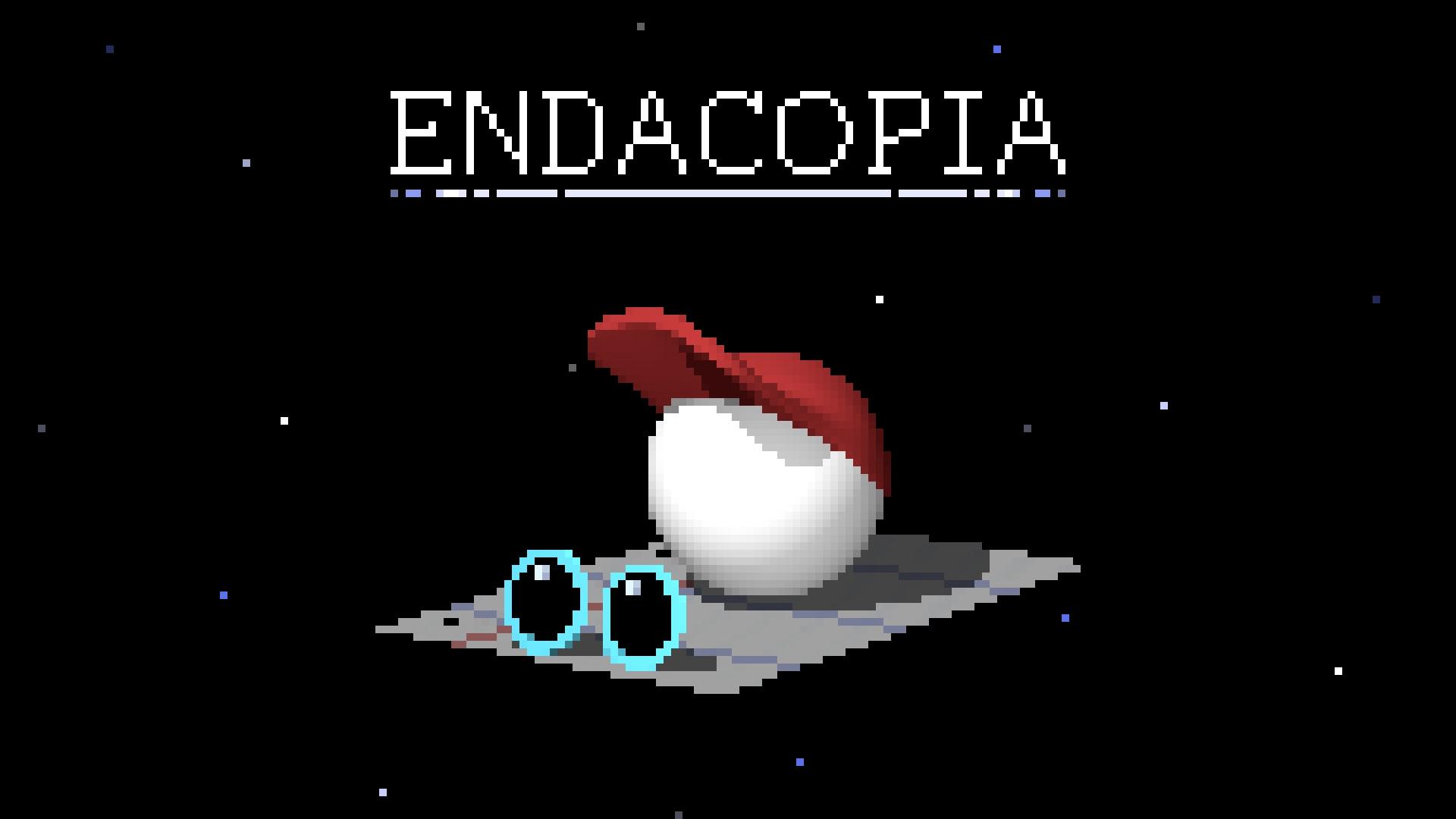
Every boss in Endacopia can be settled without throwing a single punch. The Trapezist goes down if you have the scalpel from the Whack-a-Clown machine. The Chameleon walks away if you answer his five questions correctly. The AI can be sidestepped entirely in The Office. This is not a secret — the game signals each alternate route through exploration — but most players discover it somewhere between their second and third deaths rather than before the first one. The result is that the combat system and the puzzle system are always in conversation with each other, and the most interesting question the game asks is not how to win a fight but whether the fight is even worth having.
Clockey and the Prologue's Real Purpose
Clockey, the first boss Mellow encounters after launching Doors.exe, is usually described as a tutorial fight. That description is accurate but incomplete. Clockey exists to establish that the first-person combat segments are readable — the attack patterns follow a visual logic, the timing windows are generous compared to later encounters, and the fight is short enough that even players who lose once or twice will understand the system. What Clockey also does is model the concept of avoidance before avoidance is explicitly available as an option.
In the Prologue's monster sequence, the game asks the player to point at the cabinet where Mellow is hiding. Choosing the wrong cabinet — deliberately misleading the monster — produces a better outcome than cooperation. This is the first time Endacopia tells the player that wrong answers sometimes work better than correct ones. Players who remember this moment during the Chameleon's question sequence in Timesville often describe a feeling of recognition: the rule was established at the very start and given back in a form that actually mattered. Players returning to Clockey after completing the AI fight consistently describe the first boss as feeling almost stationary by comparison — which is an accurate measure of how much the game's combat demands have escalated by that point.
The AI Fight and What It Actually Measures
The AI — associated with Genesis-01, the entity managing The Office's button room — represents the first genuine skill test in Endacopia. The community divide between players who find the fight reasonable and players who describe it as brutally hard almost always comes down to whether first-person combat has been engaged with as a core mechanic or treated as interruptions to be survived. Players who learned Clockey's timing tend to clear the AI on the second or third attempt. Players who have been clicking through combat moments quickly often hit the AI as a wall with no apparent solution.
The avoidance route requires specific preparation: the Transparent Mug from the Gambling Den filled at the Office water cooler, poured on the plant to produce the Flower, then the Wrench used on the water cooler panel to access the Core Key. Players who skipped the den to reach the AI faster — common among players who find the currency-grind sections tedious — will find themselves without options and have to fight. This is the most discussed example in the community of Endacopia's optional content being functionally mandatory on certain routes. The honest acknowledgment most guides avoid: the AI fight, even with full preparation for the alternate route, requires Gambling Den completions in a specific order. Players without that knowledge describe the fight as harder than the game intends. Players with it describe the difficulty as fair.
The Trapezist and the Circus Tent Fight
The Trapezist is Misery Town's climax, and her fight in the Circus Tent is the most visually noisy first-person sequence in the game. The community calls her a "pattern boss" — her attacks repeat in a readable structure — but the tent's environment makes the first encounter feel chaotic. New players often report that they cannot immediately identify which visual elements are part of the attack and which are decoration.
The scalpel-based alternate resolution requires completing the Whack-a-Clown puzzle before arriving at the tent. The game does not tell you the scalpel will be useful later — it places the opportunity in front of you and waits. What most guides understate is that the fight cannot be triggered at all until Mellow's eyes are recovered from Timesville. The Circus Tent is physically accessible during Misery Town exploration, but the boss encounter does not trigger without the eyes. This is the strongest evidence that Endacopia's non-linear structure has a preferred sequence even if it does not enforce one outright.
The Chameleon and the Question That Cannot Be Guessed
The Chameleon confrontation in Timesville is the most mechanically unusual boss encounter in Endacopia because it has two completely different resolution methods requiring completely different preparation. The fight — puppets as projectile weapons, stamina management, patience over aggression — is punishing if the player runs dry mid-combo. But the dialogue route requires knowing the Chameleon's real name before the conversation begins. That name is on a headstone in the Timesville graveyard and is not the same in every run.
This procedural variability — Ozzie in most runs, Ollie in others — makes the dialogue route impossible to look up in advance and apply without visiting the graveyard. All five of the Chameleon's questions must be answered correctly for Case Closed to trigger. This is the only place in Endacopia where information gathered in the world is strictly required to resolve a boss through dialogue, making the Chameleon the purest expression of the game's "explore first, fight later" philosophy. The death state afterward — the Chameleon stalking Mellow through Timesville's night cycle — is the detail most likely to cause players to close the game and re-read a walkthrough before trying again.
Henry and the Fight That Cannot Be Avoided
Henry appears throughout Endacopia as a background presence — the keeper of the house, the lizard figure whose name appears on the floppy disk and in the late-game file sequence. By the time Henry becomes an active obstacle in Ending A, the player has had enough encounters with his presence that the confrontation feels earned. Unlike every other boss, Henry has no alternate resolution on the Ending A route. No scalpel equivalent, no dialogue sequence, no preparation chain removes the need to engage. Henry must be fought.
The community's reading is that Henry's unavoidability is thematic. Every other obstacle — Clockey, the AI, the Trapezist, the Chameleon — can be circumvented with enough preparation. Henry cannot. The house he represents, the system he stands for, the relationship between Henry and Mellow built over the full runtime — these things do not resolve through clever puzzle work. Endacopia makes that point by removing the alternate route that players have come to expect.
What the Combat System Is Really Asking
Players who treat first-person combat as interruptions tend to find the boss fights harder than players who understand that combat is itself a puzzle. The timing windows, the stamina bar, the visual language of incoming attacks — all follow rules consistent across every encounter. The Chameleon's stamina management requirement is not a new mechanic introduced at the end of Chapter 2. It is the same mechanic that applied to Clockey and the AI, made more demanding by the speed and variety of puppet attacks. What the combat system is measuring, beneath the surface, is whether the player has been paying attention.
- What items are needed to avoid the AI boss fight in Endacopia? To bypass the AI, you need the Core Key, requiring this chain: win dice games in the Gambling Den, collect the Transparent Mug, fill it at the Office water cooler, pour it on the plant to grow the Flower, then use the Wrench on the water cooler panel to make the Core Key drop. With the Core Key and Flower in inventory, the alternate route past the AI becomes available.
- Can the Trapezist be beaten without the scalpel? Yes — the scalpel removes the need to fight, but not the ability. Players without it face the Trapezist in a standard first-person combat encounter and can defeat her through timing-based play. Many players on second playthroughs deliberately fight the Trapezist even with the scalpel available, since the fight grants a separate achievement.
- Does fighting or sparing the Chameleon affect the ending? Both routes — No Strings Attached for winning the fight, Case Closed for the dialogue resolution — lead to the same post-Chameleon state: a chain with a lightbulb drops in the den, and Mellow is pulled back to the starting house. The ending route is determined by other decisions made throughout the game, not the specific Chameleon resolution chosen.
Endacopia asks the same question at every boss encounter and through every puzzle chain: did you explore, or did you rush? Players who find the first-person combat painful and unavoidable are almost always players who skipped optional content earlier in the same region. The fights remaining after full preparation — Henry in Ending A, the Trapezist for players without the scalpel — are fights that are supposed to feel like fights. Mellow recovers his senses one region at a time, and Endacopia recovers its difficulty one boss at a time, until the two things arrive at the same point.

 English
 Arabic
 French
 Spanish
 Portuguese
 Deutsch
 Turkish
 Dutch
 Italiano
 Russian
 Portuguese (Brazil)
 Greek