


Surge Aerator for Improved Aquaculture Pond Circulation
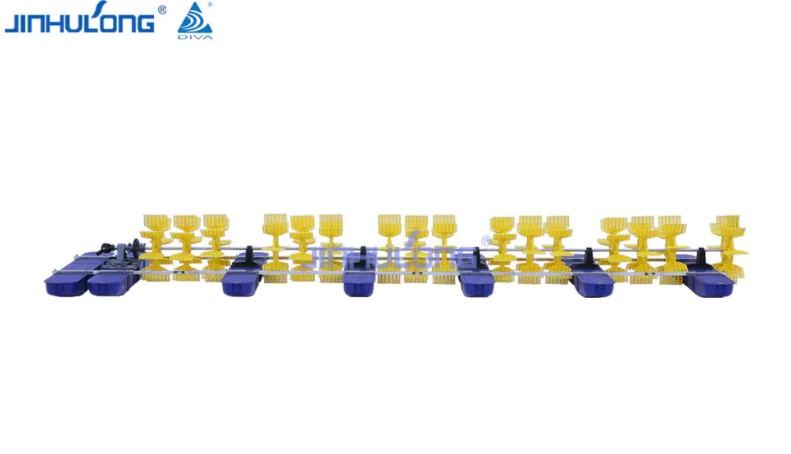
In modern aquaculture, maintaining balanced water conditions is an important part of managing fish and shrimp farming operations. When selecting suitable equipment, a Surge Aerator offers a specialized approach to water movement by creating upward discharge and continuous surface agitation. This design makes a Surge Aerator worth considering for farms that require additional oxygen exchange and improved water circulation. By understanding its mechanical structure, installation requirements, and operating characteristics, aquaculture operators can make more informed decisions when planning pond aeration systems.
Understanding Water Movement in Aquaculture Ponds
Water circulation influences the distribution of dissolved oxygen, temperature, and other environmental conditions throughout an aquaculture pond. When water movement is insufficient, certain areas may experience limited oxygen exchange and uneven water quality.
Mechanical aeration helps address these challenges by encouraging water movement and increasing contact between water and air. Different aeration technologies create different circulation patterns, making equipment selection an important part of pond management.
Upward water movement is particularly relevant in ponds where circulation between different water layers is needed. Equipment that generates surface waves can also improve water-air interaction, supporting oxygen transfer under suitable environmental conditions.
Farm operators should evaluate their pond dimensions, water depth, stocking density, and existing circulation patterns before choosing an appropriate aeration configuration.
The Importance of Impeller Geometry
The impeller is a central component that determines how water moves during equipment operation. Its shape, arrangement, and rotational characteristics influence the direction and distribution of discharged water.
A flower-shaped spiral impeller creates a distinctive upward water flow. As the impeller rotates, water is lifted and released toward the surface, producing a surging effect. This movement increases surface agitation and encourages contact between water and surrounding air.
The floating bowl works together with the impeller to support the equipment and its water discharge structure. These components contribute to the overall operating pattern and help distinguish this equipment from conventional surface aerators.
When comparing different models, buyers should consider impeller materials, structural stability, component accessibility, and compatibility with the motor assembly. These details can influence maintenance convenience and long-term equipment management.
Supporting Oxygen Exchange and Water Distribution
Oxygen availability is an important consideration in intensive aquaculture. Fish and shrimp require suitable dissolved oxygen conditions, while feeding activity and organic matter decomposition can influence oxygen demand.
Surface agitation helps increase the interaction between atmospheric air and pond water. As water rises and spreads across the surface, oxygen transfer can take place through the exposed water area.
The upward circulation pattern may also help move lower water toward the surface, encouraging more uniform water distribution. This can be useful in ponds where natural circulation is limited.
However, aeration performance depends on environmental temperature, pond depth, water conditions, and equipment capacity. Operators should combine mechanical aeration with appropriate feeding management, water monitoring, and routine pond maintenance.
ChinaAerator Equipment Design and Application Features
ChinaAerator offers specialized aeration equipment for aquaculture applications. Its surge aerator design combines a spiral impeller with a floating bowl to generate upward water movement and surface waves.
The equipment also incorporates a water circulation cooling arrangement around the motor and reducer. This structure helps manage heat produced during mechanical operation, which is an important consideration for machinery used over extended operating periods.
For fish and shrimp farming projects, buyers should review motor power, voltage compatibility, installation conditions, structural materials, and spare parts availability before purchasing. Confirming these specifications helps ensure that the selected configuration matches the requirements of the intended application.
Distributors should also consider packaging, transportation arrangements, and technical communication when sourcing equipment for different markets.
Installation and Maintenance for Reliable Operation
Installation planning has a direct influence on equipment operation. Before positioning an aerator, farmers should examine pond layout, water depth, available space, and potential obstacles that could interfere with water movement.
The floating structure should be installed according to the manufacturer's instructions, while electrical connections must meet applicable safety requirements. Operators should also consider whether the equipment location allows convenient inspection and maintenance.
Routine maintenance should include checking the impeller, floating bowl, motor connections, and reducer. Removing accumulated debris and monitoring unusual vibration or operating noise can help identify potential problems.
A consistent inspection schedule helps farmers maintain equipment condition and organize maintenance activities around their production plans.
Choosing suitable aeration machinery requires attention to both product design and actual pond conditions. For more information about aquaculture aeration products, equipment configurations, and application solutions, visit https://www.chinaaerator.net/ to explore available products and find options for different farming requirements.

 Arabic
 French
 Spanish
 Portuguese
 Deutsch
 Turkish
 Dutch
 Italiano
 Russian
 Romaian
 Portuguese (Brazil)
 Greek