


How Does Electric Kettle Thermostat Coupler Support Safety?
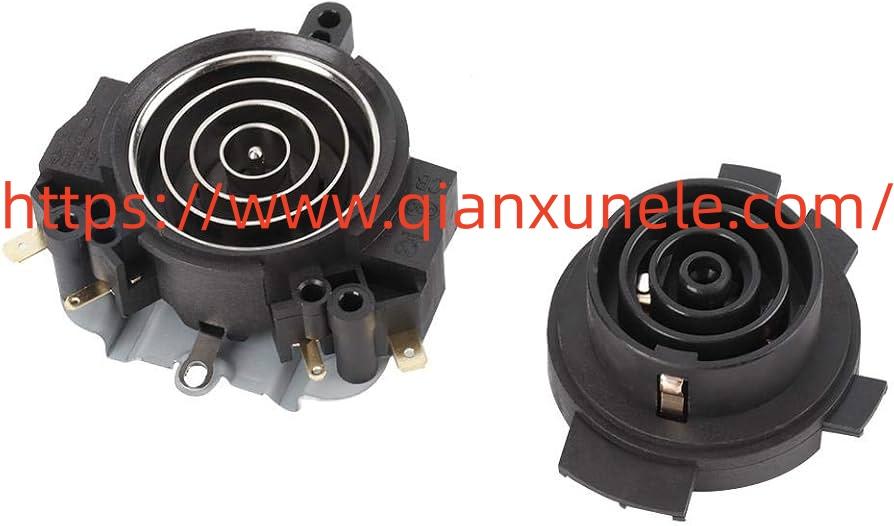
Electric Kettle Thermostat Coupler plays an important role in appliance safety by connecting the heating circuit with temperature-control and protective functions. During normal operation, it helps regulate the heating process and supports automatic power disconnection when the preset temperature is reached. For manufacturers and purchasing teams, selecting a suitable component requires careful evaluation of electrical specifications, mechanical structure, protective functions, and compatibility with the finished product.
How Does Temperature Control Improve Safety?
A heating appliance needs a dependable control system to manage repeated operating cycles. The switching mechanism responds to temperature changes and interrupts the power supply when the required condition is reached. This helps prevent unnecessary heating and reduces the need for users to disconnect the power manually.
Dry-boil protection is another important consideration. When an appliance operates without sufficient water, the temperature around the heating area may rise beyond its normal range. A protective mechanism can respond to this abnormal condition and interrupt the circuit. Buyers should ask about the protection temperature, reset method, and operating conditions before choosing a model.
Normal temperature regulation and emergency protection serve different purposes. Both functions should match the intended application and the design requirements of the finished appliance. Reviewing their specifications together gives manufacturers a clearer understanding of whether a component is suitable for their product.
Which Electrical Specifications Need Attention?
Rated voltage and current are essential selection criteria. The chosen component must match the appliance's electrical system and expected operating load. Buyers should compare the manufacturer's stated ratings with their own design requirements instead of assuming that products with similar appearances are interchangeable.
Contact resistance is another important parameter. Poor electrical contact may contribute to unwanted heat during operation, particularly when the appliance experiences frequent switching cycles. Reviewing resistance data and testing consistency can help purchasing teams assess connection quality.
Insulation resistance and dielectric strength also deserve attention. These properties relate to electrical isolation between conductive sections. Buyers should request relevant test information and confirm that the stated conditions meet their applicable product requirements.
Why Is Mechanical Compatibility Important?
A component may have suitable electrical ratings but still be unsuitable if its dimensions or terminal arrangement do not match the appliance structure. Mounting positions, connection points, housing space, and assembly direction should all be checked during product development.
Manufacturers can prepare technical drawings and physical samples before requesting a quotation. This gives the supplier clearer information about the intended installation environment and helps reduce fitting problems during production.
Material selection should also be discussed. Housing materials and internal structural parts need to suit the expected temperature and operating conditions. Buyers can ask about heat resistance, mechanical stability, and inspection procedures to understand how the component is prepared for repeated use.
What Quality Checks Should Buyers Request?
A structured inspection process can help identify potential problems before mass production. Relevant checks may include dimensional verification, terminal connection inspection, contact resistance measurement, insulation testing, temperature response evaluation, and protective function testing.
Operating life should be assessed according to expected usage frequency. Different models may be designed and tested for different cycle counts, so buyers should compare the applicable data rather than relying on general descriptions. Sample evaluation under representative working conditions can provide additional information about compatibility.
Documentation is equally important. Purchasing teams can request product specifications, inspection records, applicable certificates, and batch identification details. Clear records make it easier to review incoming goods and communicate with the supplier if a quality concern occurs.
How Can Buyers Work More Effectively with a Manufacturer?
Before placing an order, buyers should prepare a clear specification covering rated voltage, current, frequency, operating temperature, protection temperature, terminal layout, mounting dimensions, and expected service cycles. Information about the finished appliance and its intended market can also help the manufacturer assess the application.
At qianxunele, buyers can discuss available models, technical requirements, sample arrangements, and possible customization needs. Providing complete design information at the beginning of the inquiry helps both parties evaluate product suitability and clarify important details before production.A practical purchasing decision should balance electrical performance, protective functions, structural compatibility, and quality documentation. Buyers who compare these factors carefully can reduce avoidable assembly issues and establish clearer expectations with their suppliers. To review available products or discuss a specific application, visit https://www.qianxunele.com/ for further manufacturer information.

 English
 Arabic
 French
 Spanish
 Portuguese
 Turkish
 Dutch
 Italiano
 Russian
 Romaian
 Portuguese (Brazil)
 Greek