


What Should Buyers Check Before Ordering Machining Components?
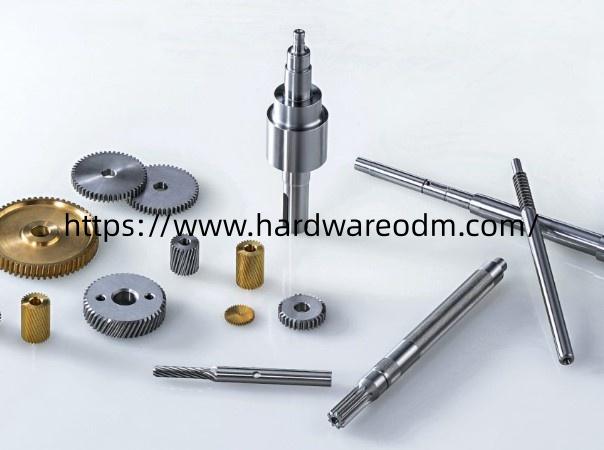
Machining Components require careful planning before an order is confirmed. Buyers need to evaluate more than the quoted unit price because material selection, drawing accuracy, dimensional tolerances, surface conditions, and inspection arrangements all influence the final result. A clear purchasing process helps both parties understand technical expectations, reduce communication gaps, and prepare a suitable production plan.
Review Drawings and Technical Requirements
Engineering drawings provide the basic information needed to understand each part. Before requesting a quotation, buyers should prepare clear 2D drawings and corresponding 3D files whenever available. These documents should identify overall dimensions, hole positions, thread specifications, reference surfaces, and other important features.
Drawing revisions also require attention. If a design has changed, the latest version should be clearly identified and shared with the supplier. Using outdated files can create differences between the approved design and the delivered items.
Buyers should also explain the intended application. Information about assembly conditions, operating loads, temperature, and surrounding structures can help the manufacturer assess whether the proposed design is suitable for the project.
Select Materials According to Application
Material selection affects strength, weight, corrosion resistance, appearance, and production requirements. Aluminum may be considered when lower weight is important, while stainless steel can be suitable for applications requiring corrosion resistance. Carbon steel and brass may also be appropriate for specific mechanical or electrical uses.
However, buyers should not select materials based on general descriptions alone. The required grade, condition, and applicable standards should be stated clearly in the purchasing documents.
It is also useful to ask about material availability and possible alternatives. If a specified grade has a long procurement period, an approved alternative may help maintain the project schedule. Any substitution should receive written confirmation before production begins.
Check Dimensional Tolerances
Not every dimension has the same influence on product function. Some measurements determine how two parts fit together, while others mainly affect appearance or general shape.
Buyers should identify critical dimensions and specify acceptable tolerance ranges on the drawing. Overly strict requirements can increase processing time, inspection work, and production costs. Requirements that are too loose, however, may cause assembly difficulties or unstable product performance.
A useful discussion with the supplier should cover the measurement method, inspection frequency, and acceptance criteria. For complex geometries, buyers may also request sample measurements before approving a larger order.
Understand the Production Process
Different shapes require different production arrangements. Turning, milling, drilling, tapping, grinding, and other operations may be selected according to geometry, material, and order quantity.
Buyers should ask the supplier to explain the proposed production route. This discussion can clarify which operations are completed internally and which require external partners. It can also reveal whether special fixtures, tools, or additional finishing steps are needed.
For projects involving several different items, it is helpful to review how the supplier plans to coordinate their production. A clear schedule can reduce the risk of one delayed item affecting the entire assembly.
Define Surface Finish and Post-Processing
Surface requirements should be confirmed before production starts. Depending on the intended application, items may require polishing, coating, plating, anodizing, heat treatment, or other finishing operations.
Buyers should specify the required appearance and functional conditions. For example, a contact surface may need particular attention to smoothness, while an exposed exterior may require consistent color or corrosion protection.
It is also important to clarify whether final dimensions are measured before or after surface treatment. Coatings and other finishing operations can affect dimensions, so the inspection plan should reflect the final delivered condition.
Confirm Quality Inspection Arrangements
A reliable quality plan should explain how the supplier checks materials, dimensions, surface conditions, and other project requirements. Buyers can ask about inspection equipment, calibration procedures, sample checks, and final verification.
For projects with strict specifications, a dimensional inspection report may be useful. Material certificates and other supporting documents can also help buyers verify that the delivered batch follows the agreed requirements.
Before ordering, both parties should define how nonconforming items will be identified and handled. Clear procedures for reporting problems, reviewing causes, and agreeing on corrective actions can prevent disputes during delivery.
Compare Quotations and Delivery Plans
A quotation should be reviewed according to its full scope rather than unit price alone. Buyers should check whether material costs, setup work, finishing operations, inspection, packaging, and transportation are included.
Delivery schedules also deserve attention. Ask whether the quoted lead time covers material preparation, production, external treatment, inspection, and packing. For repeat orders, discuss expected demand and whether the supplier can plan capacity accordingly.
Written confirmation of specifications, quantities, prices, payment terms, and delivery dates gives both parties a shared reference before work begins.
Discuss Your Project with hardwareodm
Choosing a supplier involves technical evaluation, clear communication, and careful review of commercial details. Buyers should prepare complete drawings, explain the intended application, confirm material and tolerance requirements, and agree on inspection standards before releasing an order. These steps make quotations easier to compare and help reduce avoidable changes during production. For companies sourcing custom industrial parts, hardwareodm provides a starting point for discussing project requirements and product options. Visit https://www.hardwareodm.com/product/ to review the available product information and contact the company about your project needs.

 English
 Arabic
 French
 Spanish
 Portuguese
 Deutsch
 Turkish
 Dutch
 Italiano
 Russian
 Portuguese (Brazil)
 Greek