


Loft Insulation Birmingham: Signs Your Insulation Needs Topping Up or Replacing
Loft insulation is easy to forget once it is in place. Yet over time it can settle, get disturbed or become damp, and it gradually stops doing its job. Checking it regularly, and booking loft insulation Birmingham work when it falls short, helps keep your home warm and your heating working efficiently.
Many homes still have insulation that was laid decades ago and never checked again. This guide explains the warning signs, how to inspect your loft safely, and how to decide between a top-up and a full replacement.
Why Insulation Does Not Last Forever
Insulation works by trapping still air between its fibres. Anything that squashes, soaks or tears the material reduces the air it can hold, and therefore its ability to slow heat loss.
Settling and Compression
Over the years, loose layers can flatten under their own weight. Boxes, boards or foot traffic make this worse, pressing the material down until it is much thinner than when it was laid.
Moisture
Roof leaks, condensation or burst pipes can soak insulation. Wet material loses much of its performance and may stay damp for a long time in a cold, poorly ventilated loft.
Disturbance From Other Work
Electricians, plumbers and aerial installers often move insulation aside to reach cables or pipes. If it is not put back carefully, gaps are left behind that let heat escape.
Warning Signs to Look For
Some signs show up inside the loft, while others appear in the rooms below. If you notice any of these, it is worth having your insulation checked.
Signs in Your Living Space
- Upstairs rooms feel noticeably colder than the rest of the house
- Your heating runs for longer to reach a comfortable temperature
- Bedrooms become uncomfortably warm in summer
- Snow or frost melts quickly from your roof compared with neighbours' roofs
Signs in the Loft Itself
- You can clearly see the tops of the joists
- The insulation looks flattened, patchy or uneven
- It feels damp or shows water stains
- There are droppings, nesting or chewed areas from pests
- It is dark with dust or has a musty smell
How to Check Your Loft Safely
A quick inspection can tell you a lot, but safety comes first. Only step on the joists or on boarded areas, because the plasterboard between joists will not hold your weight.
Wear gloves, long sleeves and a dust mask, as mineral wool fibres can irritate skin and lungs. Use a good torch, and avoid touching cables or junction boxes. Then measure the depth in several places, from the top of the ceiling plasterboard to the top of the insulation.
How Deep Should It Be?
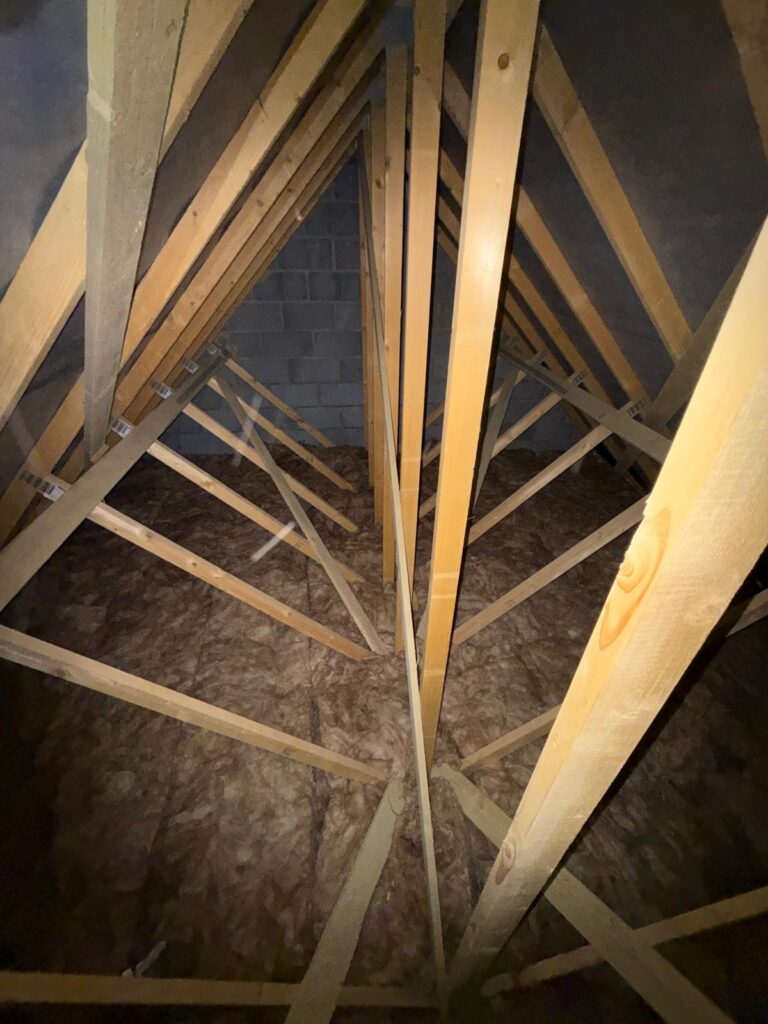
The recommended depth for mineral wool loft insulation is 270mm. If your measurements fall well short of that, a top-up is likely to make a real difference to comfort. Experienced loft insulation Birmingham installers will confirm the depth and condition during a survey, so you know exactly what is needed.
Top-Up or Full Replacement?
The right choice depends on the condition of what is already there. The table below shows when each option usually makes sense.
| Condition of existing insulation | Usual recommendation |
|---|---|
| Dry and clean but too thin | Top up to the recommended depth |
| Dry but patchy or with gaps | Fill the gaps, then top up |
| Damp or water-stained | Fix the cause, then replace the affected material |
| Contaminated by pests | Remove and replace |
| Heavily compressed under old boards | Lift boards, restore depth and use raised supports |
When a Top-Up Is Enough
If the existing material is dry, clean and evenly spread, there is usually no need to remove it. A new layer can be rolled across the joists to bring the total up to the recommended level.
When Replacement Is Better
Damp, dirty or pest-damaged insulation should be removed. Laying new material over it would hide the problem rather than solve it, and the old layer could continue to cause damp or odours.
Fix the Cause Before You Insulate
New insulation will only last if the underlying problem is solved first. Before booking loft insulation Birmingham work, deal with these common causes of damage:
- Roof leaks: Repair missing tiles, failed flashing or damaged felt.
- Condensation: Keep the eaves clear so air can move through the roof space.
- Leaking pipes or tanks: Repair them and lag any pipework in the loft.
- Pests: Seal entry points and deal with any infestation first.
Problem Areas Often Missed
Even a loft with good overall depth can lose heat through a few weak spots. These areas are easy to overlook during a quick check.
The Loft Hatch
A bare hatch board lets warm air pass straight into the roof space. Fitting insulation to the back of the hatch, along with a draught seal around the edge, closes one of the most common gaps.
Around Downlights
Recessed ceiling lights need space around them to stay cool, so insulation is often pulled back and never replaced. Protective covers or loft lids allow insulation to be laid safely around these fittings.
Near the Eaves
Insulation often stops short of the roof edges, leaving cold strips along the outside walls. It should reach as far as possible without blocking the airflow that keeps the roof dry.
Insulation and Loft Storage
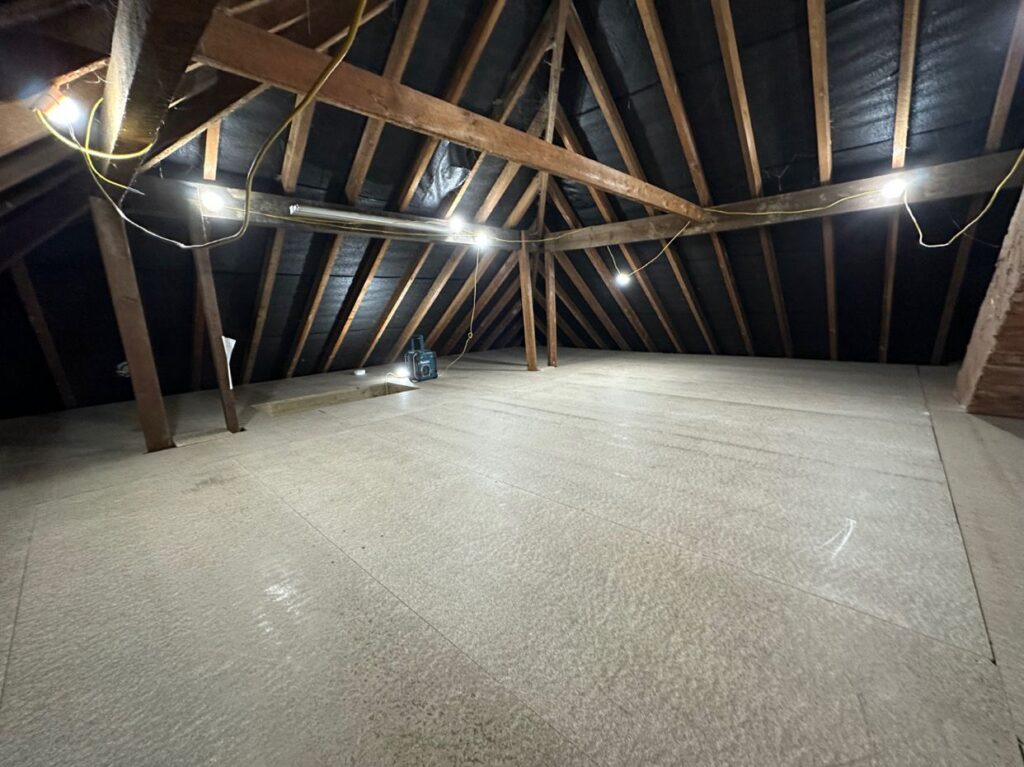
Many homes have old boards laid directly onto the joists, which squash the insulation beneath. If you want both warmth and storage, a raised floor is the better solution, as it lifts the boards clear and lets the insulation keep its full depth.
Insulation can also be fitted around existing raised boards, so you do not always need to remove your storage floor. Your installer will advise on the best approach for your loft.
What a Professional Service Includes
A professional loft insulation Birmingham service begins with a free survey to check the depth, condition and any obstacles in the loft. You then receive a fixed quote. During installation, the team lays the insulation evenly, works carefully around cables and recessed lights, keeps the eaves clear and removes all waste afterwards.
Choosing a fully insured installer also gives you peace of mind, because working in a loft means handling irritating fibres and moving around narrow joists near electrical cables.
Frequently Asked Questions
How often should I check my loft insulation?
A quick look once a year is sensible, and again after any roof repair or work in the loft by other trades.
Can I lay new insulation over old insulation?
Yes, if the old layer is dry, clean and in good condition. Damp or contaminated material should be removed first.
Does damp insulation dry out on its own?
Sometimes, but it often loses performance and may stay damp. It is usually better to fix the cause and replace the affected section.
Do I need planning permission for loft insulation?
No. Insulating a loft does not normally need planning permission.
Will new insulation make my loft colder?
Yes, because more heat stays in the rooms below. That is normal, but it is why tanks and pipes in the loft should be lagged.
Final Thoughts
Loft insulation does not last forever, but a few simple checks will tell you when it needs attention. By spotting the warning signs early and fixing the cause of any damage, you can keep your home warmer and more comfortable for years.
If your insulation is thin, damp or damaged, FIXIT Renovation offers loft insulation Birmingham homeowners can book with a free survey and a fixed, no-obligation quote.

 English
 Arabic
 French
 Spanish
 Portuguese
 Deutsch
 Turkish
 Dutch
 Italiano
 Russian
 Romaian
 Portuguese (Brazil)