


Peripheral IV Catheters Support Growing Intravenous Therapy Requirements
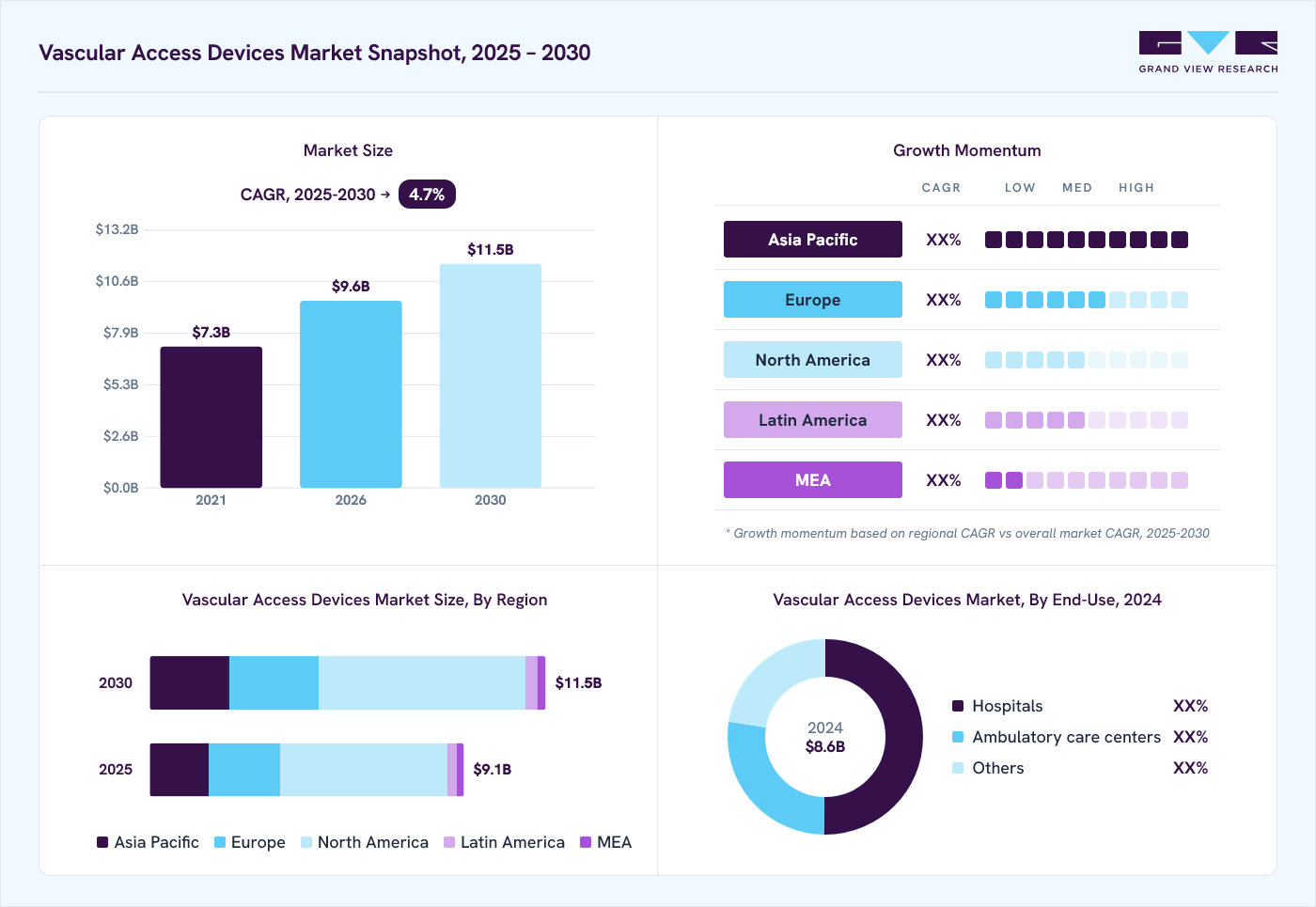
The vascular access devices market is expanding as healthcare providers increasingly rely on advanced medical technologies for administering medications, delivering fluids, collecting blood samples, and supporting long-term patient treatment. The growing prevalence of chronic diseases, rising number of hospital admissions, and increasing demand for minimally invasive medical procedures are strengthening the adoption of vascular access solutions.
Vascular access devices play an essential role in modern healthcare by providing reliable access to the circulatory system. These devices are widely used in oncology, critical care, emergency medicine, dialysis, and intravenous therapy. Growing demand for long-term vascular access, improvements in catheter materials, and increasing emphasis on infection prevention are further influencing market development.
Growing Prevalence of Chronic Diseases Supports Market Expansion
The increasing prevalence of chronic conditions, including cancer, cardiovascular diseases, kidney disorders, and diabetes, is a major factor driving demand for vascular access devices. Patients undergoing chemotherapy, dialysis, and long-term intravenous treatments frequently require dependable vascular access for medication administration and fluid management.
The growing geriatric population is further contributing to demand. Older patients often require repeated medical interventions, extended hospital stays, and continuous medication delivery, increasing the need for reliable vascular access solutions.
Additionally, the rising number of surgical procedures and emergency admissions is supporting the utilization of peripheral intravenous catheters and central venous access devices across healthcare facilities.
Short Peripheral Intravenous Catheters Lead Product Demand
Short peripheral intravenous catheters (Short PIVCs) accounted for more than 44.0% of market revenue in 2024, making them the leading product segment. Their widespread use in hospitals and other clinical settings for fluid administration, medication delivery, and blood collection supports their market position.
Safety-engineered peripheral catheters are gaining attention as healthcare providers increasingly prioritize infection prevention and needlestick injury reduction. Improvements in catheter materials, insertion mechanisms, and securement technologies are also contributing to product development.
Central venous catheters (CVCs) represent another important product category, particularly for patients requiring long-term intravenous treatment, critical care, and specialized medication administration. Meanwhile, peripherally inserted central catheters (PICCs), midline catheters, dialysis catheters, Huber needles, and implantable ports address different clinical requirements.
Go Deeper! Ask Prism AI about the Vascular Access Devices Market.
Hospitals Remain the Primary End-Use Segment
Hospitals accounted for more than 50.2% of market revenue in 2024, supported by high patient volumes, advanced medical infrastructure, and the availability of trained healthcare professionals.
The extensive use of vascular access devices in emergency care, surgical procedures, oncology treatment, intensive care, and dialysis contributes to hospital segment dominance. Hospitals also require a broad range of catheter types to accommodate patients with different treatment durations and clinical conditions.
Ambulatory care centers are gaining importance as healthcare systems increasingly shift suitable procedures toward outpatient settings. The growing preference for minimally invasive interventions, shorter hospital stays, and cost-effective treatment delivery is supporting the adoption of vascular access devices in these facilities.
North America Dominates the Regional Market
North America held 53.4% of market revenue in 2024, maintaining its position as the leading regional market. Strong healthcare infrastructure, high healthcare expenditure, increasing chronic disease prevalence, and widespread adoption of advanced medical technologies support regional demand.
The U.S. is a major contributor, driven by increasing cancer treatment requirements, a growing geriatric population, and the availability of specialized vascular access services. Healthcare providers are also emphasizing catheter safety, infection prevention, and improved clinical training.
Europe represents another established market, supported by advanced hospital infrastructure and increasing demand for long-term intravenous therapies.
Asia Pacific offers considerable growth opportunities due to expanding healthcare infrastructure, increasing access to specialized treatments, and rising patient populations requiring vascular access procedures. Growing healthcare investments in China, India, and Japan are supporting the adoption of advanced catheter technologies across hospitals and ambulatory care facilities.
Request a Sample Report to Explore Detailed Market Insights and Industry Analysis.
Key Vascular Access Devices Companies:
· Teleflex Medical
· BD
· B. Braun
· Smith’s Medical (ICU Medical, Inc)
· Cook Medical
· AngioDynamics
· Medtronic
· Medical Components, Inc.
· Cook Medical
· Terumo Medical Corporation
· Access Vascular, Inc.
About us:
Grand View Research, a market research and consulting company, provides syndicated research reports, customized research reports, and consulting services. Grand View Research database is used by the world's renowned academic institutions and Fortune 500 companies to understand the global and regional business environment. Our database features thousands of statistics and in-depth analysis on 46 industries in 25 major countries worldwide.

 English
 Arabic
 French
 Spanish
 Portuguese
 Deutsch
 Turkish
 Dutch
 Italiano
 Russian
 Romaian
 Portuguese (Brazil)