


Do Laser-Cut Vent Panels Weaken Abrasion Zones Over Time?
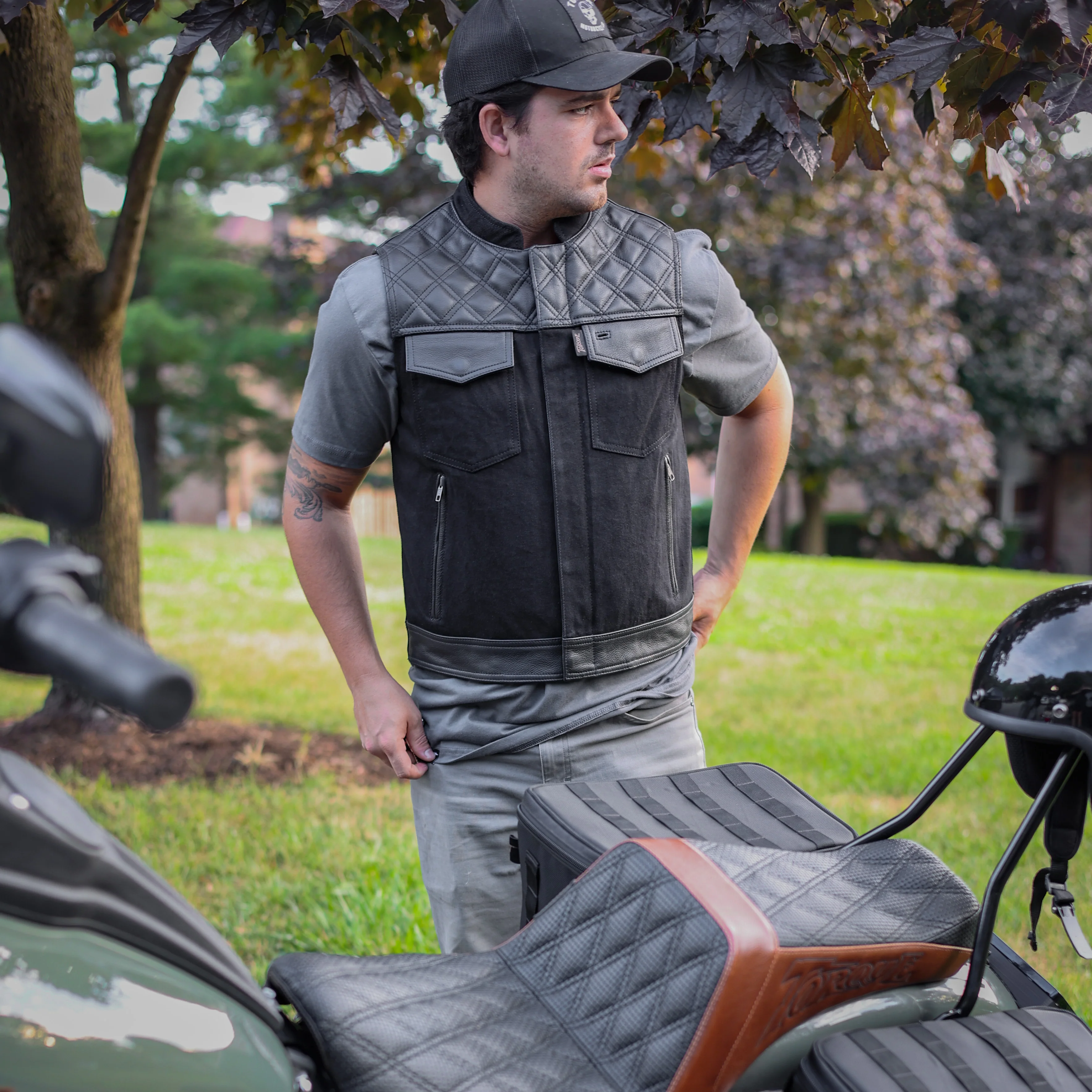
Safety-conscious riders ask this question constantly, and rightfully so. Punching hundreds of holes through protective leather seems counterintuitive when abrasion resistance represents the primary reason for choosing leather in the first place.
The concern isn't paranoia. Removing material from any protective barrier logically reduces its protective capability. But the relationship between perforation and protection involves more nuance than simple "holes equal weakness" assumptions suggest.
Understanding how modern laser-cut perforations affect long-term abrasion resistance helps riders make informed decisions about ventilated gear selection.
How Modern Laser Cutting Actually Works
Traditional perforation methods punched holes through leather using mechanical dies. This process created stress around each hole as metal forced through material, potentially weakening surrounding fibers through the punching action itself.
Laser cutting changed everything. Focused light vaporizes material along precise paths without physical contact. No mechanical stress transfers to surrounding leather. The edges of laser-cut perforations actually seal slightly through heat exposure, creating cleaner boundaries than mechanical methods produce.
A men's perforated leather vest manufactured using quality laser cutting contains perforations with consistent diameter, precise spacing, and sealed edges that resist fraying. These characteristics matter significantly for long-term durability compared to older perforation technologies.
The laser process also enables perforation patterns impossible through mechanical means. Complex arrangements optimizing airflow while maintaining structural integrity require the precision only laser cutting delivers consistently.
Structural Mathematics of Perforated Leather
Material Removal Calculations
Quality micro-perforations remove surprisingly little material despite creating hundreds of holes per square inch. Standard perforation diameters of 0.8mm to 1.2mm arranged in proper patterns remove approximately 8-12% of total surface area within perforated zones.
This means 88-92% of the original leather remains intact, including the fiber structures providing abrasion resistance. The material removal represents far less than visual inspection suggests when examining perforated panels.
Hole Spacing and Pattern Design
Perforation patterns affect structural integrity more than hole diameter alone. Holes positioned too closely create weakness between perforations where material cannot maintain structural continuity. Proper spacing maintains load-bearing pathways between openings.
Best Quality perforated vest men's designs use engineering calculations determining optimal spacing for specific leather weights and intended applications. Budget manufacturers often skip this analysis, creating patterns that look similar but perform worse under stress.
Hexagonal perforation arrangements distribute stress more evenly than grid patterns. The geometry creates more material between holes in critical directions while maintaining adequate airflow. This engineering detail separates protective gear from fashion items wearing protective clothing aesthetics.
Abrasion Performance Changes Over Time
Initial Versus Aged Strength
New perforated leather performs close to solid leather in controlled abrasion testing. The intact material between perforations handles initial contact effectively, and perforation edges resist snagging during brief slide exposures.
Extended ownership introduces variables that affect this baseline performance. Leather conditioning, UV exposure, moisture cycling, and simple aging all influence how perforated panels maintain protective capability over years of use.
Properly maintained perforated leather retains most of its protective capability across normal ownership periods. Neglected leather, whether perforated or solid—degrades significantly faster than cared-for alternatives.
Stress Concentration Realities
Engineering principles confirm that holes in any material create stress concentration points. Forces traveling through material must navigate around openings, creating higher localized stress at perforation edges than identical forces would create in solid material.
This concentration effect matters primarily under sustained stress rather than brief impact. Slide abrasion typically involves short-duration contact where stress concentration has limited time to propagate failure. Extended grinding contact, the worst-case scenario—would eventually exploit these concentration points.
A men's perforated leather vest provides meaningful protection during typical accident scenarios while acknowledging that theoretical maximum protection requires solid construction. The ventilation benefit involves accepting marginally reduced protection ceiling in exchange for substantially improved comfort.
Manufacturing Quality Variations
Premium Construction Standards
Reputable manufacturers place perforations strategically, avoiding high-impact zones where abrasion probability peaks during accidents. Shoulders and spine areas, primary contact points during slides, often remain solid even on extensively perforated designs.
Chest and side panels receive perforation treatment where ventilation benefits maximize while impact probability remains lower. This strategic placement maintains protection where statistics show riders need it most.
Quality control in premium manufacturing ensures consistent perforation execution across production runs. Each hole meets diameter specifications. Spacing remains constant. Leather selection ensures adequate thickness for structural integrity after material removal.
Budget Manufacturing Shortcuts
Lower-cost alternatives often perforate indiscriminately, placing holes wherever production simplicity allows rather than where engineering analysis supports. Shoulder perforations, spine coverage gaps, and inconsistent spacing characterize budget construction.
Thinner leather selections compound these problems. Material that barely meets protection standards before perforation falls below acceptable thresholds after 10% material removal. The combination of inappropriate placement and inadequate base material creates genuinely compromised protection.
Club style women's perforated vests from budget sources frequently demonstrate these shortcuts. Smaller production volumes reduce economic incentives for proper engineering investment. Selecting established brands with documented safety testing becomes especially important for women's sizing where market options remain more limited.
What Testing Actually Shows
Independent abrasion testing comparing solid and perforated leather samples from identical hide sources reveals measurable but modest differences.
CE certification testing, the European standard for motorcycle protective equipment, evaluates abrasion resistance through controlled grinding contact. Quality perforated panels typically achieve certification one level below identical solid construction. The difference exists but remains within acceptable protective ranges for intended applications.
Long-term testing simulating years of UV exposure, conditioning cycles, and mechanical stress shows perforated and solid leather degrading at similar rates when maintained identically. The perforations themselves don't accelerate aging processes that affect overall leather condition.
Perforation edge integrity testing specifically examines whether holes enlarge or edges fray over simulated ownership periods. Quality laser-cut perforations maintain dimensional stability effectively. Mechanically punched perforations show greater tendency toward edge degradation over time.
Maintenance Factors Affecting Longevity
How riders care for perforated gear affects long-term protection more than perforation presence itself.
-
Leather conditioning maintains fiber flexibility that prevents cracking, around perforations and everywhere else. Conditioner penetrates through perforations more easily than through solid leather, potentially improving treatment effectiveness in perforated zones.
-
UV protection matters for all leather but especially for perforated panels where sunlight reaches interior surfaces through the holes. UV-blocking storage and treatment products prevent the brittleness that reduces abrasion resistance regardless of perforation presence.
-
Contamination removal prevents abrasive particles from accumulating in perforations where they could accelerate wear during future contact. Regular cleaning maintains the protective capability that contamination gradually degrades.
-
A perforated vest men's design receiving proper maintenance maintains protective capability across normal ownership periods. Neglected gear, perforated or solid, fails to deliver the protection its specifications promise.
Final Thoughts
Perforated leather provides less theoretical maximum protection than identical solid leather. This physical reality cannot be engineered away through clever marketing or wishful thinking.
However, the reduction falls within acceptable ranges for most riding applications when quality manufacturing standards apply. Strategic perforation placement protecting high-impact zones while ventilating lower-risk areas represents sound engineering compromise rather than dangerous shortcut.
Women's perforated vests from quality manufacturers meet the same engineering standards as men's equivalents. Certification testing doesn't differentiate by sizing, either construction meets protection thresholds or it doesn't.
The meaningful comparison isn't perforated versus solid leather. The meaningful comparison is perforated leather versus what riders actually wear when solid leather feels too hot. Riders choosing textile alternatives or removing leather entirely during hot weather gain nothing from theoretical solid leather protection they're not actually using.
A men's perforated leather vest actually worn provides vastly more protection than solid leather left at home because wearing it seemed unbearable. Practical protection decisions acknowledge human behavior alongside material science.
Quality perforated construction maintains adequate protection while enabling the comfort that keeps protective gear on riders' bodies. That combination serves safety better than theoretical maximums that discourage actual protective gear usage.

 English
 Arabic
 French
 Spanish
 Portuguese
 Deutsch
 Turkish
 Dutch
Dutch
 Italiano
 Romaian
 Portuguese (Brazil)
 Greek
Greek