


Reliable Pressure Generation for Industrial Cleaning
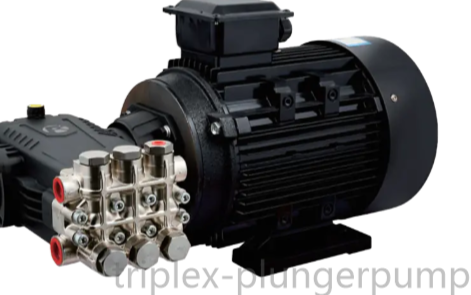
Industrial pumping equipment plays an important role in applications that require liquid delivery under controlled pressure. A Plunger Pump uses reciprocating mechanical movement to draw liquid into a pumping chamber and discharge it through an outlet valve. This operating principle makes the equipment suitable for various industrial cleaning, machinery maintenance, and liquid transfer systems. For international buyers and equipment distributors, understanding its construction, working cycle, and operating requirements is essential when selecting a suitable configuration.
The pumping process begins with a drive mechanism that converts rotational energy into reciprocating movement. In a typical crankshaft-driven design, the crankshaft rotates while connecting rods transfer movement to the plungers. As a plunger moves backward, the chamber volume increases and its internal pressure decreases. The inlet valve opens, allowing liquid to enter. When the plunger moves forward, the chamber volume decreases, the inlet valve closes, and the liquid is discharged through the outlet valve.
The plunger is one of the most important components because it operates in direct coordination with the sealing assembly. Its surface condition, dimensions, material, and alignment influence sealing performance and mechanical reliability. The sealing arrangement prevents excessive liquid leakage while maintaining the pressure required for the pumping process. Seal materials should be selected according to the liquid composition, operating temperature, and intended working conditions.
The fluid end generally includes the pump head, plungers, sealing components, inlet valves, and discharge valves. Each component contributes to the movement and control of the liquid. Valve assemblies are particularly important because they regulate the direction of flow during each pumping cycle. Contamination, deposits, or worn valve seats can interfere with proper operation and reduce delivery efficiency. Suitable filtration and regular inspection help protect these components.
Triplex configurations are commonly used in industrial reciprocating equipment. Three plungers operate at different positions in the pumping cycle, distributing discharge events across the drive rotation. Compared with a single-plunger arrangement, this design can provide a more consistent discharge pattern. However, actual flow stability depends on the pump design, operating conditions, and the hydraulic accessories connected to the system.
Pressure and flow requirements should be determined according to the intended application. Pressure describes the resistance the pump must overcome, while flow represents the quantity of liquid delivered over time. Industrial washing systems may require sufficient pressure to remove deposits and enough flow to carry contaminants away. The selected pump must work with compatible motors, hoses, nozzles, filters, and pressure control devices. Selecting equipment based on only one performance factor can lead to an unsuitable system configuration.
Industrial cleaning is one of the important application areas. Factories may use reciprocating pumping systems for machinery washing, workshop maintenance, vehicle cleaning, and cleaning production equipment. They can also be incorporated into specialized water delivery equipment used in manufacturing and industrial service operations. The actual suitability depends on the pumped medium, operating frequency, pressure requirements, and environmental conditions.
Material compatibility deserves attention during procurement. Pump heads, plungers, valve components, and seals may be manufactured from different materials according to the intended service. Stainless steel can be considered where corrosion resistance is needed, while other suitable metals and engineered materials may be selected for different applications. Buyers should communicate the liquid's chemical characteristics, temperature, viscosity, and contamination level before confirming the material configuration.
Inlet supply conditions have a direct influence on operating reliability. The suction line should provide sufficient liquid without excessive restrictions or air leakage. Inadequate supply can contribute to cavitation, irregular discharge, vibration, and premature component wear. Filters should be inspected regularly to prevent contamination from reaching sensitive internal surfaces. The discharge arrangement must also use pressure-compatible pipes, hoses, fittings, and protective devices.
Installation requires a stable mounting surface, suitable drive alignment, and sufficient space for inspection and maintenance. The pump should be positioned to allow convenient access to lubrication points, valves, and sealing assemblies. Operators should follow the manufacturer's commissioning procedures and verify the operation of pressure controls before placing the system into regular service.
Preventive maintenance helps identify developing problems before they cause unexpected downtime. Inspection activities may include checking for leakage, monitoring vibration, examining valve assemblies, and evaluating seal condition. Lubrication should follow the manufacturer's specified procedure. Replacement components should be compatible with the original equipment design. Before maintenance, isolate the power source, release system pressure, and ensure that stored hydraulic energy cannot create a safety hazard.
For industrial buyers, the purchasing process should include an evaluation of application requirements, liquid compatibility, operating schedule, drive configuration, installation conditions, and spare parts availability. Clear technical communication helps suppliers recommend a suitable arrangement without relying on assumptions about the working environment.
A Plunger Pump can provide dependable pressure generation when its mechanical construction and fluid-end materials are matched to the actual operating conditions. Correct installation, suitable liquid supply, and regular maintenance are essential for long-term service. Buyers looking for industrial pumping solutions can explore available equipment at https://www.triplex-plungerpump.com/product/pumps/ and compare configurations according to their specific application requirements.

 English
 Arabic
 French
 Spanish
 Deutsch
 Turkish
 Dutch
 Italiano
 Russian
 Romaian
 Portuguese (Brazil)
 Greek