


What Should Buyers Check in a Plastic Container Mould?
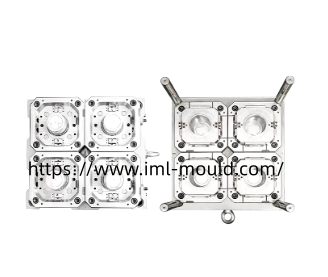
Plastic Container Mould purchasing requires careful preparation because thin-wall packaging must meet practical requirements for strength, appearance, handling, and manufacturing consistency. Buyers should evaluate product geometry, resin properties, machine performance, and tooling construction before approving a quotation. A detailed technical review also helps both parties clarify project expectations, identify possible design concerns, and establish suitable inspection standards. Instead of comparing suppliers by price alone, procurement teams should consider how each engineering decision relates to their actual production conditions.
Prepare Complete Product Information
Accurate product information gives engineers a clear starting point. Buyers should provide 2D drawings, 3D files, physical samples, or detailed measurements whenever available. Important specifications include overall dimensions, capacity, target weight, wall thickness, corner radius, rim structure, and surface finish.
The intended application should also be explained. Packaging for takeaway meals may require different stiffness and temperature resistance from products designed for chilled food, dry goods, or household storage. Expected loading, handling conditions, and transportation methods can influence the structural design.
If a separate lid is required, provide its dimensions and connection details during the initial discussion. The rim, locking points, and contact surfaces should be designed together to support a suitable fit after production.
Confirm Resin Selection and Filling Performance
Material choice influences flow behavior, shrinkage, stiffness, surface appearance, and processing conditions. Polypropylene is commonly considered for food packaging because of its processing properties and suitability for various applications. The final selection should depend on the intended use and relevant market requirements.
Thin-wall products require particular attention because molten resin must travel through narrow sections before cooling. Buyers should discuss the proposed material grade, melt flow characteristics, gate positions, runner dimensions, and possible air-trapping areas with the engineering team.
It is also useful to ask whether the proposed structure can fill consistently without excessive injection pressure or visible defects. For complicated geometries, flow simulation may help identify potential concerns before machining begins.
Match Cavity Quantity With Production Targets
Cavity quantity affects output capacity, tooling investment, machine selection, and maintenance arrangements. A multi-cavity configuration can produce several parts in one cycle, but its performance depends on balanced material distribution.
Ask the manufacturer to explain the cavity arrangement, runner configuration, and filling sequence. Differences between cavities may cause variations in part weight, dimensions, or surface appearance. Consistent material delivery is therefore an important consideration during the engineering review.
Machine compatibility should also be confirmed before final approval. Clamping force, injection capacity, tie-bar spacing, available installation space, and automation requirements all need to match the proposed configuration. Providing the machine model and technical specifications early can help prevent installation difficulties.
Examine Cooling and Venting Arrangements
Cooling has a direct influence on cycle time, dimensional stability, and finished appearance. If different sections lose heat at different rates, uneven shrinkage may result in warpage or distortion.
Buyers can request details about cooling channel positions, water connections, and temperature management. Corners, deep sections, and thicker transition areas deserve particular attention because their geometry may create different cooling conditions.
Venting is another important factor. Air trapped inside the cavity can contribute to burn marks, incomplete filling, and surface defects. The engineering team should identify likely air-trapping locations and explain how the proposed venting arrangement allows air to escape during injection.
Review Ejection and Surface Requirements
After cooling, the finished part needs to be released without unnecessary deformation or visible damage. Thin-wall structures may be sensitive to concentrated ejection forces, especially around corners, narrow edges, and deep sections.
Discuss ejector positions, draft angles, release surfaces, and automatic take-out requirements. Depending on the product geometry, a stripper plate or another release arrangement may help distribute force across a wider area.
Surface requirements should be confirmed before manufacturing. Buyers should specify whether the finished parts need a polished, textured, or particular visual finish. These choices can influence machining methods and later inspection procedures.
Ask About Tool Steel and Factory Inspection
Material selection for the tooling should correspond with the expected production volume, processing conditions, and maintenance plan. Buyers can request information about cavity and core steel, base materials, hot runner components, and replaceable parts.
It is equally important to understand how the factory checks machining accuracy and assembly quality. Relevant procedures may include dimensional inspection, component verification, surface review, and trial testing.
During discussions with the supplier, buyers should share drawings and production targets to clarify the proposed structure, material arrangement, and manufacturing schedule. A clear exchange of technical information helps identify questions before the project moves into the next stage.
Establish Sample Approval and Maintenance Standards
Sample approval should involve measurable criteria rather than visual appearance alone. Buyers can define acceptable ranges for dimensions, part weight, wall thickness, surface condition, and functional performance before the first trial.
For products with matching lids, actual fitting tests should be included. Stacking checks, handling assessments, and leakage tests may also be appropriate depending on the intended application. Multi-cavity projects should be evaluated using samples from every cavity, not just one selected part.
Maintenance planning deserves attention as well. Ask about cleaning procedures, lubrication points, cooling channel care, spare components, and recommended inspection intervals. Operating documents and trial records can help production teams maintain consistent procedures after installation.A well-planned project connects product design with manufacturing requirements throughout engineering, machining, assembly, testing, and delivery. Buyers who prepare accurate drawings, material information, machine specifications, and acceptance criteria can make technical discussions more productive. For customized thin-wall packaging projects, buyers can visit https://www.iml-mould.com/ to discuss design requirements, tooling arrangements, and manufacturing cooperation with the supplier.

 English
 Arabic
 French
 Spanish
 Portuguese
 Deutsch
 Turkish
 Dutch
 Italiano
 Russian
 Romaian
 Greek