


Single Action Rongeur: Uses, Features, and Importance in Surgical Procedures
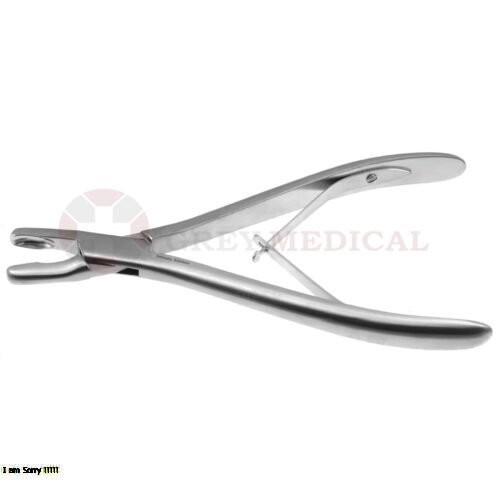
A single action rongeur is an essential surgical instrument designed to remove small pieces of bone and hard tissue with precision and control. Surgeons commonly use this instrument in orthopedic, neurosurgical, and other specialized procedures where accurate bone removal is necessary. Its straightforward mechanism allows medical professionals to perform delicate surgical tasks while maintaining a steady grip and controlled movements. Moreover, understanding its design, applications, and benefits helps healthcare professionals select the single action rongeur for their surgical requirements.

What Is a Single Action Rongeur?
A single action rongeur is a specialized surgical instrument used to cut, bite, and remove small sections of bone or other hard tissue. It typically features two handles, a central joint, and sharp working jaws. When the surgeon squeezes the handles, the jaws close and cut the targeted tissue in a single action.
Unlike double-action rongeurs, which use a compound mechanism to increase cutting force, this instrument operates through a simpler hinge-based design. As a result, it offers direct handling and a familiar operating feel. Surgeons can use it when they need controlled tissue removal without requiring the additional mechanical advantage of a double-action instrument.
Key Features of a Single Action Rongeur
The design of a single action rongeur focuses on simplicity, durability, and surgical precision. Each component contributes to its overall performance during medical procedures.
Some important features include:
1. Sharp Cutting Jaws: The instrument features carefully designed cutting edges that help remove small sections of bone. These jaws support accurate tissue removal when used with appropriate surgical technique.
2. Ergonomic Handles: Its handles provide a comfortable grip and allow surgeons to apply controlled pressure. Therefore, medical professionals can maintain better handling during repetitive surgical movements.
3. Strong Joint Mechanism: The central joint connects the handles and jaws, allowing smooth opening and closing movements. A well-maintained joint supports consistent instrument performance.
4. Durable Construction: Surgical rongeurs commonly use high-quality stainless steel. This material offers strength, corrosion resistance, and compatibility with appropriate cleaning and sterilization procedures.
5. Simple Operation: The single-action mechanism provides a direct connection between handle movement and jaw movement, making the instrument relatively straightforward to operate.
Common Uses in Surgical Procedures
Surgeons use a cryer elevator dental in several medical specialties that require controlled bone removal. Its compact design and cutting mechanism make it useful for accessing and removing small portions of hard tissue.
In orthopedic surgery, professionals may use rongeurs to remove small bone fragments, shape bone edges, or prepare specific areas during surgical treatment. Similarly, neurosurgeons may use suitable rongeur designs when working around bone structures during selected procedures.
Additionally, surgeons may use this instrument in spinal procedures to remove small amounts of bone and improve access to targeted anatomical areas. Dental and oral surgical applications may also involve specialized rongeurs designed for particular bone-removal requirements.
However, the surgeon must always select an instrument that matches the procedure, anatomical location, and required level of precision.
Benefits of Using a Single Action Rongeur
A single action rongeur offers several practical benefits in surgical environments. First, its straightforward mechanism makes handling relatively simple. Surgeons can open and close the jaws through direct pressure on the handles, allowing controlled cutting movements.
Second, its compact construction can support access to specific surgical areas, depending on the instrument's size and jaw design. This feature becomes particularly useful when working in confined spaces.
Furthermore, its durable construction supports repeated use when healthcare professionals follow the manufacturer's cleaning, inspection, and sterilization instructions. The instrument also provides a practical option for procedures that require controlled removal of relatively small amounts of bone.
Nevertheless, proper handling remains important. Excessive pressure or inappropriate instrument selection can damage surrounding tissues or compromise surgical precision.
How to Maintain a Single Action Rongeur
Proper maintenance helps preserve the functionality and lifespan of surgical instruments. Therefore, healthcare professionals should follow a consistent cleaning and inspection routine.
After each procedure, remove visible tissue and biological material according to established instrument-processing protocols. Next, clean the instrument using compatible cleaning products and validated procedures. Pay particular attention to the jaws, joint, and other areas where debris may collect.
After cleaning, inspect the cutting edges for damage, dullness, or misalignment. Also, check the joint to ensure that the handles and jaws move smoothly. If the instrument shows signs of wear or damage, remove it from service and arrange professional evaluation.
Finally, sterilize the instrument according to the manufacturer's instructions and applicable healthcare standards. Proper storage in a clean, dry environment also helps protect its surface and working components.
Choosing the Right Surgical Rongeur
Selecting the appropriate rongeur depends on the surgical application and the surgeon's preferences. Factors such as jaw shape, jaw size, handle design, cutting capacity, and overall construction can influence instrument selection.
Medical professionals should also consider the quality of the materials and the reliability of the manufacturer. A suitable surgical instrument should provide consistent performance, comfortable handling, and dependable construction.
Moreover, comparing single-action and double-action designs can help surgical teams determine which mechanism best suits their procedural requirements. While single-action models provide a straightforward operating mechanism, double-action models offer additional mechanical advantage through their compound joint design.
Conclusion
A single action rongeur plays an important role in surgical procedures that require controlled bone removal and precise tissue management. Its simple mechanism, durable construction, and practical handling make it a valuable instrument in several medical specialties. By understanding its features, applications, and maintenance requirements, healthcare professionals can make informed decisions when selecting surgical equipment.
Grey Medical® is a privately owned medical technology company dedicated to innovation and excellence in the craft of surgical instrument. Through a commitment to quality and thoughtful instrument design, Grey Medical® supports the needs of medical professionals seeking dependable surgical instruments. Choosing appropriate equipment and maintaining it correctly can contribute to an organized surgical environment and consistent instrument performance.

 English
 Arabic
 Spanish
 Portuguese
 Deutsch
 Turkish
 Dutch
 Italiano
 Russian
 Romaian
 Portuguese (Brazil)
 Greek