


Why Does a Wooden Door Develop Small Gaps Near Its Hinges?
Introduction
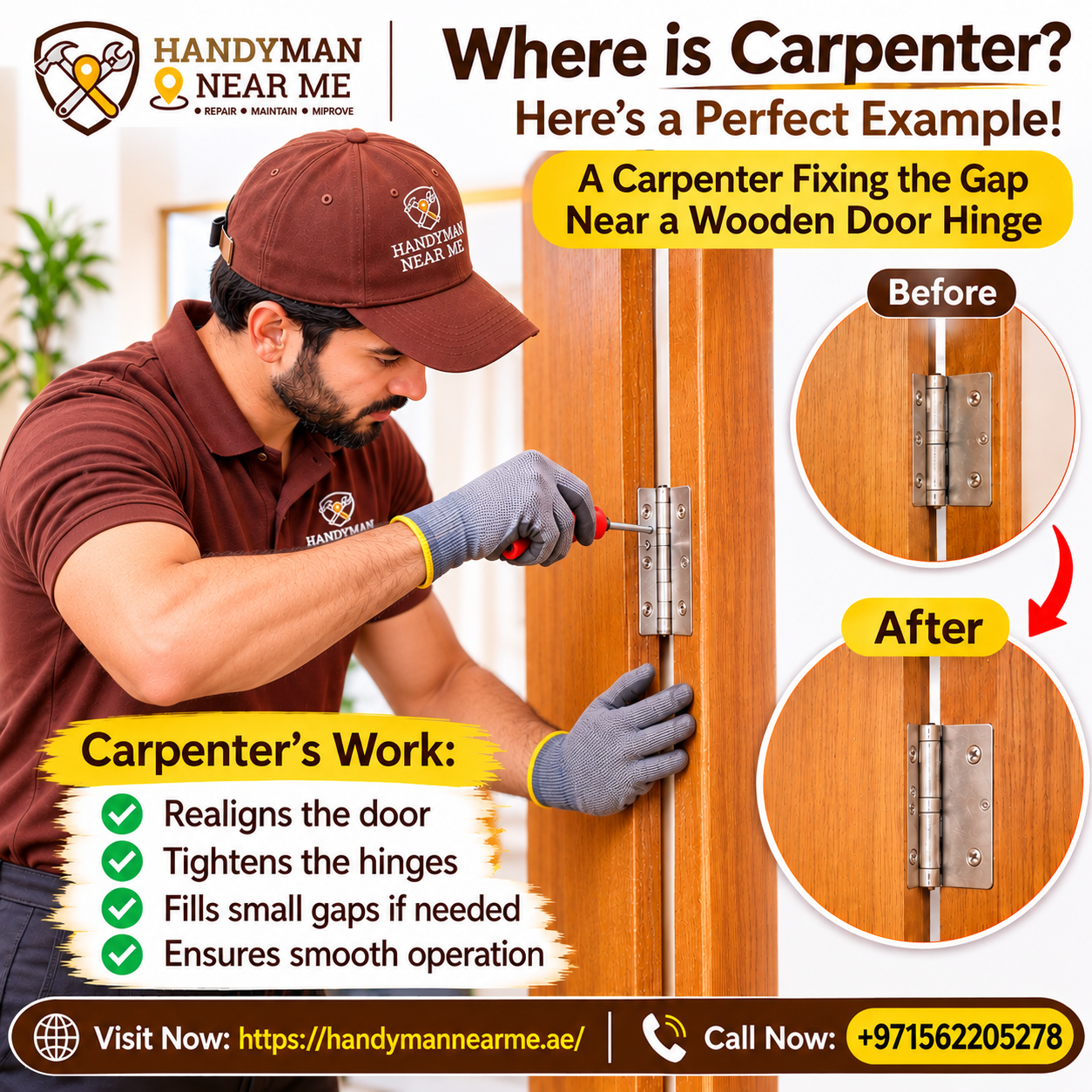
Gaps next to door hinges tend to creep up slowly. The door closes fine for months, then one day you see a small crack where the hinge meets the frame. Most of us ignore it until the door starts sticking, squeaking, or won’t latch. The good news is that the reasons are usually simple. At Handyman Near Me, our work begins with a basic inspection. We check the screws, hinges, and frame, explain what we find, and fix the actual cause. In this blog, we’ll go through the common causes, a few everyday situations, and the order we’d follow to repair it.
Handyman Near Me Guide: Finding Where the Gap Starts
Hinge Side or Latch Side
If the gap is on the hinge side, the hinge has probably pulled away from the frame or the door. If the hinge side is tight but the latch side has a gap, the door has likely dropped or the frame has twisted. Look at both sides before you start, so you don’t fix the wrong thing.
What the Shape Means
A gap that’s wider at the top usually means the top hinge is loose and the door is leaning. Wider at the bottom means the bottom hinge is loose, or the door has swollen on the other side. A gap that’s even all the way down often means the screws or hinge leaves are worn. If it’s wavy and uneven, the frame has most likely moved.
Common Situations Where Gaps Show Up
Bathroom Doors
Steam makes the wood swell, and then a fan or open window dries it out fast. This keeps happening every day, and it loosens the screws quicker than in any other room.
Heavy Solid Wood Doors
A solid door can be several times heavier than a normal room door. Two hinges have a hard time carrying that, especially on a wide door. The top hinge is usually the first to pull away.
Doors That Were Just Painted
Extra coats of paint make the door edge thicker and fill up the hinge recesses. The door then presses on the frame and pushes the hinges out of place.
Doors Used Roughly
Kids’ rooms and busy entrances get slammed all the time. Each slam shakes the screws, and after a while they work loose.
What We Check Before Touching a Screw
A quick check first saves a lot of time. We look at the length of the screws and the condition of the holes. Then we see if each hinge sits flat in its recess, and whether the pins are worn or a leaf is bent. We put a level on the frame and think about how heavy the door is compared to the number of hinges. If the wood is swollen, stained, or soft, that tells us there’s more going on than a loose screw.
A Simple Repair Order
Step 1: Tighten the Screws
Tighten each hinge screw by hand. If one keeps spinning and never grips, go to the next step.
Step 2: Fix Stripped Holes
Glue in small hardwood dowels and cut them flush. Then drill a small pilot hole and put the screw back. The thread now has fresh wood to hold on to.
Step 3: Use Longer Screws
Put longer screws in the top hinge, since it takes the most load. Make sure they reach the solid frame and not just the trim.
Step 4: Replace or Shim
Change any bent or worn hinge for the same size. If a hinge sits too deep, a thin piece of cardboard behind it can bring it back to the right height.
Step 5: Look at the Frame
If the gap is still uneven, the frame needs work. A Handyman Near Me can usually do the first four steps in one visit and tell you quickly if the frame needs more attention.
Mistakes That Make It Worse
Some shortcuts cause more trouble. A power drill can strip soft wood and make the hole bigger. Planing the door edge hides the gap but leaves the hinge loose. Caulk cracks the moment the door moves. And hinges of different sizes leave the door unevenly supported. Don’t ignore squeaks either, because they often mean the hinge is starting to wear.
When to Look for a Carpenter Near Me
Some jobs are beyond screws and glue. If the jamb is split, the wood around the hinge is rotten, or the door has warped and doesn’t sit flat, that’s the time to find a Carpenter Near Me. A skilled woodworker can rebuild a hinge pocket with matching wood or re-hang a heavy door with an extra hinge. This is often cheaper than buying a new door.
How to Stop Gaps From Coming Back
After the repair, a few habits help. Check the hinge screws every six months. Put a little light oil on the pins when they begin to squeak. Seal the top and bottom edges of the door as well as the faces, so moisture has a harder time getting in. Keep heavy hooks and mirrors off the door, and close it gently.
FAQs
1. Is a small gap near a door hinge serious?
Not always, but it means something is moving. If you leave it, the hinge usually gets looser and the door drops.
2. What is the easiest way to fix a loose hinge?
Use longer screws. If the hole is stripped, fill it with a glued dowel first.
3. Why is the gap bigger at the top of the door?
The top hinge carries the most load, so it usually loosens first and the door leans.
4. Can painting a door cause hinge gaps?
It can. Thick paint makes the door fit tighter, and that pushes against the hinges.
5. Should I repair or replace the door?
Repair it if the wood is still sound. Replace it only if it’s rotten, badly warped, or split.
Conclusion
Gaps near the hinges are the door’s way of asking for some attention. Loose screws, damp air, heavy use, or a moved frame are usually the reason, and most of these can be fixed once you know the cause. Start with the simple checks, skip quick fixes like caulk, and deal with it before it gets worse. For a repair that lasts, Handyman Near Me is happy to help. Contact us today and we’ll get your doors hanging straight again.

 English
 Arabic
 French
 Spanish
 Portuguese
 Deutsch
 Turkish
 Dutch
 Italiano
 Romaian
 Portuguese (Brazil)
 Greek