


The Impact of Social Media on Student Learning and Focus
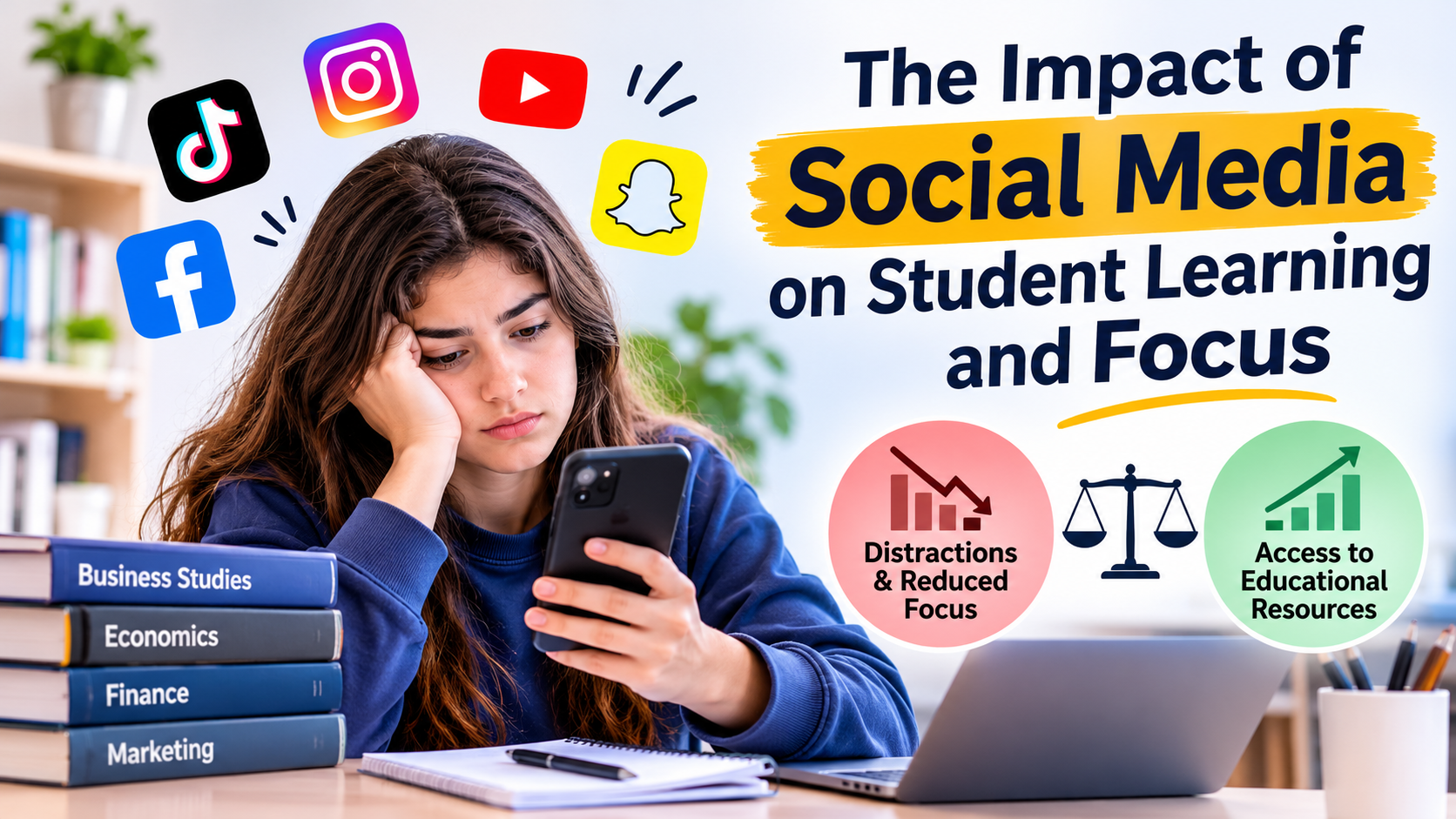
Social media has become a regular part of student life. Platforms such as Instagram, TikTok, YouTube, Facebook, and Snapchat allow students to communicate, discover information, share ideas, and follow educational content. These platforms can make learning more accessible, but they can also create distractions that interfere with concentration and academic performance. As students move between online classes, assignments, social conversations, and entertainment, maintaining a healthy balance becomes increasingly important.
The impact of social media on student learning and focus depends largely on how students use these platforms. Educational videos, study communities, and academic discussions can strengthen understanding when used intentionally. However, frequent notifications, endless scrolling, and pressure to stay connected can interrupt study sessions and reduce the time available for meaningful learning.
Understanding both the benefits and disadvantages of social media can help students make better decisions about their digital habits. Rather than avoiding technology completely, students can develop practical strategies to use social platforms responsibly while protecting their attention and academic goals.
How Social Media Influences Student Learning
Social media has changed how students access information and communicate about academic subjects. Traditional learning often depends on textbooks, classroom discussions, and instructor-provided materials. Digital platforms introduce additional ways to explore topics, exchange knowledge, and find explanations.
Students can watch educational videos, follow subject specialists, join academic communities, and participate in discussions beyond the classroom. These activities can make learning more interactive and help students discover different perspectives.
For example, a student studying biology may use YouTube to watch an explanation of cellular processes. Another student learning statistics might join an online community where members discuss probability, data interpretation, or statistical software. These resources can complement classroom instruction when students evaluate information carefully.
However, not every post or video provides accurate educational information. Students should compare online explanations with textbooks, course materials, and credible academic sources before relying on them.
Positive Effects of Social Media on Student Education
When students use social media with a clear purpose, it can support several aspects of education.
1. Easier Access to Educational Resources
One of the most useful advantages of social media is the availability of educational content. Students can find tutorials, lectures, demonstrations, and subject-related discussions without depending entirely on physical learning materials.
Short explanatory videos can introduce difficult concepts, while longer lectures can provide more detailed instruction. Students can also follow universities, educational organizations, researchers, and subject experts to discover useful learning resources.
For example, students preparing for mathematics examinations may find video explanations of algebraic equations or statistical methods. They can review difficult topics at their own pace and return to explanations whenever necessary.
However, online content should complement structured learning rather than replace it. Students should check whether the information is accurate, current, and relevant to their course requirements.
2. Improved Communication and Collaboration
Social platforms make it easier for students to communicate with classmates and participate in academic discussions. Group chats and online communities can help students exchange notes, discuss assignments, share resources, and coordinate group projects.
This communication can be particularly helpful for students enrolled in online or distance-learning programs. They may not have regular opportunities to interact with classmates in person, so digital communities can provide an additional space for discussion.
Collaborative learning also encourages students to explain concepts to others. When students discuss a topic, answer questions, or compare different approaches, they may identify gaps in their own understanding.
To make these interactions productive, students should establish clear group expectations. Academic conversations should remain focused on course-related goals instead of becoming continuous social discussions.
3. Exposure to Different Perspectives
Social media connects students with people from different educational, cultural, and professional backgrounds. This exposure can introduce new viewpoints and encourage critical thinking.
For instance, students studying economics can follow discussions about employment, inflation, business activity, and public policy. Those studying environmental science can explore conversations about sustainability and climate research.
Exposure to different perspectives can help students understand how academic concepts apply to real-world situations. However, students should distinguish between personal opinions, unsupported claims, and evidence-based information.
4. Opportunities for Peer Learning
Students do not always learn best through formal lectures alone. Sometimes, a classmate's explanation or an example from another learner makes a difficult topic easier to understand.
Online study groups allow students to exchange explanations, recommend resources, and discuss challenging concepts. They can also encourage participation from students who may feel uncomfortable asking questions in a traditional classroom.
Peer learning works best when students contribute accurate information and verify important details. Sharing incorrect notes or unverified explanations can create confusion instead of improving academic understanding.
Negative Effects of Social Media on Student Focus
Although social media offers educational opportunities, excessive or unstructured use can interfere with students' ability to concentrate.
1. Frequent Distractions and Interrupted Study Sessions
Notifications, messages, comments, and new posts can interrupt students while they are reading, writing, or solving problems. Even a brief interruption can make it difficult to return to the original task.
For example, a student may begin a 45-minute study session but repeatedly check Instagram or TikTok after receiving notifications. Each interruption shifts attention away from the lesson and reduces the continuity of the study process.
This can be particularly problematic when students work on tasks that require sustained concentration, such as writing research papers, analyzing data, or understanding complex mathematical concepts.
Turning off nonessential notifications and keeping the phone away from the study area can reduce these interruptions.
2. Reduced Attention Span During Academic Tasks
Constantly switching between short videos, messages, and academic materials can encourage a habit of frequent task switching. Students may become accustomed to receiving new information quickly and find longer reading or writing assignments less engaging.
Academic work often requires patience. Reading a research paper, understanding a scientific theory, or completing a detailed assignment involves processing information over an extended period.
When students repeatedly move between entertainment and study activities, they may struggle to maintain attention on one task. This does not mean social media permanently damages attention, but unstructured digital habits can make focused study more difficult.
Students can improve concentration by gradually increasing uninterrupted study periods and limiting unnecessary screen switching.
3. Procrastination and Poor Time Management
Social media can make procrastination easier because entertainment is always available. Students may open an application for a short break and continue scrolling much longer than intended.
This habit can delay important academic responsibilities. An assignment that could have been completed earlier may become a last-minute task, increasing stress and reducing the time available for reviewing work.
A practical solution is to schedule specific periods for social media use. Students can complete important academic tasks first and use social platforms during planned breaks.
4. Social Comparison and Academic Pressure
Social media often presents carefully selected highlights of other people's lives. Students may see posts about academic achievements, scholarships, internships, grades, and university experiences.
Comparing their progress with these online presentations can create unnecessary pressure. A student who sees classmates celebrating high grades may begin to question their own abilities, even when their academic progress is reasonable.
Students should remember that social media rarely shows the complete picture. Individual learning experiences, financial circumstances, responsibilities, and academic challenges differ.
A healthier approach is to measure progress against personal goals rather than constantly comparing achievements with online content.
5. Sleep Disruption and Mental Fatigue
Using social media late at night can interfere with healthy sleep routines. Students may continue watching videos or responding to messages when they should be preparing for rest.
Insufficient sleep can affect attention, memory, motivation, and the ability to process new information. As a result, students may find it harder to concentrate during lectures or complete academic tasks effectively.
Establishing a consistent bedtime routine and avoiding unnecessary screen use before sleeping can help students protect their rest and maintain better study habits.
How Social Media Affects Academic Performance
The relationship between social media and academic performance is not the same for every student. It depends on factors such as usage patterns, time management, learning objectives, and the ability to control distractions.
When students use social media to access educational materials or communicate with classmates, it can complement their academic activities. However, excessive recreational use may reduce the time available for reading, revision, assignments, and other responsibilities.
Consider two students preparing for the same examination. The first student uses social media to watch relevant tutorials, discuss difficult topics, and share study resources. The second student frequently switches between study materials and entertainment content.
Although both students have access to the same technology, their habits create different learning environments. The first student uses social media to support a specific academic goal, while the second allows it to interrupt the study process.
This example demonstrates why digital habits and self-regulation matter more than simply having access to social media.
Students should also consider the quality of their study time. Spending several hours with textbooks open does not necessarily mean meaningful learning has taken place. Focused reading, active recall, practice questions, and thoughtful revision are more useful indicators of productive study.
Practical Ways Students Can Balance Social Media and Studying
Students do not need to eliminate social media to improve their academic focus. Instead, they can establish realistic boundaries that allow them to benefit from digital resources without letting entertainment take control of their schedules.
1. Create a Structured Study Schedule
A study schedule helps students decide when to complete academic work and when to use social platforms. It also makes it easier to prioritize deadlines and avoid unnecessary delays.
Students can divide larger assignments into smaller tasks, such as research, outlining, drafting, editing, and final review. Completing these steps in planned sessions can make demanding coursework easier to manage.
A simple daily schedule might include:
-
Morning: Review lecture notes and complete difficult academic tasks.
-
Afternoon: Attend classes, work on assignments, or participate in study groups.
-
Evening: Revise important concepts and prepare for upcoming deadlines.
-
Break periods: Check social media during designated intervals.
The schedule should remain flexible enough to accommodate classes, employment, family responsibilities, and unexpected tasks.
2. Turn Off Unnecessary Notifications
Notifications can interrupt concentration even when students do not intend to spend time on social media. Disabling nonessential alerts during study periods can create a quieter learning environment.
Students can also use focus modes or application limits available on their devices. These features help reduce interruptions and make it easier to remain engaged with academic work.
Important calls or messages can remain accessible while entertainment notifications are temporarily restricted.
3. Use Social Media for Specific Learning Goals
Students should approach educational social media use with a clear purpose. Instead of opening an application without a plan, they can search for a particular lesson, tutorial, discussion, or academic resource.
For example, a student struggling with a statistics concept can watch a relevant explanation and then solve practice questions independently. This turns online content into a starting point for active learning rather than passive entertainment.
Students should also save useful resources in organized folders or bookmarks so they can return to them without repeatedly searching through unrelated posts.
4. Practice Focused Study Sessions
Focused study sessions help students complete demanding tasks without frequent interruptions. One practical method is to study for a set period, take a short break, and then return to the task.
Students can experiment with a 25-minute study period followed by a five-minute break. Others may prefer longer sessions depending on the difficulty of the subject and their concentration levels.
During study periods, students should keep unrelated applications closed and focus on one academic task at a time.
5. Review Screen Time Regularly
Most smartphones provide screen-time reports showing how much time users spend on individual applications. Reviewing these reports can help students identify habits that interfere with academic responsibilities.
For example, a student may discover that short social media checks add up to several hours throughout the day. Recognizing this pattern makes it easier to set realistic limits.
The purpose is not to criticize every minute spent online. Instead, students should determine whether their digital habits support or interfere with their academic priorities.
6. Protect Time for Sleep and Offline Activities
A healthy routine includes more than studying and using social media. Students should make time for sleep, physical activity, hobbies, and face-to-face communication.
Taking breaks away from screens can reduce digital fatigue and provide opportunities to relax. Regular physical activity and sufficient rest can also support the concentration needed for academic tasks.
Responsible Use of Social Media in Online Education
Online education often requires students to manage multiple digital platforms. They may attend virtual lectures, access learning management systems, submit assignments, participate in discussion boards, and communicate with instructors.
This environment makes digital discipline particularly important. Students should separate academic applications from entertainment platforms whenever possible. Keeping course materials organized and checking academic announcements at planned times can reduce confusion.
Students managing demanding online coursework may also need additional academic assistance. Scholarly Help offers support with challenging online classes, assignments, discussion boards, quizzes, and exams. Students should review their institution's academic-integrity policies and ensure that any external assistance they use is permitted.
The most effective approach is to treat technology as a tool for learning rather than allowing every digital platform to compete for attention. Students who establish clear priorities can make better use of online resources while maintaining responsibility for their education.
The Role of Parents and Educators in Developing Healthy Digital Habits
Students are not solely responsible for managing the challenges associated with social media. Parents, teachers, and educational institutions can also help create healthier digital learning environments.
Parents can encourage open conversations about online habits, sleep routines, and the importance of balancing entertainment with academic responsibilities. Instead of relying only on strict restrictions, they can help students understand why certain boundaries are useful.
Educators can introduce digital literacy activities that teach students how to evaluate online information, recognize misleading content, and communicate respectfully. They can also recommend reliable educational resources and explain how social media can support specific learning objectives.
Schools and colleges can establish clear expectations for technology use during lessons. For example, instructors can explain when phones and social platforms are appropriate for classroom activities and when they may distract from learning.
These efforts help students develop independent decision-making skills. The goal should be to prepare them to manage technology responsibly, both during their education and in their future professional lives.
Conclusion: Building a Healthier Relationship With Social Media
The impact of social media on student learning and focus can be positive or negative depending on how students use digital platforms. Educational videos, academic communities, peer discussions, and access to information can strengthen learning opportunities. At the same time, constant notifications, procrastination, social comparison, and excessive screen time can interfere with concentration and academic performance.
Students can manage these challenges by creating structured study schedules, limiting unnecessary notifications, using educational content purposefully, and protecting time for sleep and offline activities. Parents and educators can reinforce these habits by promoting digital literacy and responsible technology use.
Ultimately, effective learning requires intentional attention. When students establish clear boundaries and use social media with specific goals, they can benefit from its educational opportunities without allowing it to dominate their academic lives.

 English
 Arabic
 Spanish
 Portuguese
 Deutsch
 Turkish
 Dutch
 Italiano
 Russian
 Romaian
 Portuguese (Brazil)
 Greek