


When a building site actually needs flame retardant floor protection
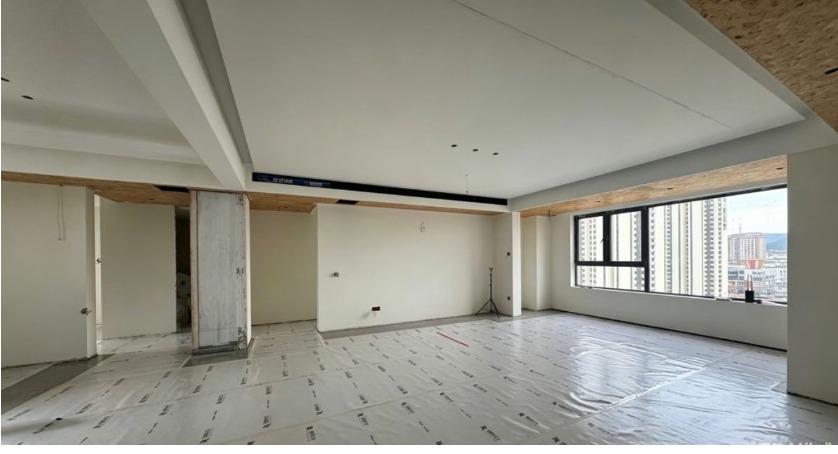
A building site needs flame retardant floor protection when three things come together: hot work, people who cannot leave, and rules that have to be proven. Grinding, welding and cutting throw sparks that land on the floor covering first, so any site doing hot work over finished floors is the clearest case. Hotels, hospitals and shopping centres that stay open during the work come next, because the floor covering becomes part of the fire strategy for escape routes and occupied floors. Public buildings add the third test: insurers and fire officers ask for tested material with a report, not a promise.
Fuel load sharpens all three, because a floor buried under dust, packaging and timber offcuts gives a spark far more to work with. Where none of those apply, on an empty site with no hot work, standard film is usually the right answer. Flame retardant film is widely misunderstood: it is a floor film treated to resist catching fire, melt back from a spark instead of feeding it, and slow flame spread across its surface. It is not a fire blanket and not permission for careless hot work. It refuses to become fuel, and on sites like those above, that refusal is worth paying for. Knowing your site type is a safety decision, not a shopping one.
Hot work changes the whole calculation
Where cutting, grinding or welding happens indoors, the floor stops being a bystander. Sparks travel further than people expect, bounce off walls, and settle in the dust that gathers along skirting and under protection edges. A standard film can melt, smoulder and carry a small fire across a room on a path nobody planned. Flame retardant film breaks that path. It still melts under sustained heat, as any plastic will, but it does not willingly carry flame from one side of a room to the other, which is the difference between a scorch mark and an evacuation. Hot work permits exist because floors burn.
Public buildings bring rules as well as risk
Some buildings cannot empty while the work goes on. Hotels refit floor by floor, hospitals move wards around the builders, and shopping centres trade behind hoardings while sparks fly on the other side. In those places the floor covering is part of the fire strategy, and facility managers, insurers and fire officers all ask the same question: tested to what, and by whom? That is why contractors on such work order from a flame retardant floor protection film manufacturer that can put a test report beside the roll, instead of a merchant who can only put a shrug beside it. Paperwork is protection too. A test report that can be produced on request turns that answer from a claim into a document.
Fuel loads decide more than floor types
The need rarely comes from the floor itself. It comes from everything stored on top of it. A refit is a fuel warehouse in disguise: packaging, foam, timber offcuts, paint, adhesives and dust, all waiting in the same rooms where the hot work happens. The floor is the one surface that connects all of it, running under every pile and every doorway. Cover that connecting surface with something that will not burn, and a stray spark has to work much harder to become a fire. Cover it with ordinary film, and the path is already laid. Escape routes deserve the same thinking.
Escape routes and occupied floors
Corridors carry a special responsibility because people may need them in a hurry, at night, in smoke. When a building stays occupied during works, the escape routes are protected like everything else, but the covering on them is judged by a harder standard. It must lie flat, stay put, and above all not add fuel to the one path everyone will use if the alarm sounds. Flame retardant film earns its place here before anywhere else, because a corridor is no place to discover what your floor covering does in a fire. The question answers itself once it is asked properly. It deserves the best film on the van.
Asking for the paperwork before the film
Flame retardant is a claim that should arrive with evidence. A serious supplier can name the test the film passed, produce the report, and confirm that the roll on the pallet is the construction that was tested, not a cousin of it. Contractors who ask for this paperwork early rarely have trouble getting it, because proper manufacturers keep it ready. The warning sign is a film sold on the word fireproof, with nothing behind the word. Fire performance is not a colour or a thickness. It is a documented behaviour, and the document is part of the product. No paper, no specification.
Where standard film remains the right answer
None of this makes flame retardant film the default for every job. A bathroom refit with no hot work, in an empty house, gains little from it, and the money is better spent on thickness and care. The skill lies in reading the site honestly: hot work, fuel loads, occupied floors and escape routes push one way, while small, empty, cold work pushes the other. Fire risk on a building site is rarely dramatic. It is a pile of ordinary things in the wrong arrangement, and the floor covering is one of the few the contractor gets to choose. Choose it like it matters, on the sites where it does.

 English
 French
 Spanish
 Portuguese
 Deutsch
 Turkish
 Dutch
 Italiano
 Russian
 Romaian
 Portuguese (Brazil)
 Greek