


Why glass gets damaged on construction sites more often than people expect
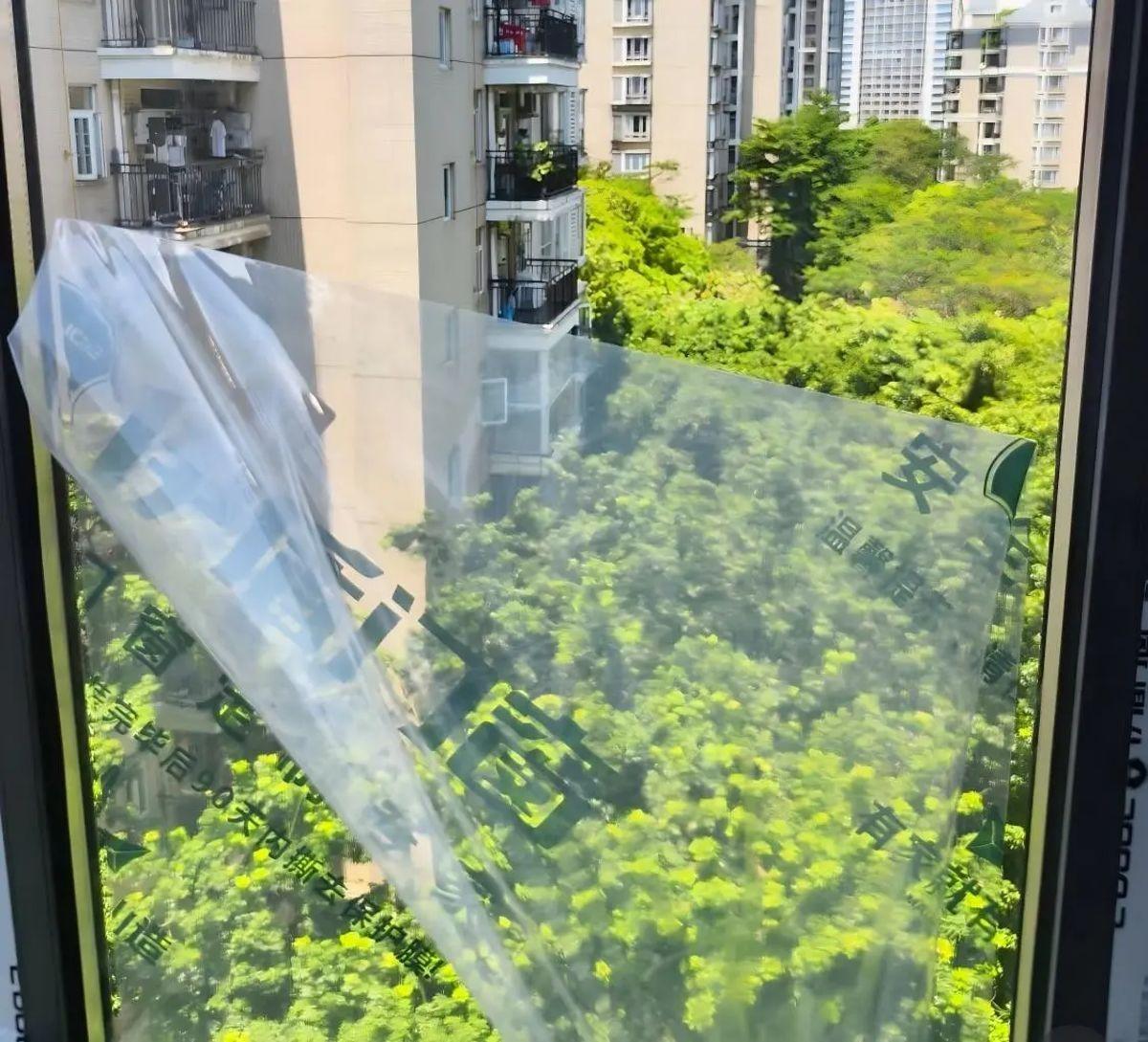
Glass gets damaged on construction sites far more often than people expect because it is hard without being tough, and sites are full of the one thing hardness cannot answer: grit. A single grain of sand dragged across a pane under a cloth, a sponge or a ladder foot cuts a line that no cleaning will remove, because the scratch is in the glass, not on it. Around the grit come the other contacts: cement and plaster splashes that etch and harden, grinder and weld sparks that pit the surface, and panes rubbed raw against each other in transit. The pane spends the job unprotected because glass looks like the one material that can look after itself.
The damage also hides. Dirt and site grime cover fine scratches for weeks, so most are found only at the final clean, in low evening light, when the programme has no time left to replace a pane. Film changes the terms completely: applied before the dirty work starts, it takes the contact, the splashes and the sparks in place of the glass, and peels away at the end to hand back a finished product. This is why glaziers order from a glass protection film manufacturer as a matter of routine. The rolls they reach for come in widths matched to standard pane sizes, with adhesives graded to hold for weeks in place and still leave no residue behind.
Grit is the enemy, and sites are made of it
A building site manufactures grit the way a bakery manufactures crumbs. It is in the dust on every boot, in the water of every bucket, and in the sponge that was rinsed in that water an hour ago. Glass meets all of it at face height, wiped, leaned on and brushed past a hundred times a week. Most contacts do nothing. The damage needs only one grain, pressed and dragged, and the pane keeps the record permanently. Floors can be sanded and walls can be painted, but a scratched pane is a scratched pane, and everyone on the job knows whose budget a replacement comes out of.
Spatter, splashes and the chemistry nobody notices
Some glass damage is not mechanical at all. Wet cement and plaster are alkaline, and splashes left to dry on a pane bite into the surface, leaving a dull bloom that no wash will shift. Sparks from grinding and welding land molten and fuse where they fall, peppering the glass with pits that catch the light forever. Labels and stickers get scraped off with blades by people in a hurry. Even hard water from a careless hose can dry into mineral maps on a sunny elevation. None of these hazards looks like an attack on glass while it happens, which is precisely why it succeeds so often.
Glass gets handled like a building material
Before it is even fitted, glass is handled like timber. Panes are leaned against walls, stacked with their faces together, carried through half built rooms and rested on trestles grit side up. Once fitted, the treatment continues. Doors are propped open with wedges and toolboxes, windows become shelves for tins and cups, and ladders find the glass the most convenient wall in the room to lean on. A pane in a finished building is a picture. The same pane during the works is a workbench, a noticeboard and a doorstop, and it collects the scars of all three jobs.
Why the damage hides until the end
The cruellest property of glass damage is its timing. A fine scratch is almost invisible under site dust, in flat light, on a busy day. It waits. Then the final clean washes the pane, the sun comes round at the low angle, and every line the site ever wrote on the glass appears at once, in front of the client, on the last morning of the job. By then there is no one to argue with and no time to argue anyway. The argument had to be won weeks earlier, when the pane was still clean and a film could have taken the damage instead.
Film turns glass back into a finished product
Protection returns glass to the category it belongs in: finished goods. A film applied at the glazier, or on delivery before the panes are stored, stays on through fitting, plastering, painting and cleaning, and peels away at the very end when the building has stopped being dangerous. Many teams choose a tinted film so that everyone can see at a glance which panes are still protected and which have been stripped early by mistake. The rule that makes it work is duration: film matched to the length of the job, with the removal date written where the last person on site cannot miss it.
The cheapest pane is the one never replaced
Ask a contractor what a damaged floor costs and the answer is a day rate. Ask what a damaged pane costs and the answer involves a measuring visit, a factory order, a lead time measured in weeks, and a programme that slips while a room waits for its glass. Large, coated and shaped panes are worse, and a scratched door can hold up an entire handover. Against that arithmetic, a roll of film is not an extra. It is the cheapest insurance on the whole job, bought by the metre and claimed in minutes saved.

 English
 Arabic
 French
 Portuguese
 Deutsch
 Turkish
 Dutch
 Italiano
 Russian
 Romaian
 Portuguese (Brazil)
 Greek