


What Can Self-Driving Cars Really Do in 2026?
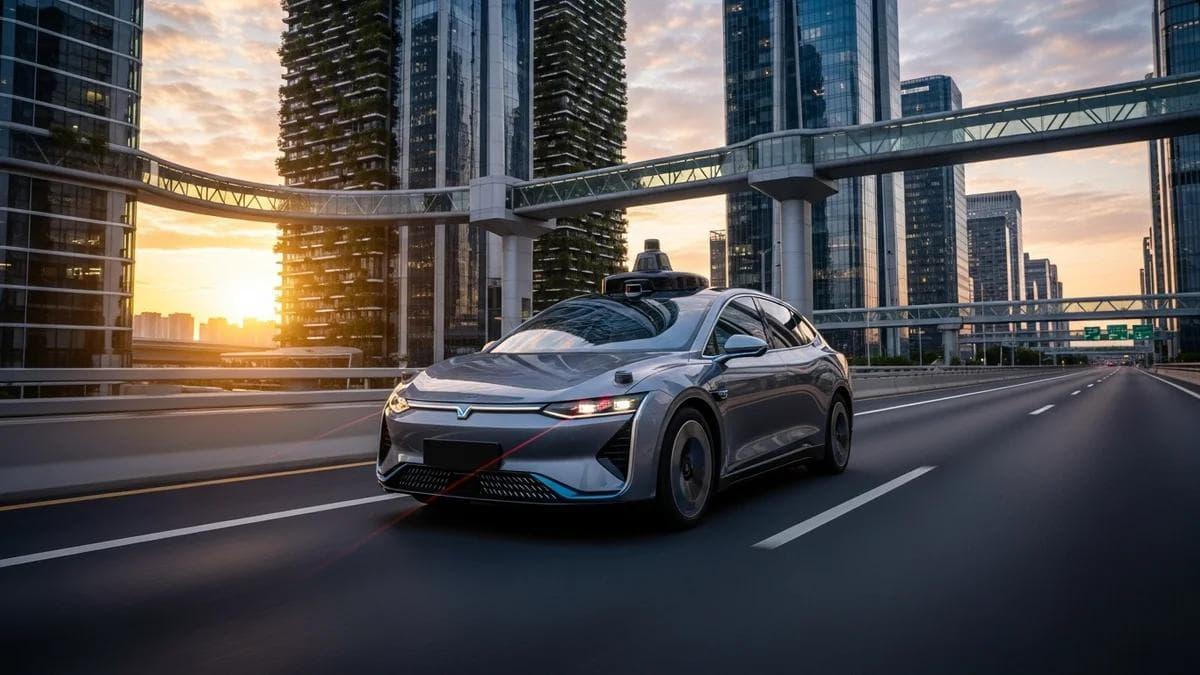
Self-driving cars have made significant progress in 2026, but they are not yet capable of replacing human drivers in every situation.
Modern vehicles can already perform several driving tasks automatically, including steering, accelerating, braking, maintaining lane position and detecting nearby obstacles. More advanced autonomous vehicles can navigate city streets, recognise traffic signals and transport passengers without a human driver in specific operating areas.
According to the International Energy Agency (IEA), commercial Level 4 robotaxi services are now operating in more than 20 cities worldwide. However, fully autonomous Level 5 driving remains a future goal.
Some of the major things self-driving cars can do in 2026 include:
-
Automatic Steering: Maintain lane position and follow road curves.
-
Adaptive Cruise Control: Automatically adjust vehicle speed according to traffic.
-
Automatic Braking: Detects potential collisions and applies brakes.
-
Traffic Signal Recognition: Identify traffic lights, road signs and certain road markings.
-
Obstacle Detection: Recognise pedestrians, cyclists and other vehicles.
-
Highway Driving Assistance: Handle steering, acceleration and braking under supported conditions.
-
Autonomous Navigation: Some driverless robotaxis can navigate urban roads without a human driver within approved operating areas.
These capabilities depend on the vehicle's automation level, software and operating conditions.
Understanding the 5 Levels of Self-Driving Cars
Not every vehicle advertised with autonomous driving technology is actually self-driving. The automotive industry uses five main levels of driving automation, from basic assistance to complete autonomy.
Level 1: Driver Assistance
Level 1 represents basic driving assistance. The vehicle can control either steering or acceleration and braking, but the driver must remain responsible for the entire driving task.
Examples include adaptive cruise control and lane-keeping assistance.
Level 2: Partial Driving Automation
Level 2 systems can control steering, acceleration and braking simultaneously under certain conditions.
However, the driver must continuously monitor the road and remain ready to take control.
Many modern vehicles from Tesla, Mercedes-Benz, BMW and other manufacturers offer Level 2 driving assistance features.
Level 3: Conditional Driving Automation
Level 3 technology allows a vehicle to handle the driving task under specific conditions without requiring continuous driver supervision.
However, the driver must be available to take control when the system requests it.
These systems are generally restricted to approved roads, speeds and weather conditions.
Level 4: High Driving Automation
Level 4 is where vehicles can genuinely drive themselves within defined geographical areas and operating conditions.
For example, autonomous robotaxis can pick up passengers, navigate city streets and complete journeys without requiring a human driver.
If the system encounters conditions outside its operating limits, it must manage the situation safely without relying on a passenger to take over.
Level 5: Full Driving Automation
Level 5 represents the ultimate goal of autonomous driving technology.
A Level 5 vehicle would be capable of driving independently under all conditions in which a human driver could operate a vehicle.
It would not require a steering wheel, pedals or human intervention.
However, Level 5 self-driving cars are not commercially available in 2026.
Best Self-Driving Car Technologies in 2026
Several automotive companies are investing heavily in autonomous driving technology. Some focus on driver assistance for personal vehicles, while others are developing completely driverless transportation services.
1. Tesla Full Self-Driving (FSD)
Tesla is one of the most recognised companies in the self-driving car industry.
Its Full Self-Driving (Supervised) system is designed to assist with driving tasks such as navigating roads, changing lanes, responding to traffic signals and parking.
Key capabilities include:
-
Navigate supported roads.
-
Assist with lane changes.
-
Recognise traffic signals and road signs.
-
Perform parking manoeuvres.
-
Assist with urban and highway driving.
Despite its name, Tesla FSD (Supervised) is not a fully autonomous driving system. Drivers must remain attentive and responsible for the vehicle.
2. Waymo Driverless Robotaxis
Waymo is among the leading companies operating commercial driverless taxi services.
Its autonomous vehicles use cameras, radar, lidar and advanced artificial intelligence to understand their surroundings.
Waymo robotaxis can perform several tasks without a human driver, including:
-
Navigate city streets.
-
Detect pedestrians and cyclists.
-
Recognise traffic signals.
-
Handle intersections and turns.
-
Pick up and drop off passengers.
-
Operate within designated service areas.
Waymo represents one of the clearest examples of Level 4 autonomous driving technology in real-world transportation.
3. Mercedes-Benz Drive Pilot
Mercedes-Benz has developed Drive Pilot, a conditional automated driving system designed for specific traffic and road conditions.
Unlike ordinary driving assistance systems, approved Level 3 technology can take over the driving task under its permitted operating conditions.
However, availability depends on the country, vehicle model and regulatory approval. Mercedes-Benz has also changed its Level 3 strategy in some markets, so buyers should check the latest availability rather than assume it is offered everywhere.
How Do Self-Driving Cars Work?
Self-driving cars combine multiple technologies to understand their surroundings and make driving decisions.
The main technologies include:
1. Cameras: Cameras capture road conditions, lane markings, pedestrians, traffic signals and nearby vehicles.
2. LiDAR Sensors: LiDAR uses laser pulses to measure distances and create a three-dimensional understanding of the surroundings.
3. Radar Sensors: Radar helps detect the position and speed of nearby objects, including vehicles in difficult weather conditions.
4. Artificial Intelligence: AI processes sensor information, identifies objects and helps the vehicle decide when to accelerate, brake or turn.
5. GPS and Navigation: GPS and digital maps help autonomous vehicles determine their location and plan routes.
6. Powerful Computing Systems: Advanced processors analyse large amounts of information and control vehicle functions in real time.
Together, these technologies allow autonomous vehicles to understand road environments and respond to changing traffic situations.
Are Self-Driving Cars Safe in 2026?
Safety is one of the biggest questions surrounding autonomous vehicles.
Self-driving technology has the potential to reduce accidents caused by human mistakes, including distracted driving, delayed braking and fatigue. However, autonomous systems can also make mistakes when they encounter unusual road conditions, unexpected obstacles or situations they have not been trained to handle.
Some important safety challenges include:
-
Heavy rain, fog and poor visibility.
-
Unexpected pedestrian movements.
-
Construction zones and road diversions.
-
Unpredictable behaviour from other drivers.
-
Software errors and sensor failures.
-
Cybersecurity and data protection.
The National Highway Traffic Safety Administration (NHTSA) emphasises that drivers using currently available consumer driving-assistance systems must remain fully engaged and attentive.
Are Self-Driving Cars Available in India?
India is an interesting market for autonomous vehicle technology, but fully driverless personal cars are not yet part of normal commercial vehicle ownership.
Indian roads present several challenges for autonomous driving systems, including:
-
Heavy and unpredictable traffic.
-
Mixed vehicle types on the same roads.
-
Pedestrians and animals crossing unexpectedly.
-
Poorly marked roads in some locations.
-
Frequent construction and road diversions.
-
Complex urban intersections.
However, advanced driver assistance systems (ADAS) are becoming increasingly common in premium and mid-range cars in India.
Features such as adaptive cruise control, lane-keeping assistance, automatic emergency braking and blind-spot monitoring are helping introduce Indian buyers to automated driving technology.
For now, these features assist drivers rather than replace them.
Advantages of Self-Driving Cars
Self-driving cars could transform transportation in several ways.
Improved Road Safety: Autonomous systems can continuously monitor their surroundings and react to certain hazards.
Reduced Driver Fatigue: Automated driving assistance can reduce the workload during supported highway journeys.
Better Mobility: Driverless transportation could provide additional mobility options for elderly people and individuals who cannot drive.
Efficient Transportation: Connected autonomous vehicles could help improve traffic flow and optimise transportation services.
Convenient Travel: Robotaxis could allow passengers to travel without personally operating a vehicle.
Challenges Facing Self-Driving Cars
Despite significant technological progress, the industry still faces several challenges.
High Development Costs: Advanced sensors, computing hardware, software development and testing require significant investment.
Legal Regulations: Different countries have different rules regarding autonomous vehicle testing and commercial operation.
Weather Limitations: Heavy rain, fog, snow and poor visibility can affect sensor performance.
Public Trust: Many people remain uncertain about travelling in vehicles without human drivers.
Infrastructure Requirements: Some autonomous services depend on detailed mapping, reliable connectivity and designated operating areas.
These challenges will influence how quickly self-driving cars become widely available.
What Is the Future of Self-Driving Cars?
The future of self-driving cars will likely involve a gradual transition rather than an immediate replacement of conventional vehicles.
In the coming years, more cars are expected to receive advanced driver assistance features, while commercial robotaxi services may expand into additional cities.
Artificial intelligence, improved sensors, high-performance processors and vehicle-to-everything communication could make autonomous transportation more capable.
However, fully autonomous Level 5 vehicles remain a long-term technological goal rather than a confirmed near-term development.
Conclusion
Self-driving cars in 2026 have moved beyond experimental technology, with advanced driver assistance systems available in many consumer vehicles and Level 4 robotaxis operating commercially in selected cities.
Companies such as Tesla, Waymo and Mercedes-Benz are developing different approaches to autonomous driving, from supervised assistance to highly automated transportation.
However, today's technology still has limitations. Most privately owned vehicles require drivers to remain attentive, while fully driverless services are restricted to specific operating areas.

 English
 Arabic
 French
 Spanish
 Portuguese
 Deutsch
 Turkish
 Dutch
 Italiano
 Romaian
 Portuguese (Brazil)
 Greek