


What Should Hospitals Check Before Installing a PSA Oxygen Generator?
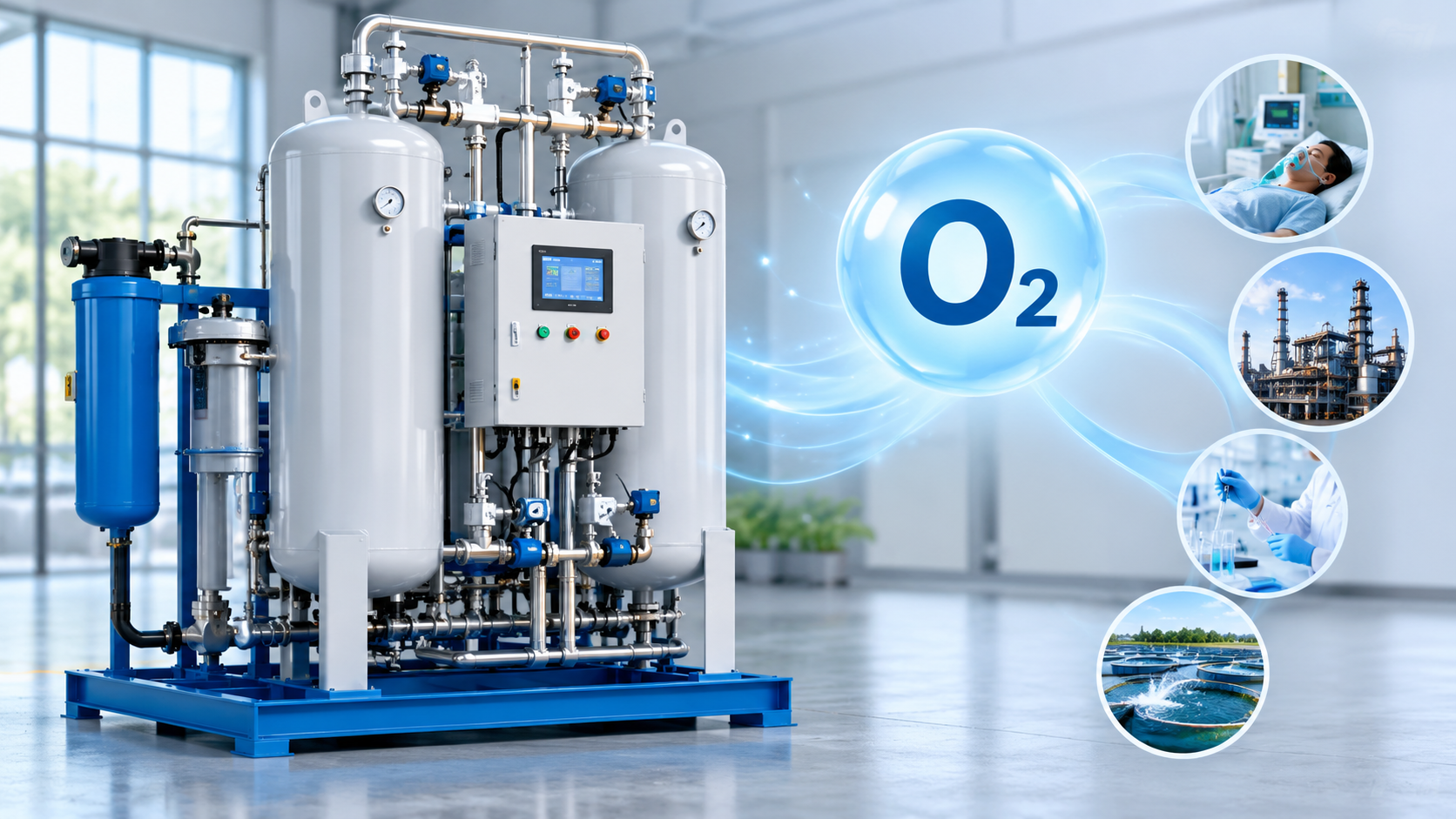
Hospitals depend on a reliable oxygen supply for critical patient care, including intensive care, emergency treatment, surgery, and respiratory support. Any interruption in oxygen availability can affect hospital operations and patient safety. For this reason, many healthcare facilities consider installing on-site oxygen generation systems to reduce dependence on external deliveries.
A PSA Oxygen Generator produces oxygen from atmospheric air using Pressure Swing Adsorption technology. However, purchasing equipment without evaluating the hospital's actual requirements can result in insufficient capacity, unnecessary operating expenses, or installation complications.
Before selecting an oxygen generation system, hospital administrators, biomedical engineers, and procurement teams should examine several technical and operational factors.
1. How Much Oxygen Does the Hospital Actually Need?
Understanding oxygen demand is the first step in selecting an appropriate system. Hospitals have different requirements depending on their infrastructure, patient volume, and medical services.
Important considerations include:
-
Number of beds requiring oxygen connections.
-
ICU and emergency department requirements.
-
Operating theatre and recovery room demand.
-
Expected simultaneous oxygen consumption.
-
Future expansion of hospital facilities.
A 100-bed hospital does not automatically require the same generator capacity as another hospital with 100 beds. Their critical care facilities, patient profiles, and equipment requirements may differ.
Hospitals should calculate peak demand using applicable medical gas design standards rather than relying only on bed count.
2. What Oxygen Purity and Quality Standards Are Required?
Oxygen quality is particularly important in healthcare environments. PSA technology uses molecular sieve materials to separate nitrogen from compressed atmospheric air, producing an oxygen-enriched gas stream.
Hospitals evaluating PSA Oxygen Generator Manufacturers in India should verify that the proposed equipment can deliver the oxygen concentration and quality required under applicable medical gas specifications.
Important factors include oxygen concentration, moisture content, contaminant limits, delivery pressure, and continuous monitoring.
Medical oxygen quality should never be assessed through concentration alone. Hospitals must verify the applicable pharmacopoeial requirements and ensure that the complete installation meets relevant safety and quality standards.
3. Is the Hospital Infrastructure Suitable for Installation?
A PSA oxygen plant requires more than sufficient floor space. Its installation involves electrical infrastructure, ventilation, compressed-air equipment, oxygen piping, and safety provisions.
Before installation, the technical team should assess available space, compressor ventilation, ambient temperature, electrical capacity, and access for maintenance.
A properly planned installation should also accommodate future servicing without disturbing essential hospital operations.
The oxygen supply network must be designed and validated by qualified professionals familiar with medical gas pipeline systems.
4. Does the System Provide Adequate Backup Oxygen Supply?
An on-site oxygen generator can reduce dependence on external oxygen deliveries, but it should not be treated as the hospital's only source of oxygen.
Power interruptions, equipment failures, maintenance work, and unexpected increases in demand can affect oxygen generation.
Hospitals should evaluate backup cylinders or bulk oxygen arrangements, emergency power provision, changeover systems, pressure monitoring, and low-purity alarms.
A reliable Hospital Oxygen Generator installation should form part of a comprehensive medical gas supply strategy with appropriate redundancy.
Backup capacity must be determined according to the hospital's risk assessment and applicable healthcare standards.
5. What Are the Long-Term Operating and Maintenance Costs?
Initial equipment pricing is only one part of the investment. Hospitals must consider the complete lifecycle cost of operating an oxygen generation system.
Major operating expenses include electricity consumption, air compressor maintenance, replacement filters, inspection of valves, oxygen quality testing, and periodic servicing.
Before selecting a PSA Oxygen Generator Plant, procurement teams should request an estimated energy consumption figure at the proposed operating capacity.
They should also examine preventive maintenance schedules, spare-part availability, and expected service requirements.
Comparing lifecycle costs provides a more realistic financial assessment than evaluating purchase price alone.
6. How Important Is the Manufacturer's Technical Support?
Reliable installation and after-sales service are particularly important for hospitals operating continuously.
When comparing PSA Oxygen Generator Suppliers in India, procurement teams should examine the supplier's technical capabilities and service commitments.
Key questions include:
-
Does the supplier conduct a detailed site assessment?
-
Are installation and commissioning services included?
-
Is operator training provided?
-
Are replacement components readily available?
-
Is emergency technical assistance available?
-
Will the supplier provide performance testing documentation?
Airox Technologies Limited offers on-site oxygen generation solutions for healthcare facilities, along with installation and after-sales support. Hospitals should confirm project-specific specifications and service commitments before placing an order.
7. What Should Hospitals Verify During Commissioning?
Commissioning determines whether the installed system performs according to the approved design and technical specifications.
The commissioning process should include oxygen purity testing, output capacity verification, delivery pressure checks, alarm testing, and inspection of electrical and mechanical systems.
Hospitals should also verify the operation of backup arrangements and confirm that relevant staff have received operational and emergency training.
All performance tests and maintenance instructions should be documented before the installation is accepted for routine medical use.
Conclusion
Installing a PSA Oxygen Generator requires careful planning, accurate demand assessment, and coordination between healthcare administrators, biomedical engineers, and qualified installation professionals.
Hospitals should prioritize oxygen quality, equipment capacity, infrastructure compatibility, backup supply, lifecycle costs, and technical support rather than focusing exclusively on initial equipment pricing.
Airox Technologies Limited provides oxygen generation solutions designed for hospital and industrial applications. Healthcare organizations planning a new installation can explore its PSA Oxygen Generator range to discuss suitable configurations and project requirements.
Contact Us Now to discuss your hospital's oxygen generation requirements.
Frequently Asked Questions (FAQs)
1. What is a PSA Oxygen Generator used for in hospitals?
A PSA Oxygen Generator produces oxygen on-site for hospital medical gas systems. It can supply oxygen for patient care applications when the equipment and complete installation meet applicable medical gas requirements.
2. How is the required PSA Oxygen Generator capacity calculated?
Capacity depends on peak oxygen demand, simultaneous equipment use, required delivery pressure, and future expansion requirements. Qualified engineers should calculate capacity according to applicable medical gas system design standards.
3. Can a PSA Oxygen Generator operate continuously?
PSA oxygen generation systems can be designed for continuous operation. However, reliable performance requires suitable operating conditions, preventive maintenance, appropriate monitoring, and backup oxygen arrangements.
4. Does a hospital need backup oxygen cylinders after installing a PSA plant?
Yes. Hospitals should maintain an appropriately designed independent backup oxygen supply. Backup arrangements help protect patient care during equipment failures, maintenance, and other supply interruptions.
5. What factors affect the cost of installing a PSA Oxygen Generator?
Installation cost depends on oxygen production capacity, equipment configuration, air compressors, electrical requirements, medical gas pipelines, monitoring systems, backup arrangements, and commissioning services.

 English
 Arabic
 French
 Spanish
 Portuguese
 Turkish
 Dutch
 Italiano
 Russian
 Romaian
 Portuguese (Brazil)
 Greek