


Portable Insect Control Devices for Home and Retail Markets
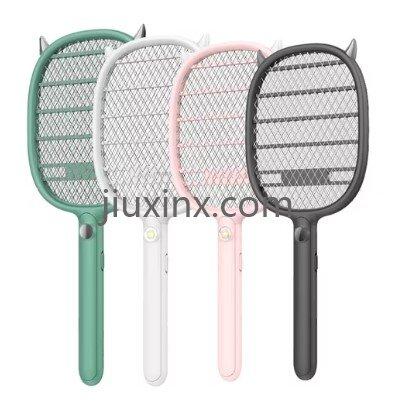
Managing flying insects is a common concern in residential environments, particularly during warmer seasons when mosquitoes and flies may enter through windows, doors, and balconies. Consumers often prefer products that are easy to operate, simple to store, and suitable for different areas of the home. A Handheld Bug Swatter provides a practical approach to everyday insect management through a familiar handheld structure and, in electric versions, an electrically operated mesh. This product category also offers opportunities for household goods importers and distributors looking to expand their pest-control product collections.
The structure of an electric handheld swatter generally consists of a handle, a mesh head, an external protective frame, and an internal electrical system. The handle is designed to accommodate the operating switch and power components, while the mesh head provides the active working area. An outer frame supports the mesh and helps reduce accidental contact with conductive elements. Manufacturers may use molded plastic for the housing because it supports different shapes, colors, and surface finishes while allowing the product to remain convenient to carry.
The operating mechanism is based on an electrical circuit that supplies energy to the conductive mesh. When a flying insect touches the energized grid, an electrical discharge helps eliminate it. The mesh arrangement is an important part of this process. Multiple layers may be incorporated to separate the active grid from the outer protective surfaces. Manufacturers should pay attention to mesh alignment, electrical connections, insulation, and the stability of the surrounding frame during assembly.
Handle ergonomics have a direct influence on product usability. Since users hold the device during operation, the grip should provide reasonable comfort and control. Handle length, surface texture, shape, and weight distribution all contribute to the overall handling experience. A stable connection between the handle and the mesh head also helps maintain the product's structural integrity during repeated movement. These details are relevant when the product is used around furniture, curtains, windows, and other household areas.
Power supply arrangements vary among different product models. Some designs use replaceable batteries, while others incorporate rechargeable battery systems. Rechargeable configurations may provide a convenient option for consumers who prefer an integrated power source and a reusable charging arrangement. Depending on the model, charging ports, indicator lights, and operating switches may be positioned differently. Buyers should confirm the available power configuration and accessories rather than assuming that all products share the same specifications.
Product appearance is another consideration for manufacturers and retailers. Different handle colors, housing finishes, and mesh frame designs can help create product variations for different customer groups. Some models may include LED lighting or additional operating indicators, depending on their intended positioning. These features can support product differentiation, but their availability should always be verified against the actual model specifications. A straightforward design may be more suitable for buyers prioritizing simple operation and accessible retail pricing.
Material selection and assembly consistency influence the quality of the finished product. The external housing should securely support the internal circuit and provide appropriate protection for the components. The mesh should be properly positioned within the frame, and the connection between the working head and handle should remain stable. Quality-control procedures may include checking the external appearance, switch operation, mesh installation, and electrical assembly. Consistent manufacturing processes help reduce variations between production batches.
Safe handling should be explained clearly in the accompanying instructions. Users should understand the correct operating method, power requirements, charging procedures where applicable, and suitable storage conditions. The protective structure should help reduce unintended contact with the energized mesh. Electrical insect-control devices should be kept away from water and should not be used in wet environments unless the product is specifically designed for such conditions. Children should only handle these products under appropriate adult supervision.
For international B2B buyers, product selection involves evaluating more than the basic operating mechanism. Importers may consider product dimensions, handle materials, power options, color availability, packaging design, and customization requirements. Supermarkets, online retailers, household appliance distributors, and seasonal merchandise suppliers may have different purchasing priorities. OEM and ODM arrangements can provide opportunities for logo printing, customized packaging, and product appearance adjustments, depending on the selected model and manufacturing availability.
Yiwu Jiuxin Electric Co., Ltd. focuses on practical household electrical products for international markets and commercial sourcing partnerships. When evaluating a Handheld Bug Swatter, buyers can compare handle construction, mesh protection, power arrangements, and available design options according to their target customers. Product customization, branding, and packaging requirements can be discussed based on the specific model and order quantity. For further product information and potential wholesale cooperation, visit https://www.jiuxinx.com.

 English
 Arabic
 French
 Portuguese
 Deutsch
 Turkish
 Dutch
 Italiano
 Russian
 Romaian
 Portuguese (Brazil)
 Greek