


NGO Donation Receipt: A Guide to Donor Records and Benefits
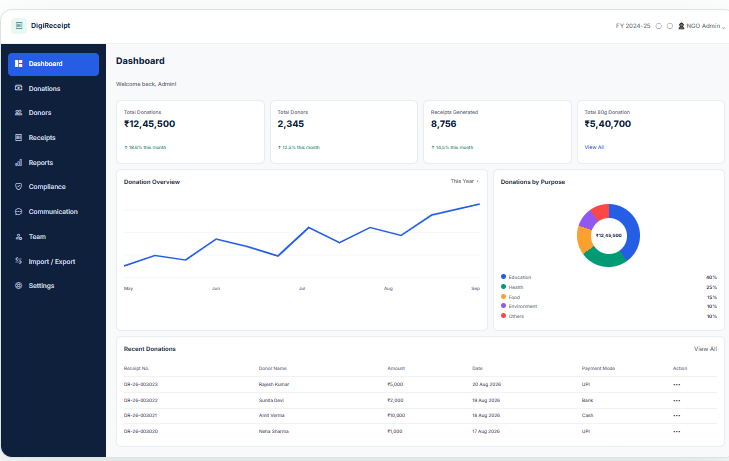
Charitable contributions play an important role in improving society and supporting people who need assistance. Many non-governmental organisations work towards education, healthcare, poverty reduction, women empowerment, child protection, and environmental development. These initiatives depend on financial support from individuals, businesses, and communities. When someone contributes to a charitable cause, maintaining proper documentation is essential. An NGO donation receipt provides official acknowledgement that the organisation has received the contribution.
Apart from confirming a payment, an NGO donation receipt helps donors maintain financial records, track contributions, and keep documents for eligible tax benefits. It also encourages transparency between charitable organisations and their supporters. Understanding the purpose and benefits of donation receipts can help donors make more informed decisions.
What Is an NGO Donation Receipt?
An NGO donation receipt is an official document issued by a non-governmental organisation to acknowledge a donation received from an individual, company, or other contributor. It confirms the amount donated, the date of contribution, and the organisation receiving the payment.
NGOs generally issue receipts for donations received through different payment methods, including UPI, bank transfers, cheques, debit cards, credit cards, and online donation platforms. Depending on the organisation's process, the receipt may be generated immediately after payment or sent to the donor's registered email address.
A properly prepared NGO donation receipt acts as proof of contribution. It also allows donors to maintain a record of their charitable activities and retrieve transaction information whenever required.
Why Do Donors Need an NGO Donation Receipt?
An NGO donation receipt is important because it provides written confirmation that a charitable contribution has been received. When individuals support multiple organisations or make regular donations, maintaining receipts helps them track their payments without confusion.
It also creates transparency in the donation process. Organisations that issue official receipts demonstrate that they follow proper documentation practices. This helps establish trust and gives donors confidence that their contributions are being recorded systematically.
Another important reason to maintain an NGO donation receipt is tax documentation. In India, donations made to certain approved charitable organisations may qualify for deductions under Section 80G of the Income Tax Act, subject to applicable conditions. A valid receipt helps donors maintain supporting records for eligible tax deduction claims.
Important Information Included in an NGO Donation Receipt
A professional NGO donation receipt should contain accurate information about the donor, the organisation, and the contribution. These details help establish the authenticity of the transaction and make the document useful for future reference.
Usually, the receipt mentions the registered name and address of the NGO, its contact details, and a unique receipt number. It also includes the donor's full name, donation amount, payment date, and payment method.
For donations eligible for tax benefits, the receipt may contain the organisation's PAN, 80G approval information, and other details required under applicable regulations. An authorised signature or digital authentication may also be included.
Donors should review all the information after receiving the receipt. Correct names, payment amounts, and organisation details are important for maintaining accurate financial documentation.
How to Obtain an NGO Donation Receipt Online
Digital payment facilities have made charitable contributions more convenient. Today, many NGOs provide online donation options that allow individuals to support social causes without visiting an office.
To obtain an NGO donation receipt, visit the official website of the organisation you want to support. Open its donation section, select the cause you are interested in, and enter the amount you wish to contribute. You may also need to provide your name, email address, and contact number.
After entering the required information, complete the payment using UPI, net banking, a debit card, or a credit card. Once the transaction is successful, the NGO may automatically generate a receipt and send it to your registered email address. Some organisations also provide an option to download the document directly from their website.
Always check the receipt after receiving it. If the document is not delivered, contact the NGO's official support team and share your transaction confirmation to request a copy.
NGO Donation Receipt and Section 80G Tax Benefits
Tax benefits are another important reason why donors request official donation receipts. Under Section 80G of the Income Tax Act in India, contributions made to certain approved charitable institutions and funds may qualify for deductions.
However, every donation does not automatically qualify for a tax benefit. The receiving organisation must have the required approval, and the contribution must satisfy the relevant legal conditions. Depending on the organisation and category of donation, deductions may be available at 50% or 100%, with or without qualifying limits.
Cash donations exceeding ₹2,000 are not eligible for deduction under Section 80G. Similarly, donations made in kind, such as food, clothes, medicines, or other goods, generally do not qualify for this deduction.
Section 80G deductions are generally available under the old income tax regime and not under the new tax regime. Donors should verify the NGO's eligibility and applicable tax provisions before claiming any deduction.
Benefits of Supporting Registered NGOs
Supporting a genuine and properly registered NGO allows individuals to contribute towards organised social development programmes. Depending on its objectives, an NGO may provide educational resources to children, organise healthcare initiatives, support disadvantaged families, or conduct environmental protection activities.
Financial contributions help organisations arrange essential resources, expand their programmes, and reach more beneficiaries. Even small donations can make a meaningful difference when combined with contributions from multiple supporters.
Before donating, individuals should understand the organisation's objectives, review its activities, and check its registration details. This helps donors make responsible decisions and choose organisations that work towards causes they genuinely want to support.
How to Maintain Donation Receipts and Financial Records
Maintaining organised donation records makes it easier to track charitable contributions throughout the financial year. Donors should save digital receipts in a dedicated folder and keep printed copies of important documents when necessary.
Payment confirmations and transaction references should also be preserved with the receipts. Organising documents according to financial years makes it easier to retrieve information when preparing financial records or reviewing eligible tax deductions.
Regular donors can periodically check their donation history to ensure that every contribution has been acknowledged by the receiving organisation.
Conclusion
An NGO donation receipt is an important document that confirms charitable contributions and promotes transparency between donors and organisations. It provides proof of payment, supports financial record-keeping, and helps maintain documentation for eligible tax deductions. Whether you contribute towards education, healthcare, child welfare, or community development, always request an official receipt from the NGO. Maintaining proper donation records makes charitable giving more organised, reliable, and accountable.
Frequently Asked Questions (FAQs)
1. What is an NGO donation receipt?
An NGO donation receipt is an official acknowledgement issued by a non-governmental organisation confirming that it has received a donation.
2. Can I receive an NGO donation receipt online?
Yes, many NGOs provide digital receipts through email or downloadable links after successful online donations.
3. Why is an NGO donation receipt important?
It provides proof of your contribution and helps maintain financial records and supporting documents for eligible tax deductions.
4. What details should an NGO donation receipt include?
It generally includes the donor's name, donation amount, payment date, NGO details, receipt number, and applicable tax approval information.
5. Can an NGO donation receipt help with Section 80G deductions?
Yes, it can support a deduction claim if the organisation and donation meet the applicable Section 80G requirements.
6. What should I do if I do not receive my donation receipt?
Contact the NGO's official support team and provide your payment confirmation or transaction reference to request the receipt.
7. Are all donations made to NGOs eligible for tax benefits?
No, only donations made to qualifying organisations and funds that satisfy the applicable legal conditions are eligible for Section 80G deductions.

 English
 Arabic
 French
 Spanish
 Portuguese
 Deutsch
 Turkish
 Italiano
 Russian
 Romaian
 Portuguese (Brazil)
 Greek