


What are the risks and complications of cosmetic surgery, and how are they reduced?
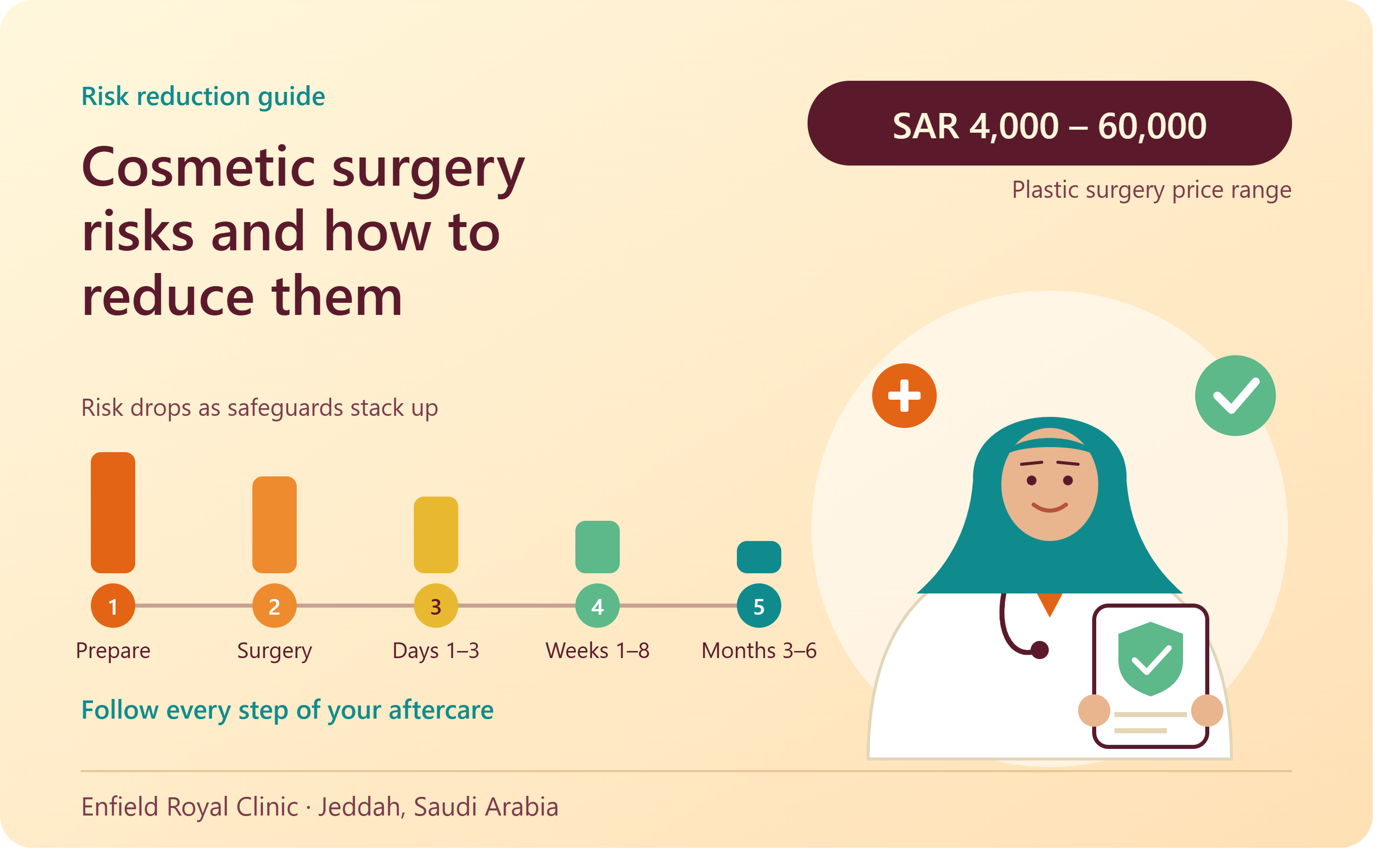
Cosmetic surgery carries the same core risks as any operation: infection, bleeding, scarring, anesthesia-related problems, and blood clots, plus risks specific to each procedure. Most are uncommon and many are minor, but none can be ruled out entirely. The good news is that preparation, a qualified team, and careful aftercare lower them substantially. This guide follows your surgery in time order, from the weeks before to the months after, showing which risk appears when and what reduces it.
The Risks at a Glance:
Health sources describe a consistent set of general surgical risks. One hospital health library lists anesthesia-related complications such as pneumonia, blood clots, and rarely death, along with infection at the incisions, fluid buildup under the skin, bleeding, scarring, and separation of the surgical wound. A public health authority summarizes the same picture as problems related to anaesthesia and surgery, excessive bleeding, infection, scarring, and failure to heal.
At Enfield Royal Clinic, the Plastic Surgery in Jeddah page names swelling, bruising, short-term discomfort, minor scarring, and temporary numbness or sensitivity changes as common effects, and notes infection as a recognized risk. It also states that every operation carries general surgical and anesthesia risks. The rest of this guide shows how each can be lowered.
Before Surgery: Where Most Risk Reduction Begins
Many complications are shaped before you reach the operating room. The same health library notes that obesity and diabetes can raise the risk of complications, and smoking raises risk and slows healing. It also advises that for certain procedures, a stable weight for six to twelve months is preferable.
Enfield Royal Clinic’s preparation stage reflects this. Patients complete lab tests and medical screening to confirm they are suitable candidates, follow instructions on medications and stopping smoking, maintain a healthy diet, fast before surgery, and wear comfortable clothes on the day. The consultation itself covers your concerns, medical history, and aesthetic goals, and ends with a customized surgical plan.
How you lower risk here: tell your surgeon about every medication, supplement, allergy, and condition, stop smoking when advised, and complete every requested test. Hiding information is one of the easiest ways to raise your own risk.
Choosing the Team: Skill Is a Safety Tool
Technical skill directly affects complications. One medical-legal resource notes that a plastic surgeon’s technical proficiency directly affects how well risks such as scarring, infection, and unsatisfactory results are minimized. That makes credentials and procedure-specific experience part of risk reduction.
The clinic lists three Plastic and Reconstructive Surgeons on its plastic surgery page: Dr. Muhannad Ahmad, Dr. Mohamed Asem, and Dr. Mohamed Elnahas. Dr. Asmaa Abdel Raouf, a Dermatologist and Cosmetologist, leads skin-focused and non-surgical care. The page lists titles but not qualifications, so ask each surgeon for registration, training, and how often they perform your procedure. The clinic itself advises patients to verify the surgeon’s certification and read patient reviews.
Anesthesia and Technique:
The clinic performs surgery under local or general anesthesia, depending on the treatment, and places surgical markings beforehand for precision and symmetry. Anesthesia is the area patients ask about most, and it is worth asking directly: who administers it, how you are monitored, and how emergencies are handled.
Your surgeon will also explain risks specific to your operation. Different procedures carry different concerns, so request a procedure-specific list:
| Risk | What it means | How it is reduced |
|---|---|---|
| Infection | Bacteria enter the wound | Sterile technique, wound care, prompt treatment, controlling diabetes and smoking |
| Bleeding and hematoma | Blood collects under the skin | Medication review, careful technique, monitoring, avoiding strenuous activity |
| Blood clots | Clots form in leg veins and may travel to the lungs | Early gentle movement, following surgeon’s advice, avoiding long travel soon after |
| Anesthesia problems | Reactions or respiratory issues | Pre-operative screening, qualified anesthesia team, monitoring |
| Scarring and poor healing | Thick, wide, or slow-healing scars | Skin care, no smoking, sun protection, following aftercare |
| Asymmetry or poor result | Outcome does not meet expectations | Clear planning, realistic goals, possible revision |
The First Days After Surgery:
The clinic describes immediate aftercare as monitoring, pain management support, recovery instructions, and scheduled follow-up. Its general timeline says swelling and mild discomfort peak in the first one to three days.
Blood clots deserve attention here. A patient guide notes that taking a long flight soon after surgery can increase the risk of blood clots, which is one reason travel plans should be discussed with your surgeon before you book. Gentle walking when your surgeon allows it is commonly advised, but follow your own surgeon’s instructions.
Contact your surgeon promptly if you notice fever, spreading redness, heavy bleeding, severe or worsening pain, shortness of breath, chest pain, or a swollen, painful leg. Do not wait for your next scheduled visit.
Healing Without Setbacks:
Per the clinic’s general timeline, initial healing happens in the first week, visible improvement appears over two to four weeks, and most swelling subsides by six to eight weeks. To protect healing during this stretch, the clinic advises taking prescribed medications, avoiding heavy lifting and strenuous activity, avoiding smoking and alcohol before and after surgery, keeping wounds clean, staying hydrated, protecting your skin from the sun, resting well, and attending every follow-up appointment.
Skipping follow-up visits is a common and avoidable mistake. These appointments let your surgeon catch fluid collections, wound problems, or infection early, when they are easiest to treat.
Results and Revisions:
Final results become clearer between three and six months. Some outcomes, such as asymmetry or scars that heal poorly, may only be judged at this stage, and some may call for revision surgery. Ask before you start what your surgeon’s revision policy is and whether any cost applies. Realistic expectations are a safety tool too, because patients who understand what a procedure can and cannot do are less likely to be disappointed.
Reducing Risk With Smarter Choices About Where to Have Surgery:
If you are comparing cities or countries, add recovery logistics to your risk assessment. Having surgery close to home means shorter travel soon after your operation and easier access to your own surgeon for follow-up. Whatever you choose, verify the facility’s license, ask where the operation takes place, and request written answers about who handles emergencies.
What Reducing Risk Costs?
Safety measures such as testing, anesthesia, and follow-up care are part of the cost of surgery. The clinic’s overall Plastic Surgery range is SAR 4,000 to SAR 60,000, and the exact price is confirmed only after a detailed consultation and treatment evaluation. The clinic names four price factors: the type of procedure, the anesthesia type, pre- and post-operative tests, and the complexity of the case. The page lists these procedure ranges:
| Procedure | Cost (SAR) |
|---|---|
| Eyelid surgery (blepharoplasty) | SAR 8,000 – 18,000 |
| Rhinoplasty (nose surgery) | SAR 12,000 – 30,000 |
| Liposuction | SAR 10,000 – 30,000 |
| Tummy tuck (abdominoplasty) | SAR 18,000 – 40,000 |
| Breast augmentation | SAR 18,000 – 35,000 |
| Facelift surgery | SAR 20,000 – 45,000 |
Ask what each quote includes, including tests, follow-ups, and revision policy, so you know what safety support is part of the price.
Booking a Consultation:
The clinic advertises a 15% off offer and has a dedicated offers page. Ask which treatments qualify, but do not let a discount shorten your safety checks. To start, fill out the consultation form on the website, message the clinic on WhatsApp at +966 59 063 0187, or call +966 11 487 9071.
Frequently Asked Questions:
What are the main risks of cosmetic surgery?
Infection, bleeding, scarring, wound-healing problems, blood clots, and anesthesia-related complications, along with risks specific to each procedure.
Are complications common?
Serious complications are uncommon, but no surgery is risk-free. Your personal risk depends on your health, the procedure, and your care team.
How can I reduce my risk?
Share your full medical history, complete all tests, stop smoking when advised, choose a qualified surgeon and licensed facility, follow aftercare instructions, and attend all follow-ups.
When should I call my surgeon after surgery?
Right away if you have fever, heavy bleeding, worsening pain, spreading redness, chest pain, shortness of breath, or a swollen, painful leg.
How much does plastic surgery cost at this clinic?
The overall range is SAR 4,000 to SAR 60,000, with the exact price confirmed after consultation.
Can I need revision surgery?
Sometimes. Ask your surgeon about revision policy and costs before you begin.
Final Thoughts:
Cosmetic surgery risks are real but manageable. The biggest reductions come from honest preparation, a qualified team, careful anesthesia and technique, and disciplined aftercare. Ask for every risk to be explained in plain language, get answers in writing, and decide only when you feel informed.

 English
 Arabic
 Spanish
 Portuguese
 Deutsch
 Turkish
 Dutch
 Italiano
 Russian
 Romaian
 Portuguese (Brazil)
 Greek