


How Does OEM Project Support Work at wendaelectronics?
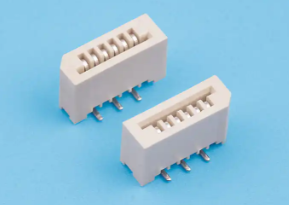
BTB Connector selection plays an important role in electronic equipment development, particularly when two printed circuit boards need to work together within a compact assembly. For purchasing teams, choosing a suitable component requires more than checking the number of contacts or comparing product dimensions. Board orientation, mating height, electrical performance, mounting conditions, and manufacturing requirements all influence the final selection. Understanding these factors before requesting a quotation can help buyers communicate with suppliers and avoid unnecessary changes during product development.
Determine How the Two Circuit Boards Will Be Connected
The first consideration is the physical arrangement of the two boards. Some electronic products use parallel board stacking, while others require coplanar or right-angle configurations.
Each arrangement serves different design requirements. Parallel stacking can help reduce the occupied board area, while coplanar structures may suit equipment with a longer or flatter internal layout. Right-angle configurations are useful when the mechanical design requires boards to meet in different directions.
Buyers should identify the intended arrangement before reviewing product models. It is also helpful to provide a simple assembly diagram showing how the boards will be positioned.
This information gives the manufacturer a clearer understanding of the application and helps narrow down suitable structural options.
Calculate the Required Pin Count and Pitch
Pin count and pitch are two important specifications that affect PCB layout. The required number of contacts should be determined by counting signal lines, power connections, and grounding requirements.
Buyers should avoid selecting a model based only on the number of available pins. It is necessary to consider the actual circuit requirements and whether additional positions may be needed for future design adjustments.
Pitch refers to the distance between adjacent contact centers. A smaller pitch can support a compact layout, but it also requires careful PCB routing and precise assembly.
A larger pitch may provide more room for routing and manufacturing operations. The appropriate choice depends on board dimensions, electrical requirements, and the available production process.
Providing the pin assignment and PCB drawing during the inquiry stage can help manufacturers review these details more efficiently.
Confirm the Mating Height and Mechanical Dimensions
The distance between two assembled boards is another detail that should be checked before purchasing. This measurement affects internal equipment space, component clearance, and enclosure design.
Buyers should consider the height of surrounding components, PCB thickness, mounting structures, and available internal space. If the selected configuration is too high or too low, it may interfere with the equipment housing or nearby components.
Mechanical tolerances also deserve attention. During assembly, small differences in board positioning can affect how the two mating halves fit together.
Some applications may benefit from alignment guides or floating structures that accommodate limited positioning variations. Whether these features are necessary depends on the equipment design and assembly conditions.
Requesting dimensional drawings from the supplier can help engineers verify the intended mating height before preparing production samples.
Evaluate Electrical Performance for the Intended Application
Electrical requirements should be reviewed according to the signals and power passing between the two boards.
Important specifications include rated voltage, current capacity, contact resistance, insulation characteristics, and operating temperature. These values should be checked against the actual working conditions rather than selected according to general product descriptions.
For applications involving high-speed data transmission, signal integrity requires additional attention. Impedance, crosstalk, grounding arrangements, and transmission requirements may influence the selected structure.
The PCB layout also affects electrical performance. Even when a component has suitable published specifications, the surrounding routing and grounding design need to support the intended application.
Buyers should provide the manufacturer with relevant electrical requirements so that available product configurations can be reviewed against the project specifications.
Check Materials and Assembly Compatibility
Material selection can influence electrical contact behavior, mechanical characteristics, and product service conditions.
Buyers can review the conductive material, surface plating, and insulating housing according to the application. Different combinations may be suitable for different operating environments and usage requirements.
Assembly compatibility is equally important. For surface-mount designs, buyers should confirm that the selected product is suitable for the intended PCB assembly process and soldering conditions.
The manufacturing team should also clarify packaging requirements, placement considerations, and inspection arrangements. These details become particularly important when the project involves automated assembly or large production quantities.
A clear understanding of these requirements can help purchasing teams evaluate whether the proposed model fits their production arrangements.
Request Samples and Conduct Practical Testing
Technical drawings provide useful information, but actual sample testing is necessary to evaluate how the selected product performs within the intended assembly.
During the evaluation process, engineers can check:
Alignment between the two circuit boards
Mating and separation procedures
Contact engagement and electrical continuity
Mechanical stability during assembly
Clearance between surrounding components
Compatibility with the planned soldering process
If the equipment will operate under vibration, temperature changes, or repeated connection cycles, relevant tests should also be considered.
Any problems found during testing should be recorded and discussed with the manufacturer. Once the design is approved, the confirmed drawings and specifications can become the reference for subsequent production.
Review the Manufacturer's Customization and Production Support
For business buyers, selecting a supplier also involves evaluating communication, technical support, and production arrangements.
A manufacturer should be able to review product drawings, explain available configurations, and discuss customization requirements. Buyers can ask about sample preparation, material options, inspection procedures, production capacity, and order scheduling.
wendaelectronics provides electronic connection products for different PCB integration requirements. For OEM projects, buyers can share their application details, expected quantities, technical drawings, and dimensional specifications to support product discussions.
It is also useful to clarify whether the requested design requires an existing model or a customized configuration. This distinction can influence development arrangements, sample approval, production preparation, and purchasing schedules.
Before confirming a bulk order, both parties should agree on the technical specifications, approved samples, packaging details, and delivery expectations.
Prepare a Technical Checklist Before Requesting a Quotation
A well-prepared inquiry can make communication between purchasing teams and manufacturers more efficient. Buyers should organize the essential information before requesting product recommendations or pricing.
A practical checklist can include:
Board orientation and installation arrangement
Required contact quantity and pitch
Mating height and dimensional tolerances
Voltage, current, and signal requirements
Contact materials and surface treatment
PCB mounting and soldering conditions
Sample quantities and expected production volume
These details provide a useful foundation for evaluating different product configurations. They also help manufacturers understand the actual application instead of making assumptions based on limited product descriptions.For electronic equipment developers and OEM purchasing teams, careful preparation can support smoother communication from initial inquiry to sample evaluation and production planning. wendaelectronics welcomes business inquiries about product specifications, customized requirements, and manufacturing cooperation. Buyers interested in available products and company information can visit https://www.wendaelectronics.com/ to discuss their project requirements.

 English
 Arabic
 French
 Portuguese
 Deutsch
 Turkish
 Dutch
 Italiano
 Russian
 Romaian
 Portuguese (Brazil)
 Greek