


Practical Mobility Solutions for Lawn Care Machines
The mobility mechanism of a lawn mower directly influences how efficiently an operator can work across different landscape conditions, and a properly designed Lawn Mower Walking System is an important part of equipment functionality. In walk-behind and self-propelled lawn mowers, the walking system refers to the mechanical arrangement that enables the machine to move across the ground. Depending on the mower design, this arrangement may include wheels, axles, drive components, transmission mechanisms, supporting structures, and associated control elements.
A conventional walk-behind mower generally relies on the operator to provide forward movement by pushing the machine. A self-propelled model uses an integrated drive mechanism to transfer power to one or more wheels, reducing the physical effort required during operation. Although these systems differ in construction, both depend on appropriate contact between the machine and the ground. The mobility arrangement must also work with the cutting deck, engine or motor, handle assembly, and overall machine structure.
In a self-propelled configuration, power is transferred from the engine or electric motor through a transmission or drive mechanism to the wheel assembly. The exact arrangement varies by equipment design. Some models use mechanical transmission components, while others incorporate belt-driven or other drive solutions. The purpose is to provide controlled movement at a speed appropriate for grass cutting and the working environment. A well-matched drive arrangement helps the operator maintain a consistent working pace without compromising control of the machine.
The structure supporting the mobility system must withstand the mechanical forces generated during normal operation. Mowers frequently travel over surfaces containing small obstacles, changes in elevation, loose soil, and uneven patches. The wheels, axles, brackets, and mounting points experience repeated loading as the machine moves. If these components are poorly aligned or insufficiently supported, the result may include uneven movement, excessive vibration, or premature wear.
Wheel design is another important consideration. Wheel diameter, width, tread pattern, and material affect how a mower interacts with different ground surfaces. Larger wheels can help a mower move across certain uneven areas, while suitable tread patterns provide traction on grass and soil. The best configuration depends on the machine's weight, cutting requirements, and intended application. A system designed for a small residential lawn may not be suitable for a larger commercial landscaping machine.
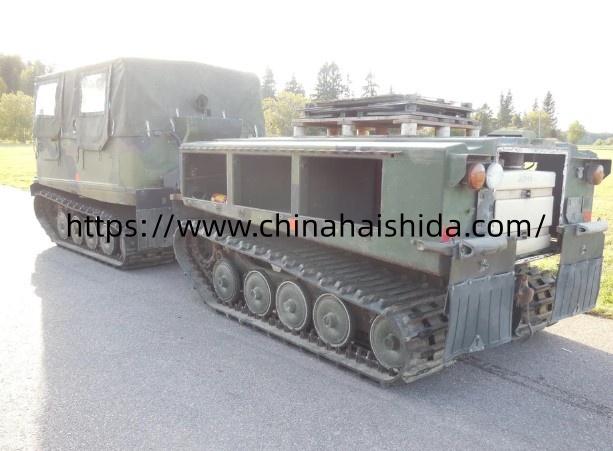
Some specialized mowing applications require mobility arrangements beyond conventional wheel configurations. Equipment operating on sloped terrain, soft ground, or areas with irregular surfaces may need a different approach to ground contact and traction. Designers must consider the relationship between machine weight, available traction, turning characteristics, and cutting performance. Increasing traction without evaluating the rest of the machine can create additional resistance or affect maneuverability.
Material selection influences durability and operating consistency. Metal components used in axles, mounting structures, and transmission supports need sufficient mechanical strength for their intended loads. Polymer or rubber elements may be incorporated where flexibility, cushioning, or ground contact is required. The selected materials should also be appropriate for exposure to grass residue, soil, water, fertilizers, and outdoor storage conditions. Corrosion protection and wear resistance are especially relevant for commercial equipment used frequently.
For manufacturers and component suppliers, dimensional accuracy is essential. A replacement mobility component must match the relevant mounting arrangement and mechanical interface. Differences in axle length, hole position, shaft dimensions, or transmission connections may prevent correct installation. Before ordering replacement components, buyers should identify the mower model and version, confirm the original part number where available, and provide drawings or measurements when necessary. Visual similarity alone is not sufficient to establish compatibility.
Operating conditions also determine maintenance requirements. Grass clippings and soil can accumulate around moving components, while moisture may contribute to corrosion. Regular cleaning helps reduce the buildup of material around wheels and drive assemblies. Operators should inspect mounting points, fasteners, belts, wheels, and other accessible components for looseness or unusual wear. Any maintenance involving powered components should follow the manufacturer's safety instructions, including appropriate isolation of the power source before inspection.
Commercial landscaping companies often place particular importance on equipment availability. A mobility failure can interrupt mowing schedules and create additional labor costs. For this reason, purchasing teams should consider replacement part availability, supplier communication, delivery arrangements, and product identification. Distributors serving the outdoor power equipment market may also benefit from maintaining accurate records of different mower configurations to reduce incorrect orders and improve inventory management.
A walking system should be evaluated as part of the complete mower rather than as an independent accessory. Its performance depends on machine weight, engine or motor output, cutting configuration, wheel arrangement, and operator requirements. Manufacturers developing new equipment should consider these factors together during the design process. Prototype evaluation across representative grass types, slopes, and ground conditions can help identify issues involving traction, steering, vibration, and durability before commercial production.
When sourcing a Lawn Mower Walking System, buyers should establish the intended mower configuration, ground conditions, drive requirements, structural dimensions, and expected operating frequency. These details provide a useful basis for supplier evaluation and technical communication. Companies exploring specialized mobility equipment and tracked utility vehicle applications can also visit https://www.chinahaishida.com/product/tracked-utility-terrain-vehicle/tracked-utility-terrain-vehicle.html to learn more about HAISHIDA's tracked vehicle product offerings.

 English
 Arabic
 Spanish
 Portuguese
 Deutsch
 Turkish
 Dutch
 Italiano
 Russian
 Romaian
 Portuguese (Brazil)
 Greek