


Building Secure SaaS Application Architecture for Data Management and User Authentication
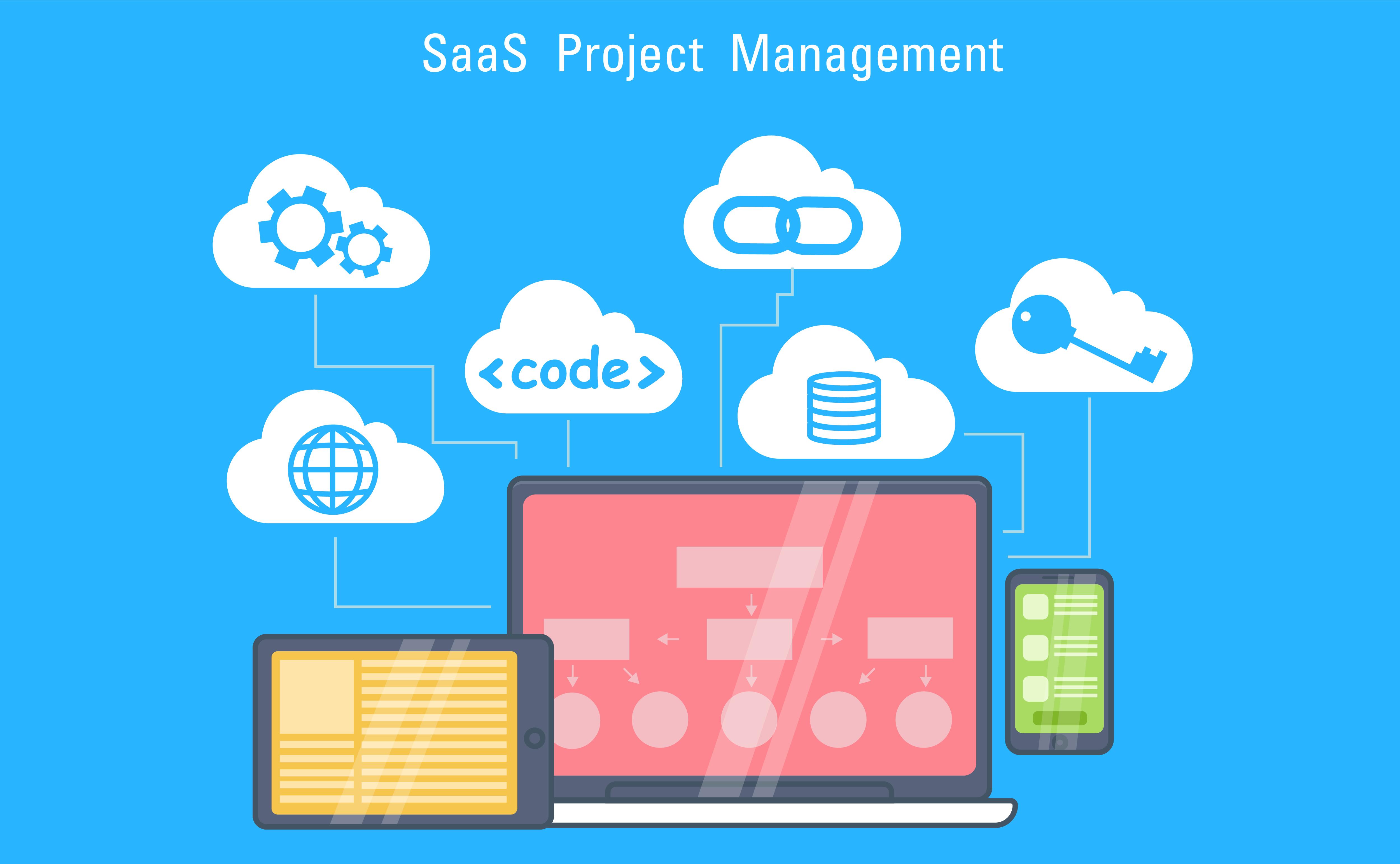
Constructing a contemporary SaaS platform entails far more than the mere assembly of functional capabilities or the design of an aesthetically pleasing user interface; rather, security must be woven into the very fabric of the application architecture from inception.
This foundational integration is imperative for safeguarding corporate assets, individual user credentials, and sensitive organizational data.As cloud-based software increasingly underpins operations across diverse sectors, ensuring the security of SaaS applications has emerged as a critical imperative for developers tasked with engineering scalable and dependable digital solutions.
A rigorously architected SaaS application development framework integrates robust authentication protocols, stringent database safeguards, granular backend authorization mechanisms, and regulated inter-component communication.
SaaS Application Security Best Practices allows developers to minimize vulnerabilities, control user access, and protect application infrastructure. Security should be considered during the initial architecture and development stages rather than introduced after deployment.
The Importance of Security in Full-Stack SaaS Development
Contemporary Software-as-a-Service platforms frequently administer a complex array of assets, including client profiles, subscription details, organizational configurations, and commercial transactions.
Within such multi-tenant environments, where numerous clients operate atop a shared infrastructure, safeguarding the integrity and confidentiality of their distinct datasets constitutes a paramount architectural imperative.
Relying exclusively on frontend constraints to ensure security is inherently insufficient; a robust full-stack application must instead mandate access control at the backend, rigorously validate all incoming requests, and safeguard database operations.
By integrating technologies such as Next.js, TypeScript, Node.js, and PostgreSQL with rigorous security protocols, developers can establish a formidable foundation for constructing resilient systems.
SaaS developers must architect a system wherein security, performance, and scalability function as an integrated whole, rather than addressing them as isolated development mandates.
Designing Secure Database Management with PostgreSQL and Prisma
The security and reliability of a Software-as-a-Service (SaaS) platform are fundamentally contingent upon its database architecture.
PostgreSQL has emerged as a premier solution for orchestrating structured application data, owing to its robust support for relational data modeling, rigorous transactional integrity, and sophisticated access-control mechanisms.
By leveraging Prisma ORM within a PostgreSQL environment, developers are empowered to architect database models and precisely delineate the relational structures connecting users, organizations, subscriptions, and application resources.
The architecture of a secure database must incorporate the following measures:
- At the tenant level, data segregation mandates that each organization maintains exclusive, controlled access to its proprietary records.
- Application services must be granted only those database permissions strictly necessary for their operation.
- Data encryption is essential for safeguarding sensitive information, ensuring its security both during transmission and while stored.
- By employing parameterized database operations, secure queries effectively mitigate the risks associated with SQL injection attacks.
- The implementation of systematic backup protocols and robust recovery procedures serves as a critical safeguard for preserving essential corporate data.
While Prisma effectively streamlines database interactions, developers remain responsible for implementing authorization checks to ensure users cannot access records belonging to organizations beyond their own assignment.
Implementing Reliable User Authentication with Better Auth
User authentication constitutes a cornerstone of secure Software-as-a-Service (SaaS) application architecture, serving to verify user identity and thereby establishing the essential prerequisite for governing access to restricted application assets.
Contemporary authentication frameworks, exemplified by Better Auth, empower developers to seamlessly integrate robust authentication protocols into full-stack architectures.
The specific implementation of these workflows is contingent upon the chosen configuration and available integrations, often encompassing a spectrum of mechanisms that range from traditional email and password verification to social identity federation, granular session management, and advanced security safeguards.
A robust authentication framework must integrate secure password hashing mechanisms, safeguarded authentication endpoints, enforced session expiration protocols, and well-defined account recovery procedures.
In addition, developers ought to integrate multi-factor authentication to establish a supplementary verification tier, a measure that assumes heightened significance for applications managing sensitive organizational or financial data.
Integrating Better Auth into a Next.js application facilitates the systematic organization of authentication mechanisms, ensuring that identity verification and the execution of protected operations adhere to a robust, structured architectural framework.
Following the right SaaS Application Security Best Practices helps development teams reduce vulnerabilities, strengthen tenant isolation, and establish reliable application workflows.
Strengthening Backend Authorization and API Security
Authentication and authorization fulfill distinct yet complementary roles within access control frameworks.
While authentication rigorously validates the identity of a user, authorization subsequently delineates the specific resources and actions to which that verified identity is entitled.
Consider a SaaS ecosystem that accommodates a hierarchy of users, including administrators, organization owners, team members, and standard customers; each role mandates distinct access privileges calibrated to their specific functional responsibilities.
Role-based access control (RBAC) offers a systematic methodology for administering permissions, enabling developers to formulate access protocols for discrete resources and mandate their enforcement via backend services.
Given that application endpoints routinely manage sensitive operations, API security assumes paramount importance.
Consequently, every protected request must undergo a rigorous validation process: first confirming the identity of the authenticated user, then verifying their organizational affiliation, and finally ascertaining that the requisite permissions are present before any action is executed.
In addition, the deployment of rate limiting, rigorous input validation, secure error handling protocols, and meticulous request verification can significantly fortify backend security defenses.
Multi-Tenant Security for Scalable SaaS Platforms
Multi-tenant architecture enables diverse organizations to function concurrently within a unified software platform.
While this paradigm significantly enhances infrastructure efficiency and streamlines application administration, it simultaneously imposes stringent requirements for data isolation.
In a secure multi-tenant architecture, it is imperative to prevent users from gaining unauthorized access to another organization's records through techniques such as URL manipulation, altering API requests, or tampering with resource identifiers.
Developers are able to deploy tenant-specific database queries, enforce organization-wide authorization protocols, and, where suitable, integrate PostgreSQL Row-Level Security.
These strategic measures serve to fortify the isolation and demarcation between distinct customer environments.
As a SaaS platform expands, maintaining robust tenant isolation remains paramount across all operational layers, including authentication mechanisms, API interactions, background job execution, and database transactions.
Integrating Security into Modern SaaS Application Architecture
Security must be regarded as an ongoing imperative rather than a singular developmental phase, demanding perpetual surveillance, rigorous testing, and sustained maintenance across the entire application lifecycle.
Contemporary SaaS development benefits significantly from a robust architectural foundation composed of Next.js, TypeScript, Prisma, PostgreSQL, and Better Auth; yet, the efficacy of this stack hinges entirely on the precise configuration of each component to satisfy stringent security mandates.
To ensure robust security posture, developers ought to consistently scrutinize dependencies, surveil application activity, preserve comprehensive audit logs, and execute periodic vulnerability assessments.
Furthermore, adhering to the established guidelines set forth by OWASP serves as an effective mechanism for pinpointing prevalent weaknesses inherent at the application level.
Conclusion
Constructing a secure Software-as-a-Service (SaaS) ecosystem necessitates an architectural framework meticulously engineered to safeguard user identities, database records, application programming interfaces (APIs), and organizational assets.
Fundamental to this endeavor are robust authentication protocols, dependable authorization mechanisms, rigorous tenant-level isolation, and comprehensive secure database management.
The strategic integration of Next.js, PostgreSQL, Prisma, TypeScript, and Better Auth, underpinned by robust security protocols, empowers developers to architect scalable SaaS ecosystems that foster business expansion while rigorously safeguarding data integrity.
Embedding SaaS application security measures throughout the entire full-stack development lifecycle not only constructs a resilient foundation for enduring software performance but also cultivates user trust and ensures the application's capacity for sustainable growth.

 English
 Arabic
 French
 Spanish
 Portuguese
 Deutsch
 Turkish
 Italiano
 Russian
 Romaian
 Portuguese (Brazil)
 Greek